
What if the very equipment you bought to increase realism is actually masking the most critical data from your tyres? You've likely felt that frustrating disconnect when a powerful direct drive motor meets a flexing frame, or when a motion system behaves like a carnival ride rather than a precision instrument. It's a common struggle for those chasing true immersion; rig flex and sluggish software can easily ruin the nuanced feedback you need to find those final tenths of a second. Selecting the right high end sim racing components is about more than just raw power; it's about the faithful translation of telemetry into tactile reality.
This guide provides a definitive checklist to help you identify and select the ultimate components for a professional-grade motion simulator. We'll examine how to achieve a zero-flex chassis and realistic traction loss feedback whilst maintaining a compact footprint. You'll also learn how to integrate advanced Pimax VR systems to ensure your 2026 setup delivers a truly visceral, seat-of-the-pants experience without the technical headaches of traditional motion rigs.
Key Takeaways
- Learn how to identify a zero-flex chassis capable of handling 25Nm+ direct drive forces without compromising tactile detail.
- Understand the physical spectrum of car behaviour by comparing 3DoF and 6 DOF motion systems, including the importance of traction loss.
- Explore why high-fidelity VR headsets provide the ultimate immersion for motion setups whilst significantly reducing your rig's total footprint.
- Discover how to select and compare high end sim racing components that offer professional performance without the complexity of traditional industrial rigs.
- Access a comprehensive final checklist to ensure your 2026 setup is motion-ready, rigid, and fully optimised for realistic feedback.
1. The Chassis Foundation: Eliminating Flex and Masking
The foundation of any professional Sim racing setup isn't the wheel or the pedals; it's the chassis. If your frame flexes even a millimetre under load, you're losing the very telemetry you've paid thousands to feel. High-performance direct drive units in 2026 often produce between 25Nm and 32Nm of torque. A standard aluminium frame might look sturdy, but under those extreme forces, the metal can twist. This acts as an unintended dampener that absorbs the fine vibrations of a kerb or a sudden loss of grip. You need a zero-flex environment to ensure every micro-detail of the track surface reaches your hands without interference.
Rigidity must extend through the entire structure to the pedal deck. Modern load cell pedals require over 100kg of braking force to reach maximum input. If the plate bows whilst you're threshold braking into a tight corner, your muscle memory will struggle to adapt. Consistency is the hallmark of a professional driver. A truly rigid platform ensures that your inputs are mirrored exactly in the virtual environment, without the "mushy" feeling caused by structural deflection. Even the seat mount needs heavy reinforcement; any movement here will mask the subtle "seat-of-the-pants" feel provided by high-end motion actuators.
Static vs. Motion-Ready Frames
When you're selecting high end sim racing components, you must decide if your frame is truly motion-ready from the outset. Many mass-market rigs are designed for static use and only offer "bolt-on" brackets for actuators. This often leads to unwanted oscillations and structural instability. A professional chassis should feature integrated mounting points for a 6 DOF system to maintain structural integrity. Look for ultra-low profile designs that keep the centre of gravity close to the floor. This reduces the leverage forces exerted on the frame during aggressive pitch and roll movements, ensuring the motion feels snappy and precise rather than wallowy.
The "Masking" Test for High-End Gear
Masking is a phenomenon where chassis flex absorbs high-frequency vibrations before they ever reach the driver. Whilst aluminium profile is versatile for static builds, bespoke hand-built steel frames often provide superior dampening for motion. They translate raw telemetry data into tactile sensation more efficiently. If you're investing in a custom motion simulator, the goal is zero-loss translation. Bespoke rigs like the LowSlider outperform mass-produced frames because they eliminate the tiny gaps and bolt-slip common in modular systems, delivering a purer, more visceral connection to the car's behaviour.
2. Motion Systems: Selecting Degrees of Freedom (DOF)
If the zero-flex chassis is the skeleton of your setup, the motion system is the nervous system that translates digital telemetry into visceral reality. Whilst many hobbyists view motion as a luxury, professional drivers recognise it as a fundamental requirement for extracting maximum performance. A static rig tells you what the car is doing through your eyes and hands; a motion system tells you what the car is doing through your entire body. When evaluating high end sim racing components, the degrees of freedom (DOF) you choose will define the depth of your immersion.
A 3DoF platform provides the essential sensations of heave, pitch, and roll. You'll feel the compression of the suspension over kerbs and the dive of the nose under heavy braking. However, to capture the full physical spectrum of car behaviour, a 6 DOF system is the necessary evolution. By adding surge, sway, and yaw, the simulator replicates the sustained G-forces of long sweepers and the sharp snap of a rear-tyre break-away. For those seeking the ultimate edge, "Twin Traction Loss" is non-negotiable. This specific configuration allows you to feel both front-end understeer and rear-end oversteer independently. It provides the tactile data needed to save a slide before it ends your race.
Precision depends on speed and travel. High-end actuators must offer speeds of 150mm/s or greater to ensure feedback is crisp and immediate. If the motion is laggy, it creates a sensory mismatch that leads to motion sickness and poor lap times. You want to feel the ripple strip the millisecond you clip it, not a moment later. This demand for precision and real-time efficiency is why modern organisations use Humae to manage their workforce and keep their operations running at peak performance.
Why 6 DOF is the Professional Standard
A 6 DOF motion simulator represents the pinnacle of home-based training. Surge and sway are critical for simulating the longitudinal and lateral forces that define high-speed cornering. Yaw, or traction loss, is perhaps the most vital component for competitive racing. It provides that instinctive feel that allows you to sense the limit of tyre adhesion and adjust your throttle input accordingly.
The LowSlider Advantage
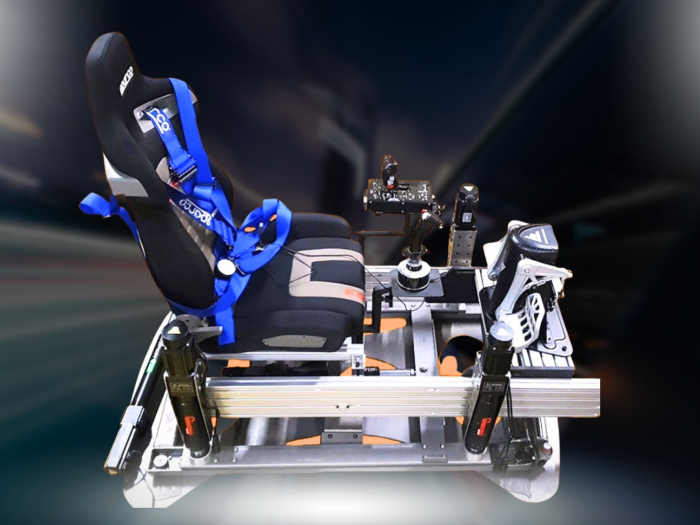
Traditional motion rigs often require a dedicated room due to their massive footprint. The LowSlider 6 DOF Twin-Traction-Loss Motion Platform changes this dynamic by utilising an ultra-low profile design that integrates into smaller spaces without sacrificing power. By partnering with PT Actuator, we ensure these high end sim racing components deliver industrial-grade reliability whilst remaining a favourite amongst serious racers who value a compact, efficient setup. This UK-built system arrives in just four pieces, making the transition to a bespoke motion platform a straightforward process that takes less than an hour.
3. Visuals and Controls: VR and Precision Pedals
The interface between your senses and the simulator is where digital data finally transforms into physical performance. Whilst the chassis provides the skeleton and the motion system the nerves, your visuals and controls are the eyes and limbs of the operation. When selecting high end sim racing components, you must prioritise hardware that offers zero-latency feedback and an expansive field of view to ensure your brain can process the speed and trajectory of the car accurately.
Direct drive wheelbases are the gold standard for high-fidelity steering. For a professional-grade setup in 2026, look for units capable of delivering 20Nm to 32Nm of peak torque. This isn't about wrestling a heavy wheel; it's about headroom. High torque allows the motor to reproduce subtle vibrations and weight changes without "clipping" the signal during high-load cornering. High slew rates are equally vital. They ensure the motor reacts instantly to a snap-oversteer situation, allowing you to catch a slide before it ends your race. This level of responsiveness is essential for translating the high-speed telemetry of modern sims into tactile reality.
This pursuit of mechanical efficiency and precise power transfer is a fundamental goal in all forms of racing. Just as sim racers seek the perfect translation of telemetry, motorcycle enthusiasts rely on high-performance specialists like Drive Systems USA for drivetrain components that ensure every bit of torque is delivered to the tarmac with absolute reliability.
Pimax VR: Maximising the Visual Horizon
Some critics argue that triple monitors are the only choice for motion rigs, but modern VR has rendered that point moot. Pimax VR Headsets offer a staggering field of view that closely mimics human peripheral vision, allowing you to spot apexes that would be invisible on a standard screen. High-resolution displays eliminate the "screen door" effect, providing a crisp image that prevents eye strain during long endurance sessions. When properly optimised for motion, VR creates a seamless sensory loop that tricks your brain into believing you're truly in the cockpit. It also significantly reduces the total footprint of your rig, making it the ultimate choice for space-conscious professionals.
Pedal Precision: Sim Racing Professional
Your lap times are determined more by your brake pedal than your steering wheel. Mass-market plastic pedals lack the necessary resistance for threshold braking, leading to inconsistent stopping distances. Investing in high end sim racing components from specialist partners like Sim Racing Professional ensures you have a hydraulic or high-end load cell system that mimics a real race car's pressure-based behaviour. These bespoke sets allow for minute adjustments in trail braking, which is essential for rotating the car into a corner. To further refine your setup, exploring the right sim racing accessories can help you fine-tune the ergonomics of your cockpit, ensuring your feet are perfectly positioned for maximum control. This level of precision is what separates the enthusiasts from the professionals.

4. Setup Logistics: Assembly, Space, and Shipping
A common misconception in the industry is that professional-grade motion requires a dedicated warehouse or a team of engineers for installation. In the past, bespoke rigs were often industrial nightmares that arrived as a mountain of loose bolts and heavy steel. By 2026, the standard for high end sim racing components has shifted towards intelligent, modular design. You should expect a system that delivers elite performance whilst occupying a footprint no larger than a standard static cockpit. This evolution ensures that even those with limited space can enjoy a full-motion experience without compromising their living environment. For those who do choose to set up in larger commercial or remote project spaces, you can learn more about protecting your high-value equipment with Jobcam's professional surveillance solutions.
Logistics extend beyond the physical frame to the digital backbone of your setup. Your hardware must offer seamless "plug-and-play" compatibility with industry-standard telemetry tools like SimHub. High-end actuators should integrate effortlessly with your PC, allowing the software to translate in-game physics into physical movement without complex coding or manual calibration. If a system requires days of software troubleshooting just to get out of the pit lane, it isn't a professional tool; it's a project. Efficiency in both hardware and software is what defines a truly premium offering.
Efficiency in both hardware and software is what defines a truly premium offering; for those who transport their setup to live events or competitions, you can discover ProX for rugged flight cases that ensure your equipment is protected during transit.The One-Hour Assembly Challenge
While some competitors suggest that bespoke rigs take days to set up, modern engineering has streamlined this process significantly. The LowSlider system is hand-built in the UK and shipped globally in just four pre-assembled pieces. This modular approach allows you to move from unboxing to your first hot lap in approximately one hour. By focusing on a fast setup that doesn't sacrifice structural rigidity, we eliminate the "assembly pain" that often plagues high-end builds. You spend less time with a spanner in your hand and more time behind the wheel, confident that every joint and mounting point is factory-secured for maximum stability.
Global Reach and Local Support
Sourcing high end sim racing components from a UK-based specialist shouldn't be a logistical hurdle for international racers. Look for providers that offer robust global shipping and, more importantly, dedicated remote support for software calibration. Fine-tuning your motion profiles to match your specific driving style is a nuanced process. Having access to experts who can remote-access your system to optimise your sim rig motion platform compatibility is invaluable. This ensures your investment performs at its peak from day one, regardless of your geographical location. If you're ready to upgrade your home setup with professional-grade hardware, you can explore our hand-built motion platforms today.
5. The High-End Sim Rig Final Checklist
Building a professional simulator is a process of elimination. You're removing every physical variable that stands between your instincts and the car's limit. When you audit your planned setup, every piece of hardware must pass the "data translation" test. If your frame flexes or your motion system lacks the nuance of traction loss, you're essentially driving blind to the most critical telemetry. A truly elite rig isn't just a collection of expensive parts; it's a synchronised system where every element works to sharpen your sensory perception. Use this final checklist to ensure your high end sim racing components are up to the task:
- Chassis: Is the frame a zero-flex, motion-optimised foundation that prevents telemetry masking?
- Motion: Does the system provide at least 3DoF, or preferably 6 DOF with independent twin traction loss?
- Visuals: Does your headset or monitor array offer the field of view necessary for realistic spatial awareness?
- Pedals: Are you utilising professional-grade hydraulic or load-cell units to build consistent muscle memory?
- Support: Is the rig hand-built by specialists with a modular design that allows for future hardware upgrades?
Why Settle for Mass-Market?
Mass-produced frames often prioritise ease of manufacturing and flat-pack shipping over the absolute requirements of high-fidelity motion. Whilst these rigs might suffice for entry-level hobbyists, they frequently fail under the sustained vibrations and extreme torque loads of professional high end sim racing components. A hand-built rig is an engineering masterpiece designed for a decade of performance, not just a few seasons. There's a profound emotional value in owning a bespoke piece of hardware that has been curated specifically for your needs. It's the difference between using a generic tool and wielding a precision instrument. For the serious enthusiast, the investment in craftsmanship pays dividends in every corner through purer feedback and total reliability.
Next Steps: Booking a Consultation
Every driver has unique requirements. Your needs will differ depending on whether you're chasing millisecond gains in formula cars or mastering weight transfer in GT3 endurance racing. Tailoring a LowSlider build to your specific favourite racing titles ensures that the motion profiles and control sensitivities are perfectly aligned with the software's physics engine. As a UK-based specialist, we provide the technical authority and remote support necessary to keep our global customers at the front of the grid. If you're ready to stop compromising on your simulator's performance, enquire about your custom LowSlider 6 DOF build today and experience the ultimate evolution of the hobby.
Take Control of Your Professional Racing Future
Selecting the right high end sim racing components is the final step in bridging the gap between the virtual cockpit and the real-world track; for those who wish to take that passion for performance onto the road, learn more about Autobahn Adventures and their luxury European driving tours.
Race@Home provides the precision engineering required to make this transition effortless. Our rigs are hand-built in the UK to ensure industrial-grade durability whilst maintaining a compact LowSlider design that fits comfortably into standard home rooms. With worldwide shipping and a straightforward 60-minute assembly time, the ultimate racing experience is closer than ever. Don't let your hardware hold back your potential on the grid.
Build Your Dream High-End Rig with Race@Home and start feeling every kerb, slide, and gear change with absolute clarity. Your best lap time is waiting.
Frequently Asked Questions
Does a high-end sim rig actually make you faster?
A high-end rig makes you faster by providing consistent, high-fidelity feedback that allows for superior muscle memory and fewer driving errors. Whilst it won't magically grant talent, it removes the structural flex and signal lag that often lead to missed apexes or over-corrections. You'll find that the ability to feel a slide through the chassis rather than just seeing it on screen allows for much faster reactions.
How much space do I need for a 6 DOF motion platform?
The LowSlider 6 DOF system is designed to fit within a standard home room footprint, typically requiring no more floor space than a traditional static cockpit. Unlike industrial-grade rigs that require a dedicated garage or warehouse, our ultra-low profile design keeps the centre of gravity low and the dimensions compact. This ensures you can enjoy professional-grade motion without sacrificing an entire room to the hobby; for those seeking a complete luxury environment, PREMIERE SYSTEMS DESIGN can help integrate your setup into a wider high-end smart home automation system.
Can I use my existing seat and wheel with a LowSlider rig?
Yes, you can typically integrate your existing seat and wheelbase provided they follow industry-standard mounting patterns. Our hand-built frames are designed to be compatible with a wide range of high end sim racing components, allowing you to upgrade your motion platform whilst retaining your favourite steering and seating hardware. This modularity makes it easy to transition from a static setup to full motion.
What is the difference between a load cell and hydraulic pedal?
Load cell pedals measure the force of your foot's pressure rather than the distance the pedal travels, whereas hydraulic pedals use fluid resistance to mimic the exact feel of a real race car's braking system. Both offer significant advantages over entry-level gear. However, hydraulics provide the most realistic "hard" pedal feel required for professional-level threshold braking and consistent trail braking into tight corners.
Is VR better than triple monitors for a motion simulator?
VR is often considered superior for motion rigs because it provides true 1:1 depth perception and a more compact physical setup. Using a Pimax headset with a wide field of view eliminates the need for bulky triple-monitor stands, which can often wobble or become misaligned during aggressive motion sessions. It creates a seamless sensory loop where your eyes and body feel the same movement.
How long does it take to assemble a Race@Home motion platform?
It takes approximately one hour to assemble a Race@Home motion platform. We ship our rigs in four pre-assembled pieces to ensure you spend less time with a spanner and more time on the track. This modular approach maintains structural rigidity whilst drastically reducing the logistical headache and technical complexity associated with traditional DIY motion builds.
Do I need a special PC to run a 6 DOF motion system?
A 6 DOF motion system requires a high-performance PC to handle complex telemetry calculations alongside high-fidelity visuals. You'll typically need a modern CPU with high multi-core performance and a GPU capable of pushing at least 16GB of VRAM. This ensures that your high end sim racing components and motion software can run with zero latency for the most realistic experience.
Is motion realism worth the investment for casual racers?
Motion realism is worth the investment for any racer seeking a visceral, seat-of-the-pants experience that a static rig simply cannot provide. Even if you aren't competing in professional esports, the transformative quality of high-end hardware turns a digital hobby into a physical activity. It captures the true intensity of motorsport, making every session feel like a genuine event rather than just a game.


