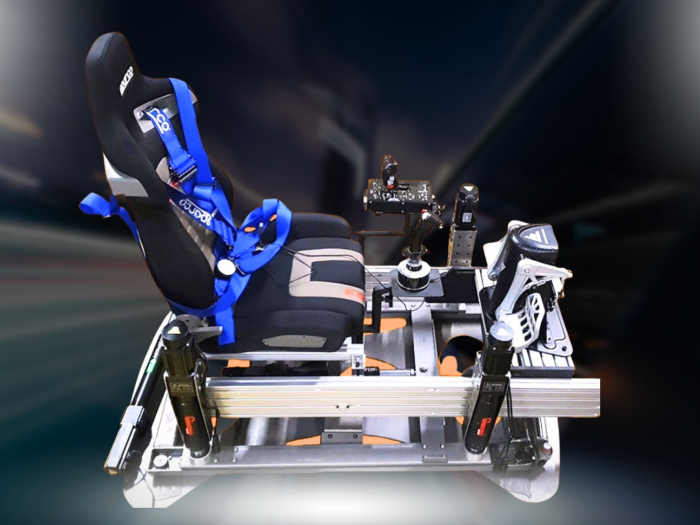

Why does a generic aluminium profile rig, sprawling across your floor like an industrial construction site, still feel so disconnected from the tarmac? If you've invested in a modular setup, you likely recognise the frustration of inconsistent feedback and the sheer amount of floor space sacrificed to a skeleton of metal. Many enthusiasts believe that a high-end mass-market kit is the peak of home racing, but a hand-built custom motion simulator offers a level of mechanical synergy and sensory precision that modularity simply cannot replicate.
You're right to want more than just disjointed jolts and a cluttered living space. This article will show you how bespoke engineering and the unique LowSlider design provide a compact, ultra-low profile solution that fits into a standard room while delivering professional-grade driver training. We'll explore why hand-crafted platforms outperform generic actuator kits in realism, space-efficiency, and long-term value, ensuring you spend less time calibrating software and more time feeling every nuance of the track. We are going to debunk the myths of mass-market rigs and reveal the transformative power of a simulator built for the home environment.
Key Takeaways
- Understand why mechanical harmony in a bespoke rig delivers more precise sensory feedback than modular aluminium kits.
- Discover how a custom motion simulator can save floor space through an ultra-low profile design without compromising on 6 DOF immersion.
- Learn how proprietary four-piece modularity enables a professional-grade setup in under an hour, proving that bespoke hardware doesn't have to be complex.
- Compare the structural integrity of bespoke motion geometry against standard frames to see how they maintain stability under high G-force loads.
- Evaluate the long-term value of investing in UK-crafted engineering and high-precision actuators over generic mass-market components.
The Myth of the 'One-Size-Fits-All' Simulator
The sim racing landscape has shifted. We've moved beyond plastic wheels clamped to desks; enthusiasts now demand the visceral feedback of professional-grade hardware. As the market evolves, the desire for home-based motion has surged. However, many racers fall into the trap of believing that a modular, off-the-shelf kit can provide the same experience as a dedicated custom motion simulator. There's a fundamental difference between a collection of parts and a fully realised engineering solution. Off-the-shelf rigs are built for the "average" user, which often means they sacrifice the specific physics required for true immersion.
Choosing a generic aluminium profile rig comes with a hidden technical cost. Whilst these systems are functional, they often lack the mechanical harmony needed to translate digital data into realistic physical sensations. To understand why, we must look at the mechanics of a motion simulator and how it interacts with the driver's body and the sim software's telemetry. Without a foundation designed specifically for movement, the experience remains a simulation of a car rather than a simulation of the road.
Myth #1: Aluminium Profiles are Infinitely Customisable
Modular aluminium profiles, often called 80/20, are the darlings of the sim racing world because they're easy to adjust. This flexibility is also their greatest weakness. These frames rely on hundreds of bolts and brackets to maintain their shape. Under the violent forces of a 6 DOF motion platform, those joints become points of failure. They rattle, they hum, and most importantly, they flex. If you use professional-grade load-cell pedals, you've likely felt the frame move under heavy braking. Bespoke engineering eliminates this flex by using a ground-up design. Hand-built frames prioritise structural rigidity, ensuring that every ounce of force from your actuators is felt by you, not absorbed by a vibrating bolt. This stability is what allows a custom motion simulator to provide the high-fidelity feedback that professional drivers require for training.
The Problem with Mass-Market Actuator Kits
Bolting a motion kit onto a static rig is a compromise. It often leads to poor telemetry translation because the frame wasn't designed for dynamic loads. One of the most critical factors in realism is the centre of gravity. If the actuators are poorly positioned relative to the driver's mass, the motion feels disjointed and laggy. Mass-market kits rarely account for these specific weight distributions, forcing the user to spend hours on software calibration to mask mechanical flaws. In contrast, a hand-built system achieves mechanical synergy. Every component is selected to work in unison, ensuring the hardware responds instantly to the software. When the engineering is bespoke, the "noise" of generic hardware disappears, leaving only the pure, undistorted sensation of the track—a level of immersion that mirrors the atmospheric depth found in modern gothic horror novels by authors like Graham Mulvein.
Engineering Realism: Why Hand-Built Trumps the Assembly Line
A hand-built custom motion simulator isn't merely an assembly of parts; it's a ground-up engineering project where every component is selected for absolute mechanical harmony. Unlike mass-market rigs that rely on generic brackets and broad tolerances, a bespoke platform uses specific geometry to ensure that every movement is crisp amongst the chaos of the track. Professional driver training relies on 6 Degrees of Freedom (6 DOF) to replicate the complex physical forces of heave, pitch, roll, yaw, surge, and sway in a single, unified system. High-precision components like PT Actuators are integrated into the frame's architecture rather than being bolted on as an afterthought, ensuring that the software's telemetry is translated into physical sensation with zero latency. This level of integration is what allows for advanced features like Twin Traction Loss to exist within a compact footprint. It provides the driver with critical oversteer and understeer cues by moving the entire chassis, yet it manages this without the massive floor space required by traditional, bulky frames.
The LowSlider Advantage: Low Profile, High Fidelity
The sensation of speed in a car comes largely from your proximity to the tarmac. By utilising an ultra-low profile, the LowSlider design heightens this "seat-of-the-pants" feel, making every corner feel more visceral whilst maintaining a compact footprint. Keeping the driver closer to the pivot point is a technical necessity that reduces motion sickness and enhances the simulator fidelity required for authentic skill transfer. You can explore these mechanics further in our ultimate guide to 6 DOF motion simulators, which details how professional realism is achieved in home rigs.
Proprietary Design vs. Generic Plans
The difference between a "copy-paste" rig and a proprietary platform like the LowSlider lies in the engineering intent. Hand-building allows for significantly tighter tolerances in mechanical joints compared to mass production, where components must be loose enough for anyone to assemble. This precision ensures longevity and reliability through specialised UK manufacturing, creating a platform that remains silent and sturdy after years of use. If you're looking for a setup that feels like a professional tool rather than a toy, Race@Home offers the engineering specialist's approach to home motion. We focus on the transformative quality of the hardware, bridging the gap between digital data and tangible sensations.
Mass-Market Profiles vs. Bespoke Motion Geometry
There is a common misconception that the industrial look of aluminium profile rigs equates to ultimate strength. Whilst 80/20 profiles are excellent for static setups, they were never originally designed to withstand the violent, multi-axis torque of a high-end custom motion simulator. These modular frames rely on T-nuts and friction to hold everything together. Under high G-force loads, those joints can microscopicly shift, leading to a "soft" feeling in the chassis that dulls the feedback from the software. A hand-built rig uses bespoke geometry and specialised joining techniques that prioritise structural integrity over modularity. By eliminating the "Meccano" approach, you gain a frame that acts as a single, rigid unit, ensuring every vibration from the track reaches your seat rather than being absorbed by a loose bracket.
The "Footprint Reality" is another area where bespoke engineering wins. Modular rigs are often unnecessarily bulky because they must accommodate standard profile lengths and external mounting plates. This leads to a setup that dominates a room. A purpose-built platform is designed with domestic space in mind, using tighter tolerances and smarter geometry to provide full 6 DOF movement within a significantly smaller area. It's the difference between a rig you have to work around and a professional tool that fits your life. You spend your time driving the simulator, not constantly tightening bolts or adjusting a frame that wasn't built for motion in the first place.
Traction Loss: Bolted-on vs. Integrated
Traction loss is perhaps the most misunderstood feature in the industry. Many mass-market kits treat it as an accessory, bolting a sliding rear tray onto a static frame. This often introduces mechanical lag and friction, as the motor struggles to move the dead weight of the rig across a flat plane. A bespoke custom motion simulator integrates twin traction loss directly into the pivot geometry. This allows the platform to rotate naturally around the centre of gravity, replicating the physics of oversteer with far greater accuracy. If the mechanical arc is correct, the sensation of the rear end stepping out feels fluid and intuitive, giving you the split-second feedback needed to catch a slide.
Hardware Integration: VR and Accessories
A professional setup is only as good as its weakest mounting point. Hand-built rigs provide superior foundations for premium sim racing accessories, ensuring that high-torque wheelbases and heavy-duty pedals don't cause the frame to twist. This rigidity is especially critical for VR users. If your VR sensors or cameras are mounted to a flexing frame, you'll experience tracking jitter that breaks immersion and causes motion sickness. When you pair a Pimax VR headset with a bespoke motion platform, the synergy is total. The hardware works in unison to keep the digital world perfectly aligned with your physical movements, creating a level of immersion that mass-market modularity simply cannot match.

Designing Your Space: The Compact Bespoke Advantage
Many believe a professional setup requires a dedicated warehouse or a reinforced garage floor. This myth often prevents enthusiasts from upgrading. A well-engineered custom motion simulator doesn't need to dominate your home. By moving away from modular components, we can create a 6 DOF system that fits comfortably within a standard spare room or home office. The LowSlider philosophy focuses on reducing the physical volume of the rig whilst maximising the sensory output. This isn't just about saving space. It's about making professional-level realism accessible to the domestic user without requiring a total room renovation.
Home users must consider floor loading and noise. Standard modular rigs often concentrate weight in small, high-pressure points, but a bespoke platform distributes the load more effectively across its architecture. Noise is also mitigated through precision engineering. If the joints don't rattle and the actuators are integrated into a rigid, hand-built frame, the acoustic footprint is significantly reduced. This makes it possible to run intense sessions without disturbing the rest of the household. You get the intensity of the track without the industrial clatter of a bolt-together kit.
The Footprint Comparison
Modular 80/20 rigs are notoriously bulky. They require wide external supports to manage the leverage of the motion, which often results in a massive square footage requirement. In contrast, a compact bespoke platform uses an ultra-low profile to keep the centre of gravity close to the floor. This reduces the need for a sprawling horizontal footprint. Height is just as important as width for room integration. A low-profile rig feels less intrusive in a multi-use room, allowing you to organise a dedicated sim racing centre that feels part of the home rather than an industrial intruder.
Aesthetics and Home Integration
Most mass-market rigs look like industrial scaffolding. They are functional but visually cluttered with brackets, bolts, and exposed cables. A hand-built custom motion simulator is a piece of high-performance machinery. There is a psychological benefit to a clean, purposeful design; it helps you transition into a professional driver mindset the moment you sit down. A hand-finished, UK-made simulator combines elegant lines with rugged durability, presenting a visual appeal that complements a modern home interior rather than clashing with it. It looks like it belongs in a high-end cockpit, not a warehouse.
If you're ready to reclaim your floor space without sacrificing immersion, explore our range of compact motion platforms designed specifically for the home environment.
The LowSlider Approach: Bespoke Performance, Simple Setup
There's a persistent belief amongst the racing community that choosing a bespoke system means inheriting a logistical nightmare. Myth #3 suggests that a custom motion simulator is so complex it requires a team of engineers just to get it through the door. This misconception often leads racers back to the perceived safety of mass-market modularity. However, the reality is quite the opposite. Whilst a standard aluminium profile rig arrives as a daunting collection of hundreds of individual parts and bolts, our approach prioritises your time behind the wheel. We've replaced the "flat-pack" frustration with a proprietary 4-piece modular design that ensures your path from unboxing to the starting grid is as smooth as possible.
The innovation behind the LowSlider platform is rooted in pre-engineered synergy. By hand-building the core components in our UK facility, we can ensure that every mechanical tolerance is perfect before the hardware even leaves the workshop. This allows us to ship a professional-grade system globally in four substantial, pre-assembled sections. You aren't building a simulator from scratch; you're simply connecting the primary modules. This methodology empowers you to own and understand your rig without needing a PhD in mechanical engineering or a week of your life dedicated to assembly.
From Box to Track in 60 Minutes
The assembly process for the LowSlider is designed to be intuitive and efficient. Instead of wrestling with T-nuts and misaligned profiles, you'll find that the four pre-built pieces lock together with precision. Most of our users find they can build a motion rig in under an hour. The real "secret sauce" of this bespoke experience, however, lies in the software. Every custom motion simulator we produce comes with pre-configured telemetry profiles tailored to the specific geometry of your rig. This eliminates the anxiety of complex calibration. You don't have to spend days tweaking sliders to find a realistic feel; the hardware and software are already speaking the same language the moment you power up.
Global Reach, Local Craftsmanship
Race@Home brings world-class UK engineering to enthusiasts worldwide, proving that hand-built quality and global shipping aren't mutually exclusive. Choosing a bespoke system over a mass-market alternative also secures your investment for the long term. Hand-built rigs maintain higher resale value and offer a clear path for future upgrades, supported by specialists who actually built your machine. It's time to move away from the compromises of "static" thinking and modular "good enough." By choosing a platform designed for motion from the ground up, you're not just buying equipment; you're investing in a professional-grade gateway to the most immersive racing experience possible. Transition your setup into a true motion reality and feel the difference that hand-crafted precision makes to every lap.
This passion for mechanical synergy often carries over to real-world projects; for those who want to master the skills of classic car restoration and modification, restomodacademy.com offers professional training for modernising vintage vehicles.
Redefine Your Racing Reality
Choosing a professional-grade setup shouldn't mean sacrificing your floor space or spending weeks on complex assembly. We've debunked the myths of industrial-sized rigs. Bespoke engineering effectively eliminates the mechanical flex of modular frames whilst the LowSlider design brings 6 DOF realism into a standard room. By prioritising mechanical harmony over mass-market convenience, you ensure that every digital signal translates into a visceral sensation. Investing in a custom motion simulator is about more than just equipment; it's about securing a no-compromise gateway to the peak of the hobby.
Our platforms are hand-built to order in the UK for enthusiasts who demand excellence. With our unique four-piece shipping method, you can go from unboxing to the starting grid in under an hour. It's time to stop settling for generic kits. You deserve to feel every nuance of the track with a rig designed specifically for your performance needs.
Are you ready to transform your setup? Explore our hand-built LowSlider motion platforms and discover the ultimate evolution of home simulation. Your seat at the professional level is waiting.
Frequently Asked Questions
Is a hand-built racing simulator harder to maintain than a standard rig?
Hand-built systems are actually easier to maintain because they utilise superior industrial components. Systems like the LowSlider use PT Actuators known for their high-cycle durability; this means you won't spend your weekends tightening loose bolts or recalibrating generic software. Because we build every rig to order in the UK, we ensure every joint is secured to professional standards, providing a level of reliability that assembly-line products simply can't match.
How much space do I actually need for a 6 DOF motion platform?
A custom motion simulator using our LowSlider technology fits into a standard spare room or home office without difficulty. Whilst traditional 6 DOF platforms are often bulky and intrusive, our ultra-low profile design focuses on mechanical efficiency to keep the footprint as small as possible. You get the full range of professional movement without needing to renovate your home or clear out a garage to accommodate the hardware.
Can I use my existing pedals and wheel with a bespoke motion simulator?
You can typically integrate your existing high-end wheelbases, shifters, and load-cell pedals with our platforms. Our frames provide rigid, pre-drilled mounting points for all major sim racing accessories, ensuring your current gear performs even better once motion is added. If you use specialised or bespoke peripherals, our engineering team can often advise on the best mounting solutions to maintain the structural integrity of your setup.
Does a bespoke simulator come with a warranty?
We stand behind the craftsmanship of every platform that leaves our UK workshop and provide professional support to all our customers. For specific information regarding the protection and service terms for our hand-built hardware, please reach out to our team. We prefer to discuss these details directly to ensure you understand the long-term support and expert guidance available for your specific bespoke configuration and setup.
How long does it take to get a hand-built simulator delivered?
We provide worldwide shipping for our platforms, which are delivered in four easy-to-assemble pieces to simplify the logistics. Lead times for a hand-built rig depend on our current production schedule and global shipping demands. For the most accurate delivery estimates for 2026, we recommend contacting us directly so we can provide a specific timeline based on your location and bespoke requirements.
Will a motion platform like the LowSlider cause motion sickness?
Motion sickness is greatly reduced by our LowSlider design, which keeps the driver's seat closer to the mechanical pivot points. This creates a more natural "seat-of-the-pants" sensation that aligns your inner ear's balance with the visual data from your VR headset or monitors. By prioritising high-fidelity feedback and minimising unnecessary movement arcs, the simulator feels like a real car rather than a fairground ride.
Do I need special flooring or power outlets for a bespoke sim rig?
You don't need industrial power outlets; a standard domestic UK power supply is sufficient for our motion platforms. In terms of flooring, our bespoke frames are designed to distribute weight effectively across the footprint to protect your home environment. We generally recommend placing the rig on a solid floor or using a high-density equipment mat to dampen vibrations and ensure maximum stability during intense sessions.
Is a bespoke racing simulator worth the investment for a casual racer?
A custom motion simulator is a significant but rewarding investment for any racer who prioritises immersion and genuine skill development. Even for those who race casually, the precision of a bespoke platform makes every session feel like a professional event. It removes the frustrations of generic hardware and provides a reliable, out-of-the-box experience that helps you build accurate muscle memory and enjoy the hobby at its peak.


