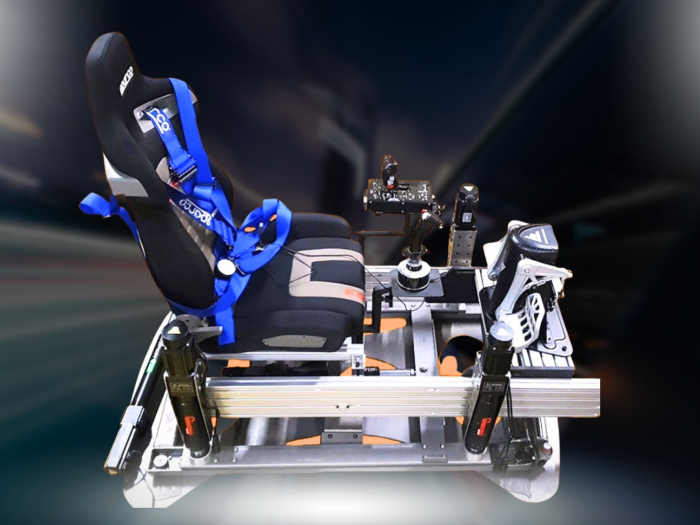

What if the ultimate evolution of sim racing isn't about building a bigger rig, but a smarter one? Most enthusiasts accept the compromise that achieving 6 DOF realism requires a bulky, industrial frame that dominates their living space. You've likely felt the frustration of a high centre of gravity causing unwanted sway, or the dread of moving a rig that weighs as much as a small car. It's a common hurdle that stops many from investing in a low profile motion simulator that actually fits their lifestyle and provides the visceral feedback they crave.
We believe that true immersion is achieved through precision of movement, not the physical footprint of the machine. This guide will show you how to secure professional-grade realism using high-performance engineering designed for the modern home. You'll learn how ultra-low profile design eliminates instability whilst providing the sharp, sensory feedback needed for a competitive edge. We'll also preview the seamless integration of Pimax VR headsets and explain how our hand-built LowSlider platforms allow you to transition from unboxing to the starting grid in less than an hour.
Key Takeaways
- Understand how modern engineering has moved beyond industrial seat movers to integrated, low-slung cockpits that prioritise stability.
- Learn why a low profile motion simulator with 6 Degrees of Freedom is essential for capturing "Traction Loss" and realistic vehicle dynamics.
- Discover the role of high-torque PT Actuators in delivering professional-grade sensations within a compact, home-friendly footprint.
- Explore how pairing wide field-of-view Pimax VR headsets creates a seamless and fully immersive digital-to-physical experience.
- Identify the benefits of the hand-built LowSlider platform, including its unique four-piece design that simplifies assembly for home users.
What Defines a Low Profile Motion Simulator in 2026?
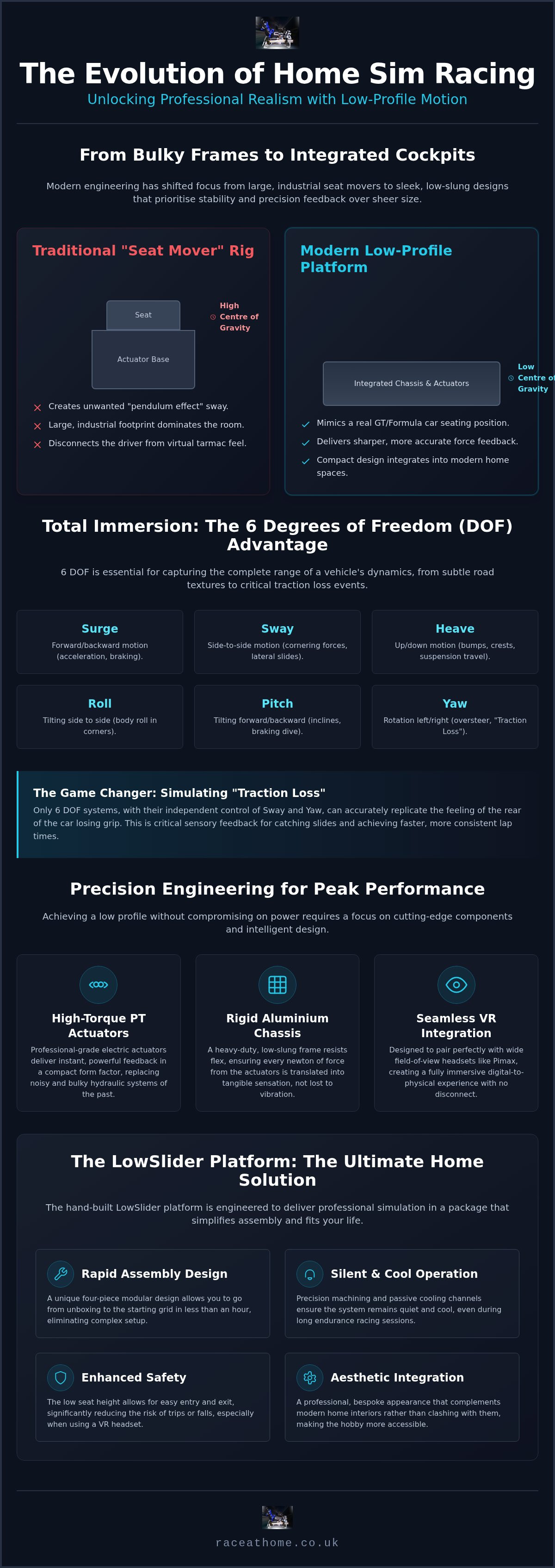
In the context of 2026 sim racing, a low profile motion simulator is defined by its ability to deliver full-spectrum telemetry feedback whilst maintaining a seat height that mimics a real GT or formula car. Historically, adding motion meant mounting a seat atop a bulky, industrial frame, often raising the driver 30cm or more off the ground. This created a top-heavy sensation that disconnected the driver from the virtual tarmac. Modern engineering has pivoted toward integrated, low-slung cockpits where the actuators are recessed or side-mounted, prioritising a minimal floor-to-seat distance. This metric is critical because it dictates the centre of gravity; the lower you sit, the more stable the rig remains during high-torque transitions.
The Evolution of Home Motion Technology
The journey to today's sleek designs began with a departure from the noisy, maintenance-heavy hydraulic systems of the past. Precision electric actuators have revolutionised the space. These components provide the same high-torque response as industrial machinery but in a fraction of the size. We've seen a massive reduction in the size of the "brain", the control cabinets and power units that once required a separate rack. For those living in standard British residential spaces, this miniaturisation is the difference between a dedicated sim room and a rig that fits comfortably in a study or lounge. A modern motion simulator now delivers 6 Degrees of Freedom (6 DOF) without the need for a warehouse-sized footprint.
Space-Saving Benefits Without Performance Loss
Opting for a compact design doesn't mean compromising on the intensity of the experience. By minimising the vertical centre of gravity, a low profile rig eliminates the pendulum effect found in taller, industrial-style simulators. This results in sharper, more accurate feedback that translates directly into faster lap times. Beyond performance, there's the practical benefit of reducing visual noise. A rig that sits lower to the ground is less imposing in a multi-purpose room, making the hobby more accessible to those who share their living space.
For families looking to optimise their shared spaces even further, LIMIKIDS provides inspiration for high-quality indoor play areas that allow children to stay active while maintaining a clean, modern home aesthetic.
- Improved Stability: Lower mounting points reduce frame flex and unwanted sway during violent directional changes.
- Enhanced Safety: Lower seat heights allow for easier entry and exit, reducing the risk of trips or falls in a VR environment.
- Aesthetic Integration: A professional, bespoke appearance that complements modern home interiors rather than clashing with them.
Achieving this balance requires meticulous craftsmanship. It's about ensuring that every millimetre of height serves a purpose, allowing the hardware to disappear so only the visceral sensation of the drive remains. When the mechanical noise is stripped away, you're left with pure, undistracted immersion.
If you are planning a more extensive home renovation to create the perfect environment for your setup, you can find out more about how Drömbygg connects homeowners with professional craftsmen for bespoke projects.
The Engineering Behind Low Profile 6 DOF Platforms
Engineering a low profile motion simulator requires a departure from traditional vertical stack designs. Most systems place the driver on top of the mechanism, which creates an unnaturally high seating position. Our approach integrates the motion hardware within the chassis itself. This is achieved through the proprietary LowSlider design, which utilises high-torque PT Actuators to provide visceral feedback without the industrial bulk. These actuators are the same components found in a sophisticated research driving simulator used to study professional driver behaviour. By housing these precision parts in a condensed mechanical environment, we maintain a sleek silhouette whilst delivering the raw power required for 6 Degrees of Freedom.
Structural rigidity is the backbone of this performance. A low-profile aluminium chassis must resist the immense forces generated by high-speed actuators. If the frame flexes, the telemetry data is lost to vibration rather than being felt by the driver. We use heavy-duty extrusions and bespoke mounting plates to ensure every Newton of force translates into a tangible sensation. Managing heat and noise in such a tight space is equally vital. Passive cooling channels and precision-machined tolerances keep the system silent and cool, even during endurance sessions. If you're looking for a bespoke setup, our hand-built platforms are engineered to meet these exacting standards.
Actuator Placement and Geometry
Horizontal and angled actuator mounting is the secret to maintaining a low height. By positioning the actuators at calculated angles, we achieve the full range of pitch, roll, and yaw within a significantly tighter radius than vertical systems. This geometry is particularly effective for "Twin Traction Loss" configurations. It allows the rig to simulate rear-end drift and front-end scrub with startling accuracy. The physics of this layout ensures that the seat remains low to the floor, preserving the realistic driving position established earlier in this guide.
Telemetry Translation: Software Meets Hardware
The magic happens when digital data becomes physical movement. A 6 DOF platform relies on low-latency processing to translate in-game telemetry into real-world sensations. Every kerb strike, gear shift, and weight transfer is processed in milliseconds. This speed is essential for maintaining immersion; any delay between the visual input and physical feedback causes motion sickness. For a deeper look at how these axes interact, explore our guide to 6 DOF motion simulators. This synergy between software and hardware is what transforms a simple game into a professional training tool.
Comparing 6 DOF vs 3DoF Low Profile Options
Choosing the right low profile motion simulator depends on your specific racing discipline and the level of physical feedback you require to stay competitive. Whilst both options provide a significant leap over static rigs, the transition from 3DoF to 6 DOF isn't just about more movement. It's about the quality and granularity of the telemetry translation. For some, a focused 3-axis system is the perfect balance of cost and immersion. For others, anything less than full 6-axis realism is a compromise that leaves lap times on the table.
3DoF: The Entry Point for Low Profile Motion
A 3DoF platform typically handles pitch, roll, and heave. This configuration allows you to feel the car's nose dive under heavy braking, the lean through a high-speed corner, and the vertical impact of kerbs or track undulations. It's an ideal entry point for flight sim enthusiasts or casual GT racers who want to escape the "static" feel of traditional sim racing. The LowSlider 3DoF motion platform is a favourite amongst those starting their motion journey. It offers a smaller mechanical footprint whilst maintaining the high-torque response our brand is known for. It's a focused, high-performance solution that fits into tighter spaces without sacrificing the premium feel of UK-built engineering.
6 DOF: The Professional Standard
Stepping up to 6 DOF introduces sway, surge, and yaw. This is where a low profile motion simulator becomes a genuine training tool. Surge allows you to feel the physical shove of acceleration and the forward throw of deceleration. Sway replicates lateral G-forces, helping you judge cornering speeds with your body rather than just your eyes. However, the real "holy grail" for sim racers is the "Twin Traction Loss" factor. This simulates the car's yaw, letting you feel exactly when the rear tyres lose grip or the front end begins to scrub. This level of fidelity is why professional teams are increasingly combining simulators and virtual reality to create high-stakes training environments. For those serious about competition, our professional driver training guide details how these extra axes translate into tangible on-track performance.
A common misconception is that 6 DOF requires a massive increase in floor space. Because the LowSlider 6 DOF Twin-Traction-Loss Motion Platform is designed with a low-slung, integrated geometry, the footprint remains remarkably compact. You're getting double the degrees of freedom in a frame that's only marginally larger than a 3DoF setup. If you primarily drive rear-wheel-drive cars or compete in endurance leagues, the ROI in terms of car control and lap time consistency makes the 6 DOF the definitive choice. It's about having every piece of data available to your senses at the exact moment you need it.
Integrating VR and Accessories with a Low Profile Rig
Integrating VR with a low profile motion simulator is the final step in achieving total immersion. Whilst a high-resolution monitor setup is impressive, VR places you directly inside the cockpit, allowing your brain to process depth and distance with surgical precision. The synergy between visual telemetry and physical feedback is what tricks the mind into believing you're truly on the grid. This connection is particularly potent in a low-slung rig where your physical seating position already matches the virtual car's geometry.
Pimax VR Headsets are our preferred choice for this setup because of their industry-leading field of view. In sim racing, being able to see the apex through the side window without rotating your head is a massive competitive advantage. When you combine this wide FOV with the ultra-low profile engineering of the LowSlider, the result is a sensory experience that rivals professional-grade simulators. You aren't just looking at a race; you're feeling the weight transfer as you dive into a corner.
Mounting your peripherals requires a specific approach on a moving platform. Standard pedal plates might flex under the high-torque forces of a 6 DOF rig, especially during heavy braking. We recommend high-end load cell pedals that can withstand the physical shifts of the chassis without losing calibration. Cable management is equally critical. With the rig capable of complex pitch and roll, every wire must be secured with enough slack to prevent snagging whilst remaining tidy enough to avoid interference with the actuators. A single loose cable can ruin a session or, worse, damage your hardware.
Optimising Pimax VR for Motion
To get the most out of your headset, you must address "world swimming". This occurs when the VR software tracks your head movement but doesn't account for the rig's physical motion, making the virtual cockpit appear to float around you. Setting up motion cancellation is essential. It ensures that the virtual car stays fixed relative to your seat, even as the actuators tilt you through a hairpin. Our Pimax VR motion simulator setup guide provides the technical steps to achieve this perfectly, ensuring ultra-low latency for maximum comfort.
Essential Accessories for LowSlider Rigs
The right accessories augment the physical sensations of the drive. Haptic add-ons can simulate engine vibrations or tyre scrub that might be too subtle for the main actuators to replicate alone. Choosing the right components ensures that your hardware doesn't become a bottleneck for your performance. For a curated selection of compatible gear, check our sim racing accessories guide. If you're ready to build a no-compromise home cockpit, you can view our full range of motion platforms and VR bundles to find your perfect match.
Why the LowSlider is the Ultimate Home Motion Solution
The Race@Home philosophy is built on a single, uncompromising principle: professional realism shouldn't require industrial-scale sacrifices. Whilst mass-market competitors often focus on high-volume production, we prioritise the bespoke quality of hand-built British craftsmanship. This dedication has resulted in the proprietary LowSlider design, which currently stands as the lowest profile 6 DOF on the market. It's a solution that finally bridges the gap between high-performance telemetry and the practical constraints of a residential home.
Choosing a low profile motion simulator from our range means investing in hardware that has been meticulously refined through years of engineering expertise. We understand that your sim rig is likely located in a multi-purpose room, not a dedicated warehouse. By keeping the centre of gravity as low as possible, we've created a machine that is both visually discreet and mechanically superior to taller, more cumbersome alternatives. It stays stable whilst you're at the limit, ensuring that every vibration serves a purpose.
From Crate to Cockpit in 60 Minutes
Many enthusiasts hesitate to invest in motion because they fear a complex, multi-day assembly process. We've eliminated this barrier through a modular delivery system. Our platforms ship in just four pre-assembled pieces, allowing you to move from unboxing to the starting grid in under an hour. You don't need a background in mechanical engineering to get started; the integration with PT Actuators is fundamentally "plug and play". If you can tighten a few bolts and connect the pre-labelled cables, you can experience full 6 DOF realism without the "IKEA-level" frustration common with overseas competitors.
Bespoke vs Mass-Produced: The Race@Home Difference
The difference between a mass-produced rig and a hand-built Race@Home platform is felt in every kerb strike and gear shift. Because each rig is built to order in the UK, we can maintain a level of quality control that mass-production lines simply cannot match. This bespoke approach also allows for significant customisation. Whether you have a favourite bucket seat or a specific set of hydraulic pedals, our frames are designed to accommodate your preferences whilst maintaining absolute structural rigidity.
Our commitment to the community extends beyond the initial build. We offer worldwide shipping and professional support to every customer, ensuring that your transition to motion is seamless. If you're ready to experience the ultimate evolution of home sim racing, explore the LowSlider range today and join the ranks of drivers who refuse to compromise on realism.
Secure the Future of Your Home Cockpit
True immersion in 2026 is no longer defined by the size of your hardware, but by the accuracy of the feedback it provides. By choosing a low profile motion simulator, you eliminate the instability of industrial frames whilst gaining the surgical precision of 6 DOF telemetry. We've demonstrated how the LowSlider reduces rig height by up to 40% compared to industrial models; this ensures you maintain a realistic driving position that mimics professional research platforms. It's the definitive way to bridge the gap between digital data and physical sensation.
Every rig we produce is hand-built in the UK and trusted by professional drivers for home training. This provides a no-compromise gateway to competitive sim racing that fits seamlessly into your lifestyle. It's time to reclaim your living space without sacrificing the visceral thrill of twin traction loss. Build your bespoke LowSlider 6 DOF motion platform today and take your place at the front of the grid. The pursuit of perfection starts with a single, precision-engineered step.
Frequently Asked Questions
What is the actual floor-to-seat height of a low profile motion simulator?
The floor-to-seat height of our low profile motion simulator is designed to be up to 40% lower than traditional industrial models. This reduction is achieved by integrating the actuators into the frame rather than stacking the seat on top of the mechanism. By sitting closer to the floor, you achieve an authentic formula or GT driving position whilst significantly lowering the centre of gravity for improved stability during high-G manoeuvres.
Does a low profile design limit the range of motion in 6 DOF?
A low profile design does not limit the range of motion; it simply optimises the mechanical geometry. By using angled actuator mounting, the LowSlider achieves the full six degrees of freedom within a tighter radius. You still receive the visceral feedback required for professional training, including heave, sway, and surge, but without the unnecessary vertical bulk found in utilitarian industrial frames that often feel disconnected from the floor.
Can I assemble a full motion simulator by myself in under an hour?
Yes, you can easily assemble a full LowSlider platform by yourself in less than sixty minutes. We ship our rigs in four pre-assembled modular pieces to eliminate the complexity often associated with high-end motion hardware. If you can follow a straightforward guide and connect pre-labelled cables, you'll be ready for the starting grid without needing an engineering degree or a team of assistants to manage the build.
Is the LowSlider compatible with all major sim racing software like iRacing and ACC?
The LowSlider is fully compatible with all major sim racing titles, including iRacing, Assetto Corsa Competizione, and Dirt Rally 2.0. Our systems utilise industry-standard telemetry translation software to ensure seamless communication between the game engine and the PT Actuators. This "plug and play" integration ensures that every kerb strike and gear shift in your favourite sim is translated into precise physical feedback instantly.
How much floor space do I actually need for a 6 DOF LowSlider rig?
A 6 DOF LowSlider rig requires a footprint only marginally larger than a standard static cockpit. Because the actuators are integrated into the chassis geometry, you don't need a massive clearance zone around the machine. This compact design makes it the ideal low profile motion simulator for standard British residential spaces, fitting comfortably into spare rooms or studies where traditional industrial rigs would be too imposing.
Does a low profile rig require special mounting for VR base stations?
A low profile rig doesn't require special mounting for VR base stations, but stability is vital for tracking. Because the rig sits lower to the ground, it experiences less frame sway, which helps maintain tracking consistency. We recommend mounting base stations to the walls or on stable stands rather than the rig itself to ensure that the 6 DOF motion doesn't interfere with the optical tracking sensors during a session.
What is the maximum driver weight for a compact motion platform?
Our compact motion platforms are engineered to support a wide range of driver weights whilst maintaining high-torque performance. The specific capacity depends on your chosen actuator configuration, but our PT Actuators are selected for their industrial-grade lifting power. We recommend contacting our technical team with your specific requirements to ensure your chosen seat and peripheral setup remains within the optimal performance window for your body weight.
Do you ship the LowSlider motion platforms internationally from the UK?
We ship LowSlider motion platforms internationally from our UK workshop to customers all over the world. Every rig is hand-built to order and securely crated in its four modular sections to ensure it arrives in perfect condition. Whether you're based in Europe, North America, or beyond, we provide professional support to assist with the final setup and software calibration of your bespoke, UK-engineered motion system.


