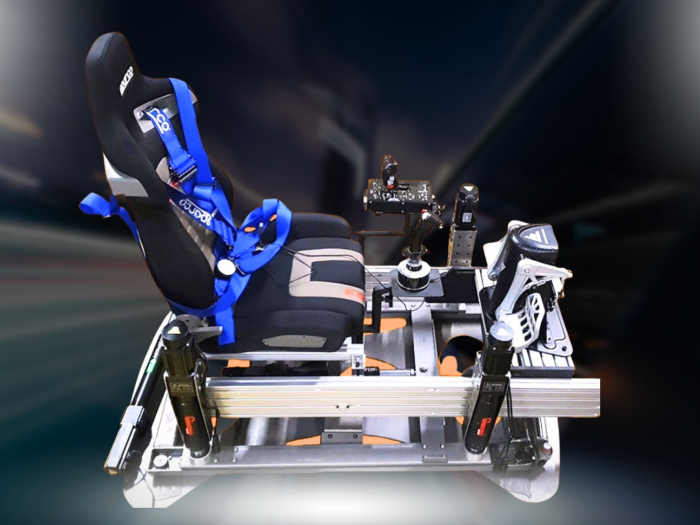

Why does your high-end motion rig still feel like a collection of hardware rather than a unified racing machine? It's a common frustration for enthusiasts who've invested in top-tier motion but still find themselves fighting the logistics of a home setup. You've likely experienced the annoyance of a cable snagging during a high-intensity weight transfer or felt a subtle flex in your peripherals that blurs the precision of your motion feedback.
We agree that a motion platform is the foundation, but the right LowSlider motion platform accessories are what translate that raw power into professional-grade driver feedback. You'll discover the essential hardware integrations and mounting solutions required to unlock the full potential of your rig for unparalleled realism. We'll preview the path to a seamless, high-performance cockpit that maintains a compact, low-profile footprint whilst ensuring every tactile sensation remains crisp and synchronised. This guide provides the technical clarity needed to transform your space into a professional-grade environment where every gear shift and kerb strike feels exactly as the engineers intended.
Key Takeaways
- Understand how high-end peripherals translate raw 6 DOF telemetry into the precise tactile feedback required for professional-grade driver training.
- Identify the essential LowSlider motion platform accessories, including hydraulic pedals and Direct Drive wheels, that eliminate flex and maintain precision during intense movement.
- Explore the integration of Pimax VR headsets to achieve perfect visual synchronisation and maximum immersion within your compact cockpit footprint.
- Learn practical strategies for cable management and safety zone planning to ensure your hardware remains protected throughout its full range of motion.
- Discover how bespoke mounting solutions and hand-built British engineering allow you to tailor your rig to your favourite high-performance hardware.
Enhancing the LowSlider Experience: Why Cockpit Accessories Matter
The hardware you bolt to your chassis is more than just a control interface. It's the final link in a complex chain of digital and physical data. When your platform processes telemetry, it relies on motion simulator technology to replicate the pitch, roll, and heave of a real vehicle. If your wheel mount flexes or your pedal plate vibrates, that high-fidelity data is lost. Choosing the right LowSlider motion platform accessories ensures that every nuance of the track surface reaches your hands and feet without interference.
The LowSlider's ultra-low profile presents a unique engineering challenge. Unlike traditional, bulky rigs that sit high off the ground, this platform keeps your centre of gravity close to the floor. This design improves stability but requires specific mounting considerations. Standard brackets often aren't designed for the high-G forces generated by a 6 DOF system. You need hardware that handles rapid direction changes without adding unnecessary mass. Excessive weight can dampen the responsiveness of the actuators; you want absolute rigidity without the bulk that ruins the platform's agility.
Defining Motion-Ready Peripherals
A peripheral is only "motion-ready" if it can withstand the relentless vibration and lateral forces of twin-traction loss. Static rigs don't face these stresses. On a motion platform, every bolt and joint is a potential point of failure. High-end load cell pedals and direct drive wheels must be mounted to zero-flex plates. If there is even a millimetre of movement in your hardware, it will blur the feedback. You'll find that premium components, such as those from Sim Racing Professional, are built to handle these specific mechanical loads, ensuring that 100kg of braking force doesn't result in a flexing footplate.
The LowSlider Ecosystem Approach
We don't believe in universal "hacks" that compromise the integrity of your setup. At Race@Home, we curate a specific range of hardware to match the LowSlider's compact footprint. This bespoke approach ensures that your sim racing accessories work in harmony with the chassis rather than fighting against it. By utilising integrated solutions, you avoid the "Frankenstein" rig effect. You gain a professional-grade environment where the mounting brackets are as over-engineered as the platform itself. This dedication to British engineering ensures your setup remains tidy, professional, and, most importantly, incredibly fast.
Precision Control: Best Pedals and Wheels for Sim Racing Cockpit Motion
High-performance motion requires high-performance controls. If you use entry-level pedals on a 6 DOF platform, the experience will feel disconnected. You need peripherals that can match the speed and power of the actuators. This is why selecting the right LowSlider motion platform accessories is vital for professional-grade realism. High-quality controls eliminate the "input lag" between your actions and the physical sensations you feel in the cockpit.
Hydraulic vs. Load Cell Pedals on Motion Rigs
When your cockpit pitches forward under heavy braking, your body weight shifts. In a static rig, you only fight the pedal spring. In a motion rig, you fight physics. Hydraulic pedals are often preferred by veterans because they offer a natural, fluid resistance that mimics a real brake caliper. Load cell pedals are equally effective if the mounting plate is sufficiently rigid. Modern load cell sensors in 2026 utilise high-frequency sampling to differentiate between driver leg pressure and the inertial forces generated by rapid 6 DOF chassis acceleration. Without a rock-solid foundation, you lose the ability to trail-brake effectively whilst the platform is in motion.
Direct Drive Integration
Direct Drive (DD) wheels are the gold standard for a reason. They provide the torque necessary to simulate steering weight during high-speed cornering. However, mounting a 25Nm motor to a moving chassis requires precision engineering. Our partnership with Sim Racing Professional ensures that every wheel base mount is designed to handle extreme torque without introducing unwanted vibration into the steering column. By selecting the correct LowSlider motion platform accessories, you ensure that every Nm of torque from your motor is felt as intended, rather than being absorbed by chassis flex.
This synergy allows you to feel the front tyres scrubbing across the tarmac even as the traction loss system simulates the rear end stepping out. To truly master the car, you must understand how these forces interact. You can explore the sim racing g-force feedback physics to see how torque and motion combine. If you are looking to build a no-compromise setup, we recommend choosing pedals and wheels that are specifically rated for high-G environments. You can view our curated range of compatible sim racing peripherals to find the perfect match for your LowSlider.
Visual Immersion: Integrating Pimax VR with Your LowSlider Rig
Visual data is the primary driver of immersion, yet it is often the most overlooked component of a motion setup. When your chassis pitches into a hairpin or slides through a high-speed chicane, your eyes expect an immediate, high-fidelity response. Integrating LowSlider motion platform accessories such as a Pimax VR headset creates a closed-loop system where your vestibular and visual systems are in total synchronisation. This isn't just about playing a game. It's about tricking your brain into believing you are genuinely behind the wheel of a GT3 machine. Without this visual alignment, the physical sensations provided by the 6 DOF actuators lose their context.
The Pimax Advantage for Motion Users
We chose Pimax as our primary VR partner because their hardware meets the rigorous demands of high-performance motion. A standard VR headset often suffers from a narrow field of view (FOV), which creates a restrictive "tunnel vision" effect. Pimax headsets offer up to a 200-degree FOV, allowing you to use your peripheral vision to judge apexes and spot rivals alongside you. High refresh rates are equally vital. If the visual frame rate drops whilst the platform is moving, motion sickness is almost guaranteed. Pimax delivers the resolution and speed required for professional driver training, ensuring the virtual horizon stays exactly where it should be through advanced motion compensation software.
VR vs. Triple Monitors on Motion
Whilst triple monitors provide a grand sense of scale, they require a massive footprint and complex mounting arms that can vibrate under high-G loads. The LowSlider is designed to be compact and low-profile, making VR the logical choice for many home users. VR eliminates the need for bulky monitor stands, preserving the clean, professional look of your cockpit. However, running high-resolution VR with 6 DOF telemetry requires significant computing power. You must ensure your PC can maintain a steady frame rate to prevent latency from breaking the immersion. For those with limited space, VR offers a professional-grade experience without the logistical headache of a triple-screen array.
Cable management is the final technical hurdle for VR users. On a moving platform, a snagged cable can be catastrophic for your hardware. We recommend a specific loom that allows for the full range of heave and surge movement without tension. By planning your cable routing early, you protect your investment and maintain the "no-compromise" quality that defines the Race@Home experience. A tidy setup isn't just about aesthetics; it's about ensuring your LowSlider motion platform accessories function reliably during every session.
Technical Optimisation: Mounting, Cable Management, and Space
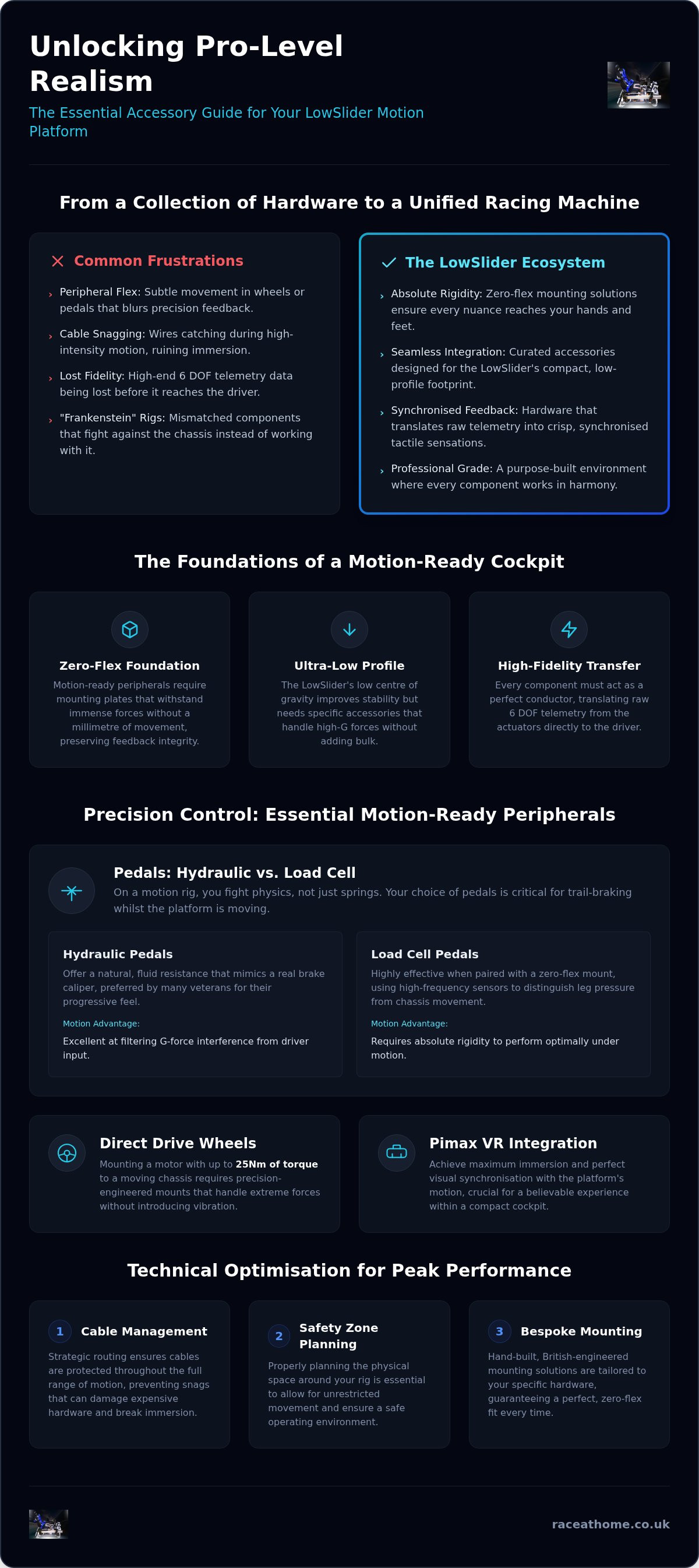
Precision and power are useless if a stray USB lead terminates your session mid-corner. Technical optimisation is the bridge between a collection of high-end parts and a professional-grade simulator. When you integrate LowSlider motion platform accessories, you must account for the extreme physical travel of the chassis. A 6 DOF system doesn't just vibrate; it surges, heaves, and rotates with significant force. If your cable management isn't designed for this range of motion, you risk damaging expensive peripherals or the actuators themselves.
Managing the 6 DOF 'Swing'
The traction loss assembly introduces lateral movement that can easily pull cables taut. We recommend using industrial-grade drag chains or heavy-duty spiral wrap to create a flexible loom. These solutions ensure your cables follow a predictable path, preventing them from entering 'pinch points' on the LowSlider frame during extreme pitch and roll. You don't want a power lead caught in the pivot mechanism. A professional installation requires identifying these clearance zones before you tighten the first cable tie. It's about creating enough slack for the 'swing' without leaving loops that could snag on external objects.
Compact Footprint Planning
Maximising realism in a typical UK home requires a strategic approach to space. The LowSlider's low-profile design is its greatest asset, but you still need to calculate a 'safety zone' around the rig. We suggest a minimum clearance of 500mm on all sides to account for the platform's maximum displacement. This prevents the rig from striking walls or furniture during high-intensity weight transfers. You can find detailed floor plan ideas in the ultimate sim racing setup guide.
Organising your power supply units (PSUs) is equally critical. With multiple PT Actuators and high-torque peripherals, the heat and cable bulk can accumulate quickly. A dedicated, off-chassis PC stand or mount is essential to avoid strain on the motherboard ports. This separation also protects your computer from the visceral vibrations generated by the motion system. To ensure your floor remains undamaged, use high-density rubber dampening mats that can absorb the kinetic energy of a full 6 DOF session. If you're ready to complete your build, you can optimise your technical layout with our range of bespoke mounting solutions.
The Race@Home Advantage: Bespoke Accessories for the Ultimate Rig
The market is flooded with modular aluminium profile rigs that claim to be "motion-ready". Whilst these systems are versatile, they often lack the structural integrity required for high-fidelity 6 DOF movement. When you add heavy pedals, high-torque wheels, and a full motion system, the joints in a modular rig can creak or shift over time. Choosing the right LowSlider motion platform accessories is only half the battle; you need a foundation that can support them without compromise. Our hand-built steel construction provides the rigidity necessary to ensure every millimetre of actuator travel translates into driver feel rather than chassis flex.
Hand-Built Precision in the UK
Our approach to engineering is grounded in the rigours of professional motorsport. We specialise in creating low-profile systems that bring the centre of gravity as close to the floor as possible. This design philosophy extends to how we integrate your LowSlider motion platform accessories. Every chassis we build in our UK workshop is tested with high-end peripherals from Sim Racing Professional and PT Actuator before it ever reaches a customer. This ensures that the mounting points for your pedals and wheel base are perfectly aligned and reinforced. We don't believe in universal brackets that "mostly" fit. We prioritise bespoke solutions that provide a rock-solid connection between the driver and the digital track.
Start Your Motion Journey
Moving from a static seat to a fully accessorised 6 DOF cockpit is a significant evolution in your racing career. It's a transition that requires both technical expertise and a passion for realism. Because we are a boutique, UK-based specialist, we provide a level of personal support that mass-production brands cannot match. We understand the practical challenges of home setups, from calculating floor loads to organising complex cable looms for multiple power supplies. Our goal is to act as your consultant, helping you curate an ecosystem where every component works in perfect harmony.
If you're ready to finalise your setup, the next step is a detailed technical review of your requirements. Whether you're integrating Pimax VR for maximum immersion or hydraulic pedals for ultimate brake feel, we ensure your rig is tailored to your favourite peripherals. For a deeper dive into the technical specifications of our systems, you can explore our 6 DOF motion simulator pillar. This guide provides the final details needed to plan your build. When you're ready to commit to a no-compromise experience, our team is here to help you organise a complete, accessory-optimised package that arrives in four easy-to-assemble pieces, ready for the first green light.
Master the Art of Motion Integration
Transforming your sim racing setup into a professional-grade simulator requires more than just raw power. It demands a curated ecosystem where every component, from hydraulic pedals to high-resolution VR, works in perfect harmony with your chassis. By selecting the right LowSlider motion platform accessories, you ensure that high-fidelity telemetry isn't lost to flex or poorly managed cables. You've learned how technical optimisation and bespoke mounting solutions protect your investment whilst delivering the crisp, tactile feedback needed to find those final tenths of a second on track.
Race@Home provides the gateway to this elite experience. Our rigs are hand-built in the UK and trusted by professional racing teams to deliver consistent, high-performance results. With our compact 6 DOF design and global shipping in four easy-to-assemble pieces, a world-class cockpit is more accessible than ever. It's time to move beyond the limitations of mass-produced hardware. Upgrade your sim racing experience with the LowSlider 6 DOF and bespoke accessories today and feel the difference that precision engineering makes to every corner.
Frequently Asked Questions
Do I need special pedals for a motion platform?
You don't strictly need special pedals, but high-end load cell or hydraulic units are strongly recommended. Standard entry-level pedals often lack the structural rigidity to handle the shifting body weight that occurs during intense 6 DOF movement. When the platform pitches forward under heavy braking, a solid, zero-flex pedal set ensures your inputs remain precise and consistent whilst fighting the physical forces of the simulator.
Can I use any VR headset with the LowSlider 6 DOF?
Most modern VR headsets are technically compatible, but high-performance models like Pimax are preferred for professional-grade immersion. The key requirement is software compatibility with motion compensation tools. These tools ensure that the virtual horizon remains stable even as your cockpit tilts and rotates. Without this alignment, you may experience significant motion sickness as your eyes and inner ear receive conflicting data.
How do I prevent cables from snapping during traction loss movements?
The best way to protect your hardware is by using industrial drag chains or heavy-duty spiral wraps to create a flexible cable loom. These LowSlider motion platform accessories allow your leads to follow a controlled path during the full range of heave and surge movement. It's vital to identify pinch points on the frame and provide enough slack to prevent tension without leaving loops that could snag.
Is it difficult to mount third-party steering wheels to the LowSlider?
Mounting high-end direct drive wheel bases is straightforward thanks to our range of bespoke mounting plates. We design these interfaces to be compatible with major professional brands, ensuring a rock-solid connection that doesn't introduce unwanted vibration. Because we use hand-built steel construction, you can bolt your favourite high-torque motor directly to the chassis without worrying about the flex found in modular aluminium rigs.
Does adding heavy accessories affect the speed of the motion actuators?
Yes, every kilogram added to the moving chassis increases the inertia the actuators must overcome. Whilst PT Actuators are incredibly powerful, excessive weight can subtly dampen the platform's responsiveness to high-frequency telemetry data. We recommend balancing your setup by choosing LowSlider motion platform accessories that prioritise rigidity over unnecessary bulk. This ensures the platform remains agile and provides the crispest feedback possible during rapid direction changes.
What is the best way to manage the power requirements of multiple accessories?
We suggest using a dedicated, high-quality power distribution block mounted off the moving chassis. This approach reduces the number of trailing cables and minimises electromagnetic interference with your motion telemetry data. Keeping your power supply units (PSUs) on a separate stand also protects them from the constant vibration of the rig, which can lead to internal component failure over time.
Do I need a specific type of sim racing seat for motion?
A rigid, side-mounted bucket seat is essential for any high-performance motion rig. Reclining seats with internal adjustment mechanisms are prone to rattling and can eventually fail under the relentless G-forces and vibrations of a 6 DOF system. A fixed-back seat ensures that you are held firmly in place, allowing you to feel every nuance of the traction loss and heave movements without any dampened feedback.
How much extra space do I need for accessories on a LowSlider rig?
You should plan for a minimum "safety zone" of 500mm around the entire perimeter of the platform. This clearance accounts for the maximum physical displacement of the chassis during extreme pitch, roll, and traction loss movements. If you mount protruding peripherals like handbrakes or sequential shifters, you must ensure they don't strike walls or furniture whilst the platform is operating at its full range of motion.


