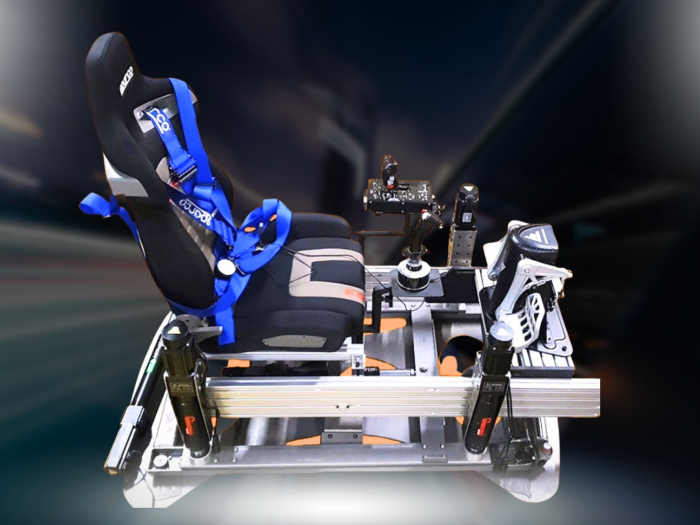

Your high-end load cell pedals are effectively useless if your mounting plate flexes under the weight of a 6 DOF motion surge. You've invested in a motion platform to feel every kerb and weight shift, yet that immersion shatters the moment your brake pedal feels inconsistent during a high-G manoeuvre. It's a common frustration for elite drivers; the more your rig moves, the harder it becomes to maintain the muscle memory required for perfect trail-braking. Understanding motion simulator pedal compatibility is the only way to bridge the gap between digital telemetry and physical sensation.
You deserve a setup where the hardware matches the intensity of the software. Discover which high-end pedal sets provide the absolute rigidity and haptic feedback required to handle the intense forces of a professional-grade simulator. This guide explores how to eliminate mechanical flex and achieve seamless integration with 6 DOF telemetry. We'll preview the 2026 landscape for top-tier hardware, focusing on the precision engineering of Sim Racing Professional (SRP) and other industry leaders to ensure your inputs remain precise whilst your cockpit is in full flight.
Key Takeaways
- Understand how 6 DOF motion shifts your centre of gravity and why your pedals must function as a rigid anchor point against intense physical forces.
- Evaluate the performance differences between load cell, hydraulic, and active systems to find the right balance of reliability and sensory feedback.
- Ensure long-term durability by mastering motion simulator pedal compatibility, preventing mechanical flex from ruining your trail-braking consistency.
- Optimise your ergonomics with dedicated heel plates to stabilise your feet during the high-G manoeuvres typical of professional-grade motion rigs.
- Learn to create a cohesive ecosystem by pairing high-end pedals with LowSlider motion telemetry and VR headsets for total immersion.
Why Motion Simulators Demand More from Your Pedals
When your simulator pitches forward under heavy braking, your entire body weight shifts towards the footwell. In a static rig, your leg pressure remains relatively constant based on your physical input alone. However, in a 6 DOF environment, gravity becomes a dynamic variable that fundamentally alters how you apply pressure to the brake and throttle. This physical shift is why motion simulator pedal compatibility isn't just about bolt patterns; it's about structural integrity and sensory alignment.
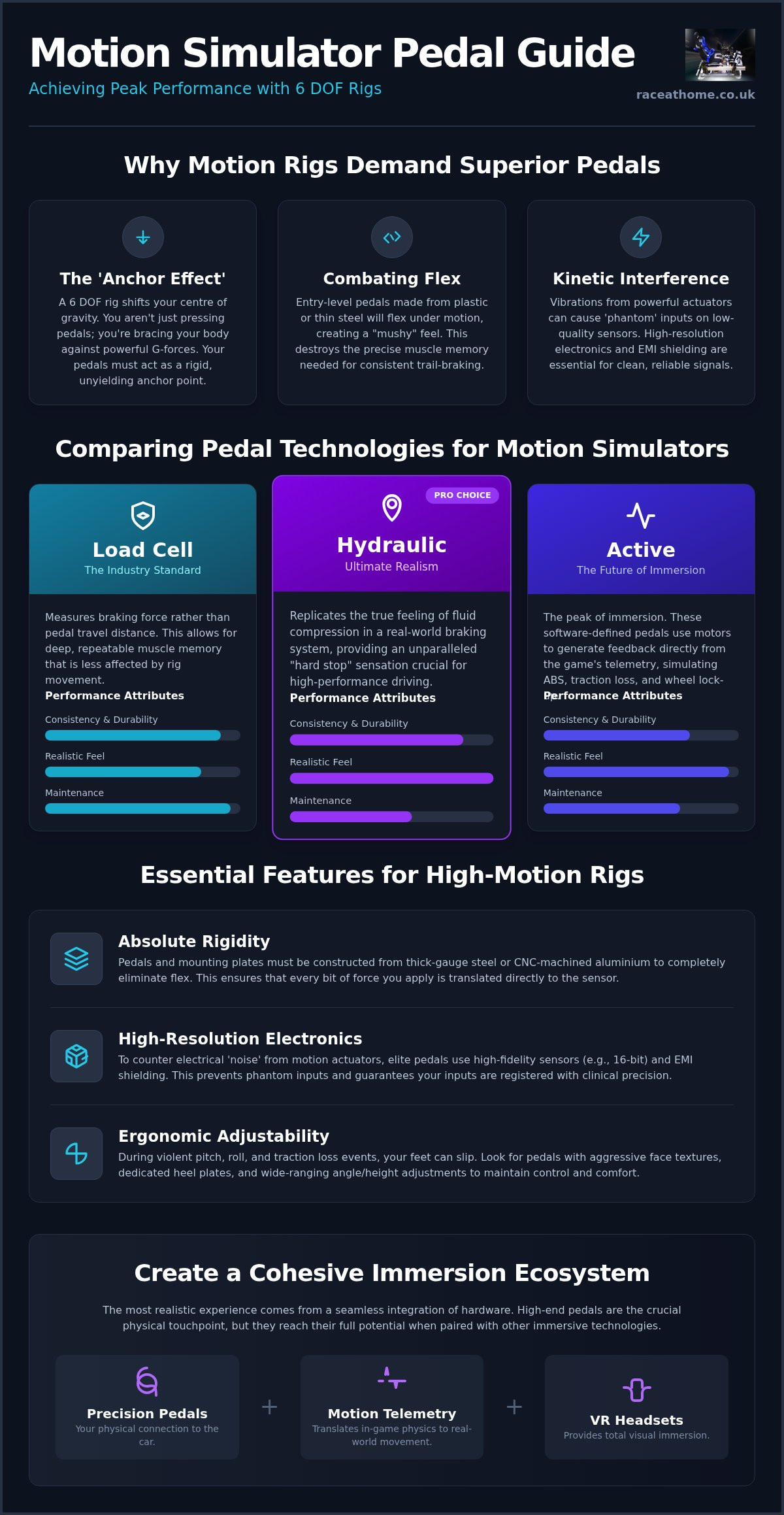
We call this the 'Anchor Effect'. You aren't merely pressing a pedal; you're bracing your body against a machine that's actively moving beneath you. If your pedals are constructed from entry-level plastic or thin-gauge steel, they'll flex the moment the rig pushes back. This flex destroys the precision required for high-level competition, as it introduces a "mushy" feeling that overrides the digital data coming from the sim. For a broader perspective on how these components fit into the wider ecosystem, you can consult a sim racing technology overview to see how hardware has evolved to meet these kinetic demands.
True immersion requires a direct relationship between motion telemetry and pedal haptics. If your platform simulates an ABS trigger or a wheel lock-up, but your pedals remain static and numb, the sensory disconnect is jarring. Professional-grade builds require hardware that can translate software data into tactile sensations whilst resisting the immense mechanical stress of a moving cockpit. Achieving perfect motion simulator pedal compatibility means your inputs remain clinical, even when the platform is at its most violent.
The Challenge of Kinetic Energy
High-powered actuators create a demanding environment for sensitive electronics. Constant vibration can cause 'phantom' inputs on low-quality sensors, leading to unexpected throttle spikes or braking inconsistencies. To combat this, elite pedals utilise high-resolution 16-bit electronics that remain stable even amongst heavy rig movement. EMI shielding refers to the use of conductive or magnetic materials to block electromagnetic interference generated by high-powered motion actuators from disrupting sensitive pedal sensor signals. Without this protection, the electrical "noise" from your motors can easily corrupt your pedal data, leading to a loss of control at the limit.
Maintaining Consistency During Traction Loss
When a rig utilises twin traction loss, the rear of the simulator swings laterally to mimic oversteer. This sudden sideways movement can cause your foot to slip across the pedal face if the texture isn't sufficiently aggressive. Maintaining a consistent foot-to-pedal relationship is vital when the rig is fighting to throw you off-centre. Because the LowSlider platform features a unique low-profile design, having highly adjustable pedal angles is non-negotiable. You must be able to fine-tune the rake and height to ensure your ankles aren't strained during violent pitch and roll manoeuvres, keeping your focus entirely on the apex.
Comparing Pedal Technologies: Load Cell, Hydraulic, and Active
Selecting the right technology is the foundation of achieving true motion simulator pedal compatibility. As the sim racing industry growth continues to accelerate, the hardware available to home enthusiasts now rivals professional motorsport grade equipment. You're no longer limited to simple potentiometers; instead, you must choose between load cells, hydraulic systems, and the emerging frontier of active software-defined pedals. Each technology interacts differently with the kinetic energy of a 6 DOF platform. Making the wrong choice can lead to a jarring disconnect between what you see in VR and what you feel underfoot.
Load cell pedals remain the industry standard for a reason. They measure force rather than distance, allowing you to develop deep muscle memory that isn't easily disrupted by the rig's movement. Hydraulic systems offer an unparalleled "hard stop" feeling, replicating the fluid compression of a real GT3 car. However, they often require more maintenance than their electronic counterparts. Finally, ActivePedal technology represents the 2026 peak of immersion, where every vibrate and throb is dictated by live telemetry data rather than physical springs.
The Case for Load Cells in Motion Rigs
For those prioritising durability and consistency, the Sim Racing Professional (SRP) pneumatic-style load cell is a revelation. Unlike traditional load cells that rely on rubber elastomers, SRP's design provides a progressive feel that mimics air compression. This ensures your braking remains clinical even during violent 6 DOF surges. These units are preferred for high-traffic environments because they don't degrade over time. If you're frequently switching between car classes in VR, load cells allow for rapid software calibration without the need to bleed lines or swap mechanical parts, whilst maintaining a professional level of accuracy. To ensure your build meets these standards, you can consult with our team to find the perfect mounting solution for your LowSlider rig.
ActivePedals: The Future of Motion Integration
Simucube ActivePedals have redefined what we expect from high-end peripherals. By using a powerful motor to control pedal resistance, these units can simulate ABS pulses and TC haptics that sync perfectly with your motion platform's behaviour. When your rig pitches forward to signal weight transfer, the pedal can simultaneously stiffen to reflect the increased load on the front tyres. You can alter the entire pedal profile in seconds, moving from a soft road car feel to a rock-hard formula style setup without touching a single tool. Software-controlled pedals eliminate mechanical wear by replacing traditional springs and dampers with precisely managed electromagnetic resistance. This makes them exceptionally resilient against the mechanical "noise" and vibrations inherent in a high-performance motion ecosystem.
The Best Pedals for Motion Simulators in 2026
Rigidity is the non-negotiable standard for any 6 DOF setup. In a motion-controlled environment, your pedals endure physical forces that would buckle a standard consumer rig. Achieving true motion simulator pedal compatibility requires a frame that refuses to flex even when your actuators are delivering maximum heave and pitch. The following roundup represents the elite tier of 2026 hardware, specifically curated for their ability to maintain clinical precision amongst the chaos of a moving cockpit.
Top Pick: Sim Racing Professional (SRP) GT-P
In the pursuit of absolute realism, the Sim Racing Professional (SRP) GT-P stands as the pinnacle of LowSlider motion platform accessories. These pedals utilise a unique piston-based resistance system that replicates the pneumatic feel of a real race car. Unlike elastomer-based systems that can soften or deform over long sessions, the SRP GT-P remains remarkably consistent. The build quality is perfectly suited for Race@Home bespoke simulators, featuring a heavy-duty chassis that acts as a genuine anchor for the driver. With a high-precision 200kg load cell, these pedals allow for the extreme braking pressures required in modern GT3 and LMP machinery without a millimetre of unwanted movement.
The Professional Choice: Simucube ActivePedal
Simucube has effectively deleted the mechanical limitations of traditional pedals. By removing physical springs and elastomers, the ActivePedal eliminates the primary points of wear that typically fail under the constant vibration of a motion rig. This makes it an exceptionally reliable choice for professional driver coaching and high-utilisation environments. The integration with the Simucube ecosystem creates a unified feedback loop, allowing for telemetry-driven pedal travel. You can instantly switch from the short, rock-hard throw of a Formula 1 car to the longer, more progressive travel of a GT3 setup. This software-defined behaviour ensures that your physical inputs always match the visual cues provided by your motion platform.
Whilst SRP and Simucube lead the field, several other options provide the robustness required for motion simulator pedal compatibility in 2026:
- Heusinkveld Ultimate+: Renowned for its 'tank-like' build quality, these pedals are designed to handle the sustained high pressures of professional 6 DOF rigs without fatigue.
- VRS DirectForce Pro: This set offers an exceptional value-to-performance ratio, providing the high-pressure braking feel of much more expensive units whilst maintaining a simple, rigid design.
- Asetek Invicta: A superb choice for those who crave a hydraulic sensation but want the zero-maintenance reliability of a digital system.
Ergonomics and Mounting for High-Motion Rigs
Mounting high-end pedals to a static rig is a simple engineering task, but adding a 6 DOF platform introduces a complex set of ergonomic challenges. When your simulator is pitching through a hairpin or surging under heavy braking, your feet require a stable, dedicated heel plate to prevent them from hunting for position. Without this fixed reference point, the physical displacement of your body makes it nearly impossible to maintain consistent pressure. Achieving true motion simulator pedal compatibility isn't just about the bolts; it's about ensuring the driver remains perfectly indexed to the controls whilst the cockpit is in full flight.
The LowSlider’s unique low-profile seating position demands a specific approach to pedal face height. Because you're sitting lower than in a traditional upright rig, your pedals must be adjusted to prevent calf strain and ensure your force is applied horizontally through the load cell. It's vital to prioritise the pedal-to-seat distance over simply bolting the units to the floor. If the distance is even slightly off, the kinetic energy from the motion actuators will magnify the discomfort, leading to fatigue and a loss of clinical precision during long endurance sessions.
Eliminating Pedal Plate Flex
Standard pedal decks often fail when subjected to 100kg or more of braking force, especially when the rig is moving in the opposite direction. You'll need to reinforce any standard aluminium profile deck with steel plates to ensure a zero-flex environment. The LowSlider platform solves this issue with an integrated, ultra-rigid mounting system designed specifically for professional-grade peripherals. The leverage effect of long-travel brake pedals on motion rigs means that every kilogram of foot pressure is amplified against the mounting plate, demanding a level of structural reinforcement that standard sim rigs simply don't provide.
Cable Management for Moving Platforms
Cable stress is a silent killer of motion rigs. As the platform moves through its full range of 6 DOF travel, pedal looms can easily snag or stretch if they aren't properly managed. Using braided sleeves and robust strain relief for USB and power cables is essential for long-term reliability. It's equally important to separate your sensitive pedal signal cables from high-voltage actuator leads to avoid EMI, which can cause erratic sensor behaviour. Always include a 'service loop' in your wiring; this provides the necessary slack for the platform to reach its maximum traction loss rotation without snapping connectors. To experience a rig where every component is engineered for synchronised performance, explore our bespoke motion solutions and see how we eliminate the common pitfalls of high-end simulator builds.
Completing Your Immersion: Beyond the Pedals
Achieving perfect motion simulator pedal compatibility is merely the first step in constructing a world-class simulator. Whilst your pedals provide the clinical data for braking and acceleration, true realism requires a holistic approach where every component speaks the same language. This is where sim racing g-force feedback becomes vital. It isn't enough to feel the pedal vibrate; you need the entire chassis to react to the weight transfer you've just initiated. When you bury the brake pedal of an SRP GT-P set, the simulator must pitch forward with enough violence to convince your inner ear that you're shedding speed at 200mph.
Visual synchronisation is the final piece of the puzzle. Pairing your high-end pedals with a Pimax VR headset ensures that your visual horizon shifts in perfect harmony with the physical movement of the rig. If there's even a millisecond of latency between your foot input, the motion response, and the visual update, the immersion shatters. The LowSlider 6 DOF platform acts as the central nervous system of this ecosystem, translating your precise pedal telemetry into visceral chassis movements. It's this synchronised dance between hardware and software that separates a gaming setup from a professional-grade training tool.
The Race@Home Philosophy
Every Race@Home rig is hand-built in the UK with a no-compromise attitude toward structural integrity. We understand that the world’s stiffest pedals exert immense pressure, so we engineer our platforms to be the most rigid foundations on the market. We've streamlined the logistics of high-end motion, offering an industry-leading 1-hour assembly time even for our most complex 6 DOF setups. This means you spend less time turning spanners and more time hitting apexes. With worldwide shipping, we bring bespoke British engineering to dedicated drivers amongst the global sim racing community, ensuring your motion simulator pedal compatibility is backed by world-class support. For teams looking to extend this professionalism to their appearance, admiral-sports.com offers high-performance sportswear designed for competitive environments.
Your Path to Professional Realism
Choosing between a 3DoF and a 6 DOF platform often comes down to how much detail you want to extract from your pedal inputs. Whilst a 3DoF setup provides excellent pitch and roll, the 6 DOF system adds the lateral surges and traction loss that make high-end pedals truly come alive. Beyond the hardware, we focus on the integration of driver coaching and telemetry data to help you refine your technique. Whether you're a seasoned veteran or a newcomer looking for the ultimate home setup, we're here to consult on every aspect of your build. It's time to stop compromising on your equipment. Build your professional sim racing rig with Race@Home and experience the definitive evolution of sensory feedback.
Elevate Your Performance with Professional Rigidity
The pursuit of the ultimate lap time demands a cockpit where every input is clinical and every reaction is visceral. You've seen why high-end pedals must act as a rigid anchor against the dynamic forces of a 6 DOF platform. Whether you choose the software-defined precision of an active system or the pneumatic realism of an SRP load cell, your hardware must bridge the gap between telemetry and physical sensation. Mastering motion simulator pedal compatibility is the final hurdle in eliminating the mechanical flex that ruins trail-braking consistency.
Race@Home is dedicated to this pursuit of realism. As official partners of Sim Racing Professional and PT Actuator, we engineer bespoke solutions that are hand-built in the UK to ensure no-compromise quality. Our platforms are designed for rapid deployment, arriving via worldwide shipping in four easy pieces to get you on track faster. It's time to move beyond entry-level limitations and embrace a setup that matches your ambition. If your passion for high-end machinery extends from the simulator to the street, you can discover Club Lowrider ST to find specialised components for your Harley-Lowrider ST.
Explore the LowSlider 6 DOF and Professional Pedal Options
Take the lead and transform your simulator into a professional-grade training tool today.
Frequently Asked Questions
Do I really need load cell pedals for a motion simulator?
Yes, load cell pedals are essential because they measure pressure rather than travel distance. In a motion rig, your body is constantly shifting; a travel-based sensor will produce erratic inputs as you brace yourself against the platform's movement. Load cells allow you to maintain trail-braking consistency by relying on muscle memory that isn't disrupted by the cockpit’s pitch and roll.
Are hydraulic pedals too messy for a home sim racing setup?
Modern hydraulic pedals are generally sealed units, but they do require more long-term maintenance than electronic alternatives. Whilst they offer a sublime, realistic feel, many drivers now opt for pneumatic-style load cells like the Sim Racing Professional (SRP) GT-P. These provide a similar fluid resistance without the risk of leaks or the need for periodic fluid bleeding, making them a cleaner choice for home environments.
How do I prevent my pedals from flexing on a motion rig?
You prevent flex by using a dedicated, high-gauge steel mounting plate and ensuring your rig's foundation is structurally sound. Standard aluminium profiles can still resonate or bend under 100kg of force; therefore, we recommend integrated systems like those found on the LowSlider. Ensuring motion simulator pedal compatibility involves choosing hardware with a thick baseplate that resists the leverage effect created during heavy 6 DOF manoeuvres.
Will high-end pedals help reduce motion sickness?
High-end pedals can help reduce motion sickness by providing more accurate haptic feedback that matches the visual and physical cues of the simulator. When your feet feel exactly what your eyes see and your body experiences, it reduces the sensory conflict that often leads to nausea. Consistent, high-resolution inputs help your brain process the motion as a realistic physical event rather than a digital error.
Can I use Fanatec or Thrustmaster pedals on a professional motion platform?
You can use entry-level pedals from Fanatec or Thrustmaster, but they often lack the structural rigidity required for high-performance motion. The plastic components and thinner metal frames are prone to cracking or bending when the rig's actuators are at full tilt. For a professional platform, we suggest graduating to enthusiast-grade hardware that can withstand the significant kinetic energy generated by 6 DOF systems.
What is the best way to mount pedals on a LowSlider rig?
The best way to mount pedals on a LowSlider rig is to utilise the integrated mounting deck and a dedicated heel plate. Because of the platform's low-profile design, you should adjust the pedal rake and face height to ensure your legs are comfortable whilst seated low. This specific configuration keeps your feet indexed to the controls even during violent traction loss or heave movements.
Do ActivePedals require special software to work with motion platforms?
Simucube ActivePedals require their own dedicated software suite to manage the motor's resistance and haptic effects. However, they integrate seamlessly with motion telemetry through SimHub, allowing the pedal behaviour to sync with the platform's physical responses. This creates a unified feedback loop where the pedal stiffens or vibrates in direct response to the digital data coming from the simulation.
How much should I spend on pedals for a 6 DOF simulator?
Your investment should match the quality of your motion platform to avoid creating a performance bottleneck. A 6 DOF simulator is a significant engineering investment; pairing it with budget pedals will compromise the entire experience. Focus on motion simulator pedal compatibility and structural integrity rather than just the price tag, as professional-grade pedals are built to last as long as the rig itself.


