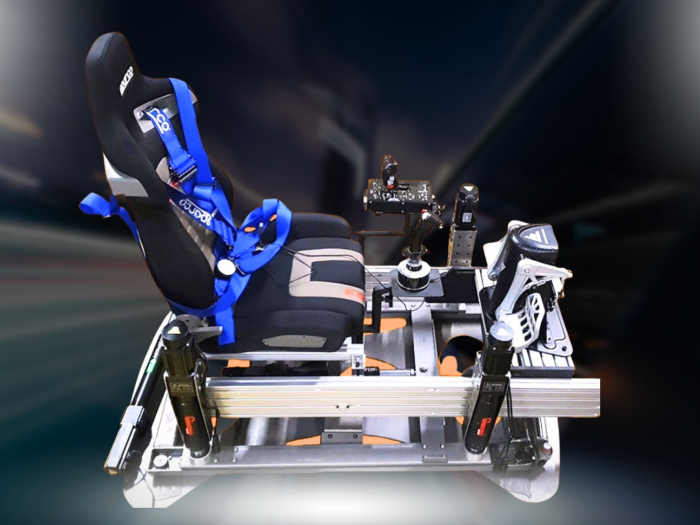

Why does your high-end sim rig still feel like a sluggish carnival ride rather than a precision-engineered GT3 cockpit? You've likely invested heavily in direct-drive wheels and load-cell pedals, yet that final, visceral layer of immersion often remains frustratingly out of reach. If you're tired of "mushy" feedback and massive, room-consuming frames that take days to assemble, you're not alone. Finding the right actuator based motion simulator platform is about more than just raw force; it's about the sophisticated translation of digital telemetry into physical reality.
We understand that you want the intensity of 6 degrees of freedom without turning your spare room into an industrial warehouse. This guide will show you how to choose the perfect motion system to transform your rig into a professional-grade environment. You'll learn how to identify industrial-grade reliability and low-latency response times that eliminate motion sickness whilst ensuring total immersion. We'll explore the critical 2026 technical standards, from unified CAN bus architectures to specialised, hand-built designs that prioritise mechanical precision over unnecessary bulk.
Key Takeaways
- Contrast 3DOF and 6 DOF systems to determine which level of immersion suits your professional training requirements.
- Evaluate the technical differences between PT Actuator and D-BOX G5 systems to prioritise travel range or haptic feedback.
- Identify the ideal actuator based motion simulator platform for home use by focusing on a low-profile design that maximises spatial efficiency.
- Realise how hand-built, UK-engineered platforms like the LowSlider simplify logistics with a modular setup that takes only sixty minutes to assemble.
- Master the relationship between digital telemetry and physical feedback to eliminate latency and improve the realism of every corner.
Understanding Actuator Based Motion Simulator Platforms
An actuator based motion simulator platform is a sophisticated system that utilises high-speed linear actuators to physically shift your entire cockpit in response to in-game telemetry. Unlike basic "seat movers" that only tilt your chair, a full-motion platform moves the seat, wheel, and pedals as a single unit. This preserves the critical alignment between your hands, feet, and eyes. If your pedals move independently of your seat, your brain quickly detects the mechanical inconsistency, breaking the sensory illusion. By 2026, the shift toward "direct drive" motion has effectively eliminated the mechanical lag and "slop" found in older, gear-driven systems. This year marks a turning point where industrial-grade precision has finally become accessible for home enthusiasts, thanks to modular designs that prioritise a compact footprint without sacrificing power.
Actuators vs. Haptic Feedback: What is the Difference?
Distinguishing between motion and haptics is vital for building a balanced rig. Actuators handle large-scale displacement, such as the violent pitch of heavy braking or the roll of a high-speed corner. Haptic systems, by contrast, focus on high-frequency vibrations. Think of the subtle engine rumble through the chassis or the sharp "clack" of a gear change. Whilst some manufacturers claim haptics alone provide realism, the most immersive setups use actuators to provide the heavy lifting and haptics to layer in the fine detail. You can find a deeper Motion Simulator Overview to understand how these mechanical forces have evolved from flight training to home racing. Combining both technologies ensures you feel the weight transfer of the car amongst the granular textures of the track surface.
The Mechanics of Linear Actuators in Sim Racing
The mechanics of an actuator based motion simulator platform rely on the seamless translation of software telemetry from titles like iRacing or Assetto Corsa into physical movement. This process relies on three core metrics: travel, velocity, and acceleration. Travel, or stroke length, determines how much vertical or horizontal distance the actuator can cover. This is essential for simulating dramatic elevation changes at tracks like Spa-Francorchamps. Velocity refers to how fast the actuator moves, whilst acceleration defines how quickly it reaches that speed. In 2026, the standard has shifted toward unified CAN bus architectures. These systems, frequently found in premium setups like the LowSlider, offer the high-frequency response needed to mimic a stiff racing suspension. They provide a "no-compromise" translation of digital data into tangible sensations, ensuring that every kerb strike feels sharp and every slide feels recoverable.
Degrees of Freedom: Choosing Between 3DOF and 6 DOF Systems
Selecting your degree of freedom is the most critical decision when building an actuator based motion simulator platform. It defines how your brain interprets the physics of the virtual car. Whilst a 3DOF system provides the essential sensations of weight transfer, stepping up to a 6 DOF rig unlocks full spatial realism. If you're aiming for professional-level driver coaching, the additional axes are not luxuries; they are essential tools for detecting the subtle onset of oversteer. You need to decide if you're looking for a boost in immersion or a tool for competitive development.
The 3DOF Experience: Pitch, Roll, and Heave
A 3DOF setup is often the smartest starting point for enthusiasts working within a standard home office. By simulating pitch (the nose-dive under braking), roll (the lean during cornering), and heave (the vertical jolt over kerbs), you gain a massive leap in immersion over a static rig. It’s an efficient way to feel the car's attitude without requiring a massive physical footprint. For many, this provides the perfect balance of performance and practicality. You can explore this further in our look at LowSlider 3DoF: The Perfect Entry into Motion Sim Racing.
The 6 DOF Advantage: Full Spatial Realism
The 6 DOF system is the gold standard for realism. It adds surge, which mimics the sustained G-force of acceleration, and sway, which replicates the lateral pull of high-speed sweeps. Most importantly, it introduces yaw. In a high-performance environment, yaw is your best friend. It allows you to feel the rear end stepping out before you see it on the screen. Our proprietary Twin-Traction-Loss technology takes this further. It provides distinct feedback for both front and rear grip levels. This level of detail is why professionals choose these systems for muscle memory training. Dive into the technicalities with The Ultimate Guide to 6 DOF Motion Simulators: Professional Realism for Home Rigs.
Ultimately, your choice depends on your specific goals. A 3DOF system excels at providing the "feel" of the road for casual racing. However, if you want to master the limit of grip, you need the extra data provided by yaw and surge. If you're ready to move beyond static racing, you can view our hand-built motion platforms to see which configuration fits your training requirements. Precision motion is a product of rig geometry, and getting the right number of axes for your space is the first step toward the ultimate cockpit.
Key Actuator Technologies: PT Actuator vs. D-BOX G5
Choosing the right hardware for your actuator based motion simulator platform usually involves a choice between two industry leaders: D-BOX and PT Actuator. D-BOX G5 is the current standard-bearer for haptic integration. It carries an official FIA license, which is a significant endorsement for professional motorsport simulation. However, whilst D-BOX excels at high-frequency vibrations, it's often limited in total travel range. If you want to feel the massive elevation drops of a circuit like Bathurst, the limited stroke length of a haptic-first system might feel restrictive compared to industrial alternatives.
PT Actuators represent a more robust, industrial-grade philosophy. These components are designed for heavy-duty, high-frequency use and utilise a unified CAN bus architecture. This standard, rolled out in 2025, ensures incredible reliability and data throughput. At Race@Home, we utilise PT Actuators for our LowSlider range because they provide the raw lifting power and travel needed for a truly visceral 6 DOF experience. They don't just vibrate; they move the entire mass of your rig with a level of authority that haptic-only systems struggle to match. To understand the industrial precision required for such high-performance components, read more about the machinery that sets these manufacturing standards.
The Engineering Behind PT Actuators
These units boast exceptional torque-to-weight ratios, allowing for snappy, realistic responses that never feel "mushy" under the weight of a full cockpit. By integrating these actuators with professional sim software like SimHub or SRS, you can fine-tune every aspect of the car's behaviour. It's a bespoke approach that favours the driver who demands granular control. Whether you're simulating the stiff suspension of a formula car or the long-travel dampers of a rally machine, the hardware adapts to the telemetry with surgical precision.
Direct Drive Motion: Eliminating Latency
In high-speed racing, milliseconds are the difference between a spectacular save and a race-ending crash. The path from the game engine to physical movement must be as direct as possible to avoid the dreaded "floating" sensation. High-end actuators eliminate the software "handshake" lag that often plagues entry-level systems. This speed is also vital for reducing sim-induced motion sickness. When the visual input from your VR headset matches the physical feedback perfectly, your brain remains convinced of the reality. If there's even a slight delay, the sensory mismatch can lead to nausea, breaking the immersion you've worked so hard to build.
Essential Criteria for Your Home Motion Rig Setup
Integrating an actuator based motion simulator platform into a domestic environment presents unique engineering challenges. Whilst industrial power is desirable, you must consider the footprint and profile of the rig. A low centre of gravity is not just about stability; it directly improves motion fidelity by reducing the leverage forces on the actuators. This ensures that every jolt and slide is felt instantly rather than being absorbed by a flex-prone, tall frame. If your rig is too high, the motion can feel "boaty" and disconnected from the digital telemetry.
Noise and vibration are equally critical for residential use. If you live in a flat or a terraced house, you need a system that offers "neighbour-friendly" performance. High-end actuators utilise advanced dampening and precise motor control to minimise the mechanical thud often associated with older systems. This allows you to maintain total immersion without disturbing the rest of the household. Ensuring your platform is compatible with your favourite titles, from iRacing to Assetto Corsa Competizione, is the final piece of the puzzle. You need a software interface that is plug-and-play, not a coding project.
Compactness and the 'LowSlider' Philosophy
Traditional 6 DOF rigs often resemble industrial scaffolding, taking up massive amounts of floor space. The LowSlider philosophy challenges this by utilising an ultra-low-profile design. These systems are engineered to fit under standard desks, allowing you to maintain a professional-grade cockpit in a standard home office. This compact engineering doesn't sacrifice stability. It actually enhances it by keeping the mass closer to the floor. For a deeper dive into spatial planning and hardware requirements, check out The Ultimate Sim Racing Setup Guide: Building a Professional Motion Rig in 2026.
The One-Hour Assembly Revolution
The sim racing industry has long been plagued by "IKEA-style" assembly nightmares. Many competitors ship 500-piece aluminium profile kits that take days to organise and build. We've moved away from this complex approach. By shipping in four pre-assembled, factory-tested modules, we've reduced the setup time to approximately sixty minutes. This hand-built approach ensures rigorous quality control that mass-produced kits simply cannot match. It means you spend less time with a spanner and more time on the track. When your rig arrives, it should be an exciting upgrade, not a logistical burden.
Ready to transform your spare room into a world-class racing environment? Explore our range of compact motion platforms and discover how precision engineering fits into your home.
Why the LowSlider is the Ultimate Actuator Based Platform
The LowSlider stands as a testament to British engineering, moving away from mass-produced extrusions toward a bespoke, hand-built approach. Every actuator based motion simulator platform we produce is crafted to order in the UK; this ensures a level of attention to detail that off-the-shelf kits simply cannot replicate. Our proprietary Twin-Traction-Loss system is the heart of this design. It allows you to feel the precise limit of grip, distinguishing between front-end understeer and rear-end oversteer with startling clarity. This isn't just movement; it's a high-fidelity data stream delivered directly to your senses.
We've solved the logistical headache of high-end motion by shipping our platforms globally in just four easy-to-assemble pieces. You won't find a 500-page manual here. Instead, you get direct access to the engineers who built your rig. If you have a technical query or need to fine-tune your telemetry settings, you're speaking to an expert who knows every bolt and bracket of your system. It's a premium, consultant-led experience that ensures your investment performs at its peak from day one. This dedication to craftsmanship is what separates a generic rig from a professional-grade cockpit.
Maximising Immersion with VR and Accessories
To truly "trick the brain" into believing you're on track, pairing your platform with high-end visuals is essential. We've partnered with Pimax to ensure our rigs work seamlessly with the latest wide-FOV headsets. You can follow our The Ultimate Pimax VR Motion Simulator Set-up Guide 2026 to synchronise your physical and visual horizons perfectly. It's also vital to select pedals and steering wheels that match the platform's power. High-torque direct-drive wheels and heavy load-cell pedals complement the industrial-grade response of the actuators, creating a cohesive, high-performance environment where every input feels authentic.
Your Path to Professional Sim Racing
A motion rig transitions from a hobbyist's toy to a professional training tool the moment the feedback becomes consistent and reliable. For drivers looking to shave tenths off their lap times, the LowSlider provides a repeatable environment for muscle memory development. If you're ready to commit to a professional-grade cockpit, our Buy Motion Simulator UK: The 2026 Professional Guide to High-End Sim Rigs offers a final checklist of what to ask before placing your order. Ensure your chosen space meets the floor-loading requirements and that your PC has the computing power to handle high-frequency telemetry alongside VR. This is the ultimate evolution of the hobby; a no-compromise gateway to the world of professional motorsport simulation.
Elevate Your Home Racing to Professional Standards
Choosing the right actuator based motion simulator platform is about more than just adding movement; it's about refining the vital link between digital telemetry and physical sensation. You've seen how the choice between 3DOF and 6 DOF systems defines your training potential, and why industrial-grade PT Actuators provide the reliability needed for high-frequency feedback. By prioritising a low-profile design and a compact footprint, you can transform a standard home office into a professional-grade cockpit without the logistical nightmare of traditional rigs.
Our LowSlider platforms are hand-built in the UK and trusted by professional racing teams to deliver surgical precision on every lap. With our one-hour assembly guarantee, you'll spend your time mastering the limit of grip rather than struggling with complex kits. If you're ready to stop playing and start driving, it's time to invest in a setup that matches your ambition. Build your bespoke LowSlider motion platform today and experience the ultimate evolution of sim racing immersion. The track is waiting.
Frequently Asked Questions
How much space do I need for an actuator-based motion simulator?
You need approximately the same footprint as a standard static sim rig, but with additional clearance for the platform's movement. Whilst a LowSlider is designed to be ultra-low profile and can fit under many standard desks, it's best to allow for a dedicated area of at least 1.5 metres by 2 metres. This ensures the actuators have enough room for full 6 DOF travel without coming into contact with walls or furniture.
Can an actuator-based platform help reduce motion sickness?
Yes, a high-quality actuator based motion simulator platform can significantly reduce nausea by aligning your physical sensations with your visual inputs. Motion sickness often stems from a sensory mismatch where your brain sees movement in VR but your body remains static. Low-latency actuators provide the "inner ear" feedback needed to resolve this conflict, creating a more comfortable and convincing experience during long sessions in the cockpit.
Are actuator-based motion rigs loud enough to disturb neighbours?
Modern industrial-grade actuators are surprisingly refined, producing a focused mechanical hum rather than a loud or intrusive noise. Most vibrations are transferred directly into the floor, so it's advisable to use high-density rubber isolation feet or a dedicated dampening mat if you live in a flat or a terraced house. These simple additions absorb the high-frequency energy, making the setup neighbour-friendly whilst maintaining your immersion.
What is the difference between 3DOF and 6 DOF for sim racing?
The primary difference lies in the number of axes the platform can simulate. A 3DOF system provides pitch, roll, and heave, which covers basic weight transfer like braking and cornering. Stepping up to 6 DOF adds surge, sway, and yaw. Yaw is particularly vital for serious racers, as it replicates traction loss, allowing you to feel the rear of the car stepping out before you see it on screen.
Do I need special software to run an actuator-based platform?
You require telemetry software to translate the digital data from your racing titles into mechanical movement. Professional platforms typically utilise industry-standard applications such as Sim Racing Studio (SRS) or SimHub. These tools act as the bridge between the game engine and the actuator controllers, allowing you to customise the intensity of specific forces, such as gear shifts, engine rumble, or the harshness of hitting a kerb.
How long does it take to assemble a full-motion simulator rig?
A modular, hand-built system like the LowSlider can be ready for the track in approximately sixty minutes. Unlike mass-produced aluminium profile kits that arrive as hundreds of individual pieces, these professional rigs ship in four pre-assembled modules. This approach eliminates the need for complex mechanical engineering at home, ensuring that your rig is factory-tested and ready for immediate use without a frustratingly long assembly process.
Is a motion rig compatible with consoles like PS5 or Xbox?
Most high-end actuator platforms are designed primarily for PC use because of the open telemetry data required for precise movement. Whilst some entry-level haptic systems offer limited console support, professional-grade 6 DOF platforms rely on the high-frequency data streams found in PC versions of simulators like iRacing. Always verify if a specific telemetry bridge is available for your console before committing to an industrial-grade actuator setup.
What is the weight limit for a professional motion simulator platform?
Weight limits are determined by the lifting capacity of the actuators, with professional setups typically supporting a total payload between 200kg and 250kg. This figure includes the weight of the driver, the racing seat, the steering wheel base, and the pedal set. Industrial-grade PT Actuators are specifically engineered to handle these substantial loads whilst maintaining the snappy, low-latency response times required to mimic a true racing suspension.


