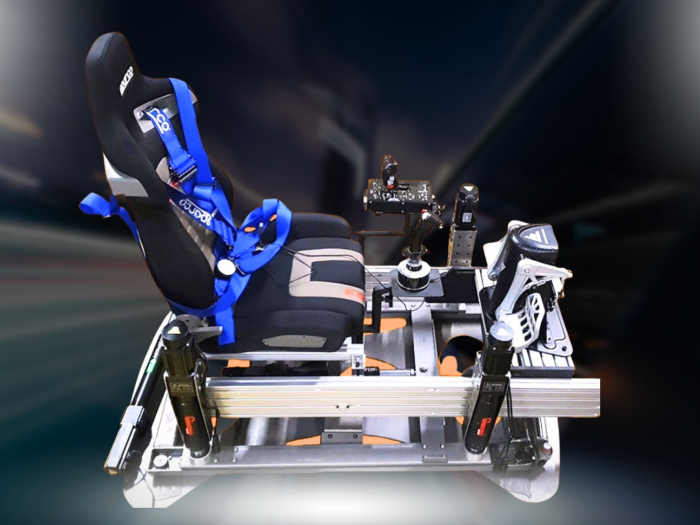

If you're still relying on your eyes alone to navigate a hair-pin turn on a rain-soaked Finnish stage, you aren't actually driving; you're just watching a screen. You likely recognise the frustration of a static setup where the car's weight transfer remains a mystery until you've already spun into the trees. This lack of "seat-of-the-pants" feedback doesn't just hurt your stage times; it creates a visual-physical lag that often leads to motion sickness. To truly master the gravel, you need the visceral feedback provided by a professional rally simulation motion rig.
The right motion platform transforms your simulator from a visual experience into a high-performance training tool that unlocks pro-level realism at home. By reading this guide, you'll learn how to translate digital telemetry into tangible sensations that allow you to feel every slide and weight shift. We will explore the engineering of twin-traction-loss systems, the benefits of ultra-low profile designs for home sim centres, and how to achieve total immersion without sacrificing your entire living space whilst maintaining a premium aesthetic that performs as well as it looks.
Key Takeaways
- Understand why physical feedback is essential for navigating off-road chaos and how it eliminates the visual-physical lag that often causes motion sickness.
- Discover how a full-motion cockpit provides superior immersion compared to seat-only systems by moving the entire rig through pitch, roll, and yaw.
- Learn why twin-traction-loss is the most critical mechanical feature for any high-performance rally simulation motion rig to accurately replicate sliding physics.
- Explore how ultra-low profile designs and compact footprints allow you to integrate a professional-grade setup into a standard home environment.
- Gain insights into the no-compromise engineering of hand-built platforms that offer rapid assembly whilst maintaining bespoke, enthusiast-grade quality.
The Physics of Rally: Why a Motion Rig is Essential for Off-Road Simulation
A professional rally simulation motion rig is far more than a vibrating seat; it's a sophisticated engineering platform that decodes digital telemetry from a game engine and translates it into physical acceleration, pitch, and roll. Whilst circuit racing is often defined by the pursuit of a smooth, predictable racing line, rally is a constant battle against the terrain. You're dealing with unpredictable surfaces like loose gravel, thick mud, or ice, where the car is rarely pointing in the direction of travel. Visual cues alone simply cannot convey the violent vertical heaves of a jump or the subtle lateral snaps that occur when a tyre loses purchase on a forest track.
To navigate these environments, drivers rely on vestibular feedback. This is the sensory information processed by the inner ear that relates to balance and spatial orientation. Understanding the fundamentals of motion simulator technology is vital for any enthusiast because it explains why a static rig feels "floaty" or disconnected. In a rally car, the high-frequency vertical and lateral shifts are constant. Without a platform to replicate these movements, you're forced to guess what the chassis is doing, which often leads to over-correction and slower stage times.
Beyond Visuals: The Sensory Demands of Rally
Your brain is hard-wired to expect physical movement when your eyes perceive acceleration. When you drive a static rig, this disconnect creates a sensory conflict that is the primary cause of sim-sickness. By introducing a motion rig, you align your visual and physical inputs, allowing your body to process the experience naturally. This is especially critical in rally, where weight transfer is everything. If you wait until you see the car rotate on your screen, you've already missed the window to "catch" the slide. Feeling the rear end step out through your hips allows you to react instinctively, often before your conscious mind has even processed the visual change.
Performance Gains: How Motion Makes You Faster
Motion provides a tangible competitive advantage by sharpening your inputs and reducing reaction times. On loose surfaces, braking is a delicate art of modulation. A motion platform lets you feel the wheels lock up or the nose dive through the chassis, allowing for much finer control than a pedal alone can provide.
- Faster Grip Detection: Respond to loss of traction through the chassis rather than waiting for visual confirmation.
- Precise Weight Management: Sense exactly when the car's weight has settled onto the front tyres for better turn-in.
- Improved Jump Control: Feel the suspension compress on landing to prepare for the next corner immediately.
Feeling exactly how the car's weight settles on the suspension allows for earlier throttle application, which is the most effective way to reduce stage times in any rally simulation motion rig setup.
Deciphering Degrees of Freedom: 3DOF vs 6 DOF for Rallying
Choosing the right configuration for your rally simulation motion rig comes down to how many Degrees of Freedom (DOF) you need to replicate the visceral chaos of a forest stage. Whilst static rigs rely on your eyes to guess the car's orientation, motion platforms use mechanical actuators to physically tilt, lift, and rotate the cockpit. Research into advanced driving environment simulation highlights how high-fidelity physical feedback is essential for understanding vehicle dynamics at the limit. For rally, where the car is rarely stable, this feedback is the difference between a clean stage and a terminal crash.
It is important to understand the concept of "Full Motion" versus simple seat-movers. A professional-grade rig moves the entire cockpit, including your steering wheel, pedals, and seat, as a single unit. This ensures your physical relationship with the controls remains constant even during violent movements. If only the seat moves, your feet might slip from the pedals or your arms might stretch unnaturally during a heavy pitch, breaking the immersion and reducing your precision.
Understanding the 3DOF Entry Point
A 3DOF setup typically covers Pitch, Roll, and Heave. Pitch allows you to feel the nose dive under heavy braking or lift during acceleration. Roll simulates the lateral lean as you throw the car into a tight hairpin. Crucially for rally enthusiasts, Heave provides the vertical impact of cresting a hill or the sharp jolt of landing a small jump. This configuration represents a massive leap over static rigs, providing the essential sensations needed to stop driving by sight alone. You begin to feel the suspension compressing and the chassis reacting to the ruts in the road, which is vital for building a natural rhythm on loose surfaces.
The 6 DOF Advantage: Total Immersion
For those seeking the pinnacle of 6 DOF motion simulator realism, the platform expands to include Surge, Sway, and Yaw. Surge and Sway add the critical longitudinal and lateral G-forces experienced during sudden weight shifts, whilst Yaw provides the rotational feedback necessary to judge your drift angle on gravel or ice. These six axes work in concert to replicate every nuance of a rally car's behaviour.
Imagine hitting a high-speed jump at an angle whilst the rear of the car is already stepping out. A 3DOF rig might give you the impact, but only a 6 DOF platform can articulate the simultaneous vertical heave, the lateral sway of the slide, and the rotational yaw as you fight for control in mid-air. This level of technical fidelity separates a standard peripheral from a professional-grade training tool. If you're ready to move beyond basic vibration and experience true mechanical feedback, explore the bespoke platforms at Race@Home.
Traction Loss and Surface Detail: The Core of Rally Realism
In the world of off-road racing, the car is almost never travelling in the same direction it is pointing. Success on a gravel stage depends on your ability to manage a controlled slide, which makes a dedicated traction loss system the most critical component of any professional rally simulation motion rig. Whilst basic motion rigs provide pitch and roll, they often leave the driver guessing about the rear end's grip levels. Feeling the precise moment the tyres break traction allows you to maintain the perfect drift angle, turning a potential spin into a high-speed exit.
The mechanical execution of this movement is vital. Many entry-level systems use a simple pivot, which can feel like the rig is rotating around a fixed point rather than sliding across a surface. A true sliding traction loss system replicates the lateral "step out" of a chassis. This level of fidelity is why major manufacturers invest so heavily in virtual vehicle validation; they understand that realistic physical feedback is the only way to accurately assess a car's performance at the limit.
The Mechanics of the Slide
Standard motion platforms often focus solely on rear-traction loss. Whilst this helps identify oversteer, it misses the complex "hunting" sensation of a four-wheel-drive rally car clawing for purchase on loose soil. In the physical world, this traction is dictated by the quality of off-road wheel and tire packages; in the simulator, it is the job of the motion rig to communicate that threshold to the driver. Integrating twin traction loss provides feedback for both the front and rear axles, allowing you to feel the car's entire orientation change as the weight shifts. The LowSlider design prioritises an ultra-low centre of gravity for these movements. By keeping the mass close to the floor, the system produces sharp, immediate lateral shifts without the distracting "pendulum" effect found in taller, bulkier rigs.
The raw data from the simulator must be filtered through sophisticated software to become usable feedback. The "frequency" of your actuators determines how well you perceive the difference between the crunch of deep gravel and the slickness of packed snow. High-fidelity components like PT Actuators excel here, offering the rapid response times needed to translate high-frequency surface details directly to the driver.
- Surface Texture: Feel the individual ruts and stones through the chassis.
- Grip Threshold: Detect the exact micro-second that tyres lose purchase on ice.
- Weight Transfer: Sense the lateral sway as the car's mass settles during a Scandinavian flick.
Lower-grade actuators often struggle with these high-speed demands, resulting in a "muddy" or delayed sensation that confuses the driver. Professional-grade actuators ensure every bump and slide is crisp, preventing the sensory lag that breaks immersion and slows your stage times.

Home Integration: Managing Space and Setup for Your Rally Rig
Many enthusiasts hesitate to invest in a professional rally simulation motion rig because they assume it requires a dedicated warehouse or a reinforced concrete floor. This is a common misconception. Whilst older systems were often bulky and architecturally demanding, modern engineering has prioritised the home user. The LowSlider platform features an ultra-low profile and a compact footprint that allows it to integrate seamlessly into a standard spare room or home office. By lowering the centre of gravity, we don't just improve the physics; we reduce the physical presence of the rig in your living space.
Achieving this level of home integration requires a shift in how we think about assembly and logistics. Most high-end simulators arrive as a confusing collection of hundreds of individual parts. We've simplified this process through a modular design that respects your time and your home environment. Our sim racing setup guide provides a clear roadmap for creating a professional sim centre without the typical mechanical headaches.
The One-Hour Assembly Promise
Our rigs ship in four primary, pre-fabricated pieces. This modular approach means you can go from unboxing to the starting line in under one hour. We've pre-configured the electronics and cabling at our UK facility, so you don't need to be a systems engineer to get started. If you've ever spent days "tinkering" with complex mechanical bolt-ups from other brands, you'll appreciate our focus on craftsmanship. It's about driving, not building. The goal is to provide a plug-and-play experience that maintains the integrity of a bespoke, hand-built tool.
Optimising Your Sim Centre Environment
Even with a compact design, a few environmental considerations ensure peak performance. A low-profile rig is inherently easier to integrate into a multi-purpose room because it doesn't dominate the eye-line, but you should still plan your layout carefully.
- Flooring: A flat, solid surface is ideal. Whilst the LowSlider is remarkably stable, using high-density rubber matting helps with vibration dampening and protects your floor from the rig's high-frequency movements.
- Power Requirements: Ensure you have sufficient dedicated sockets for both the motion actuators and your high-performance PC to avoid overloading single extensions.
- Cable Management: Our pre-routed paths keep the setup looking clean. Proper cable slack is essential to ensure that the rig's motion doesn't pull on connections during violent jumps or slides.
By focusing on a space-saving footprint and rapid assembly, we've removed the barriers between you and professional-grade realism. If you're ready to upgrade your home setup, view our range of compact motion platforms at Race@Home.
The LowSlider Advantage: Engineering the Ultimate Rally Experience
Race@Home stands as the premier choice for bespoke motion simulators, focusing on the specific needs of the enthusiast who demands more than a mass-market solution. Whilst many competitors focus on high-volume manufacturing, our philosophy is rooted in a "hand-built to order" approach. This isn't just about exclusivity; it's about the technical integrity of the platform. When you're navigating a rally simulation motion rig through a high-speed forest stage, every millimetre of flex in the frame is a loss of data. Our UK-based engineering team ensures that every rig we ship meets the rigorous standards required for professional-grade driver training.
This dedication to craftsmanship allows us to bridge the gap between digital telemetry and physical sensation. We don't just sell hardware; we provide a gateway to a professional-level experience that transforms your home sim centre. The LowSlider isn't a peripheral; it's a precision-engineered tool designed to translate the chaotic physics of off-road racing into actionable physical feedback.
Bespoke Engineering vs. Mass Production
The primary benefit of a hand-built rig is the absolute rigidity of the chassis. Mass-produced alternatives often rely on thinner materials to save on shipping costs and manufacturing time, which leads to mechanical noise and vibration dampening. We use premium materials like high-grade aluminium and industrial steel to create a foundation that can withstand the violent, high-frequency shifts of a 6 DOF system. This focus on longevity means your rig will perform as well in year five as it did on day one. Because our facility is based in the UK, we maintain total oversight of the quality control process, ensuring that every weld and pre-configured electronic component is perfect before it leaves our workshop.
The Complete Sensory Package
True immersion requires a unified sensory loop. The LowSlider platform is designed to work in perfect synergy with high-end VR headsets, such as the Pimax range, which provide the wide field of view and depth perception essential for rally. When you combine this visual clarity with the visceral feedback of our twin-traction-loss system and professional-grade pedals, the result is total immersion. You'll find yourself reacting to the car's behaviour instinctively, using the same "seat-of-the-pants" feel that professional drivers rely on in the real world.
By integrating the best in motion technology with premium accessories, we've created a setup that rewards precision and punishes mistakes just like a real WRC car. It's time to stop playing and start training. The LowSlider is not a toy; it's a professional driver training tool that will fundamentally redefine your performance on the stage.
Ready to experience the ultimate in off-road realism? Explore our range of hand-built motion platforms and elevate your rally career today.
Master Every Stage with Professional Precision
Conquering the unpredictable terrain of off-road simulation requires more than just visual skill; it demands a genuine physical connection to the car's chassis. By integrating a professional rally simulation motion rig, you bridge the gap between digital data and visceral sensation. You now understand how 6 DOF systems and twin-traction-loss technology provide the essential feedback needed to catch a slide and shave vital seconds off your stage times.
At Race@Home, we specialise in engineering this level of realism. Our platforms are hand-built to order in the UK, ensuring uncompromised quality and long-term rigidity. The proprietary LowSlider design offers an ultra-low profile that fits seamlessly into standard home environments, whilst our pre-configured electronics allow for a rapid 1-hour assembly. You don't need a warehouse to experience world-class immersion; you just need the right engineering.
Don't settle for a static experience when you can have professional-grade training at your fingertips. It's time to transform your home setup and dominate the leaderboard. Explore the LowSlider 6 DOF Motion Platform and start your journey toward total rally realism today.
Frequently Asked Questions
Is a motion rig worth it for rally simulation compared to circuit racing?
Yes, a motion rig is arguably more valuable for rally than circuit racing because rally physics are defined by constant weight shifts and loss of traction. Whilst circuit racing is about finding a smooth line, rally requires you to feel the car's balance on loose surfaces. A professional rally simulation motion rig provides the "seat-of-the-pants" feel necessary to anticipate slides and navigate jumps, turning a guessing game into a precise, high-performance training exercise.
How much space do I realistically need for a 6 DOF rally rig?
You don't need a dedicated warehouse; a standard room of approximately 2.5m by 2m is usually sufficient for a LowSlider 6 DOF rig. Our proprietary design focuses on an ultra-low profile and a compact footprint that doesn't dominate your living space. Because the actuators are integrated efficiently, the rig remains stable without requiring a massive, sprawling frame. This makes it ideal for home sim centres where space is at a premium.
Does a motion platform actually help reduce motion sickness in VR?
Yes, motion platforms significantly reduce sim-sickness by aligning your visual and physical senses. In a static rig, your eyes see movement whilst your inner ear senses none; this creates a sensory conflict that leads to nausea. By providing physical feedback that matches the on-screen action, a 6 DOF platform ensures your body and brain are in sync. This is particularly beneficial whilst using high-end VR headsets like a Pimax for total immersion.
Can I assemble a Race@Home LowSlider rig by myself?
Absolutely, the LowSlider is specifically designed for straightforward, single-person assembly. We ship every rally simulation motion rig in four primary, pre-fabricated pieces with the electronics already pre-configured at our UK facility. This modular approach means you can go from unboxing to your first stage in under an hour. You won't need specialist engineering tools or days of mechanical tinkering to get your platform operational and ready for the gravel.
What sim racing software is best for rally motion rigs?
Titles like DiRT Rally 2.0, Richard Burns Rally, and the official WRC series offer the most sophisticated telemetry for motion platforms. These games provide detailed data on suspension travel and wheel slip that our software translates into physical movement. For the best experience, we recommend using software that supports high-frequency output, allowing our PT Actuators to replicate the specific textures of gravel, mud, and snow with professional-grade accuracy.
Are motion rigs loud enough to disturb neighbours in a typical home?
Modern high-end actuators are remarkably quiet and designed for home environments. Whilst the rig produces some mechanical sound during violent movements, it is typically no louder than a high-end direct drive steering wheel. Using high-density rubber matting further dampens vibrations through the floor. Most users find that the noise is easily contained within a standard room, ensuring you won't disturb neighbours or other family members whilst you are driving.
What is the difference between a seat mover and a full-motion cockpit?
A seat mover only tilts the chair, whilst a full-motion cockpit moves the entire rig, including the steering wheel and pedals. In a seat mover, your relationship with the controls changes as you move, which can be disorienting. Our LowSlider platforms provide a full-motion experience, ensuring your hands and feet stay perfectly aligned with the controls even during the most aggressive pitch, roll, and yaw movements experienced on a rally stage.
How does traction loss improve my rally stage times?
Traction loss allows you to feel the rear end of the car step out before your eyes can process the visual change on screen. This immediate physical feedback lets you "catch" slides earlier and more accurately, preventing spins and allowing for much earlier throttle application. By mastering the drift angle through twin-traction-loss feedback, you maintain higher exit speeds and significantly reduce your overall stage times on loose, unpredictable surfaces.


