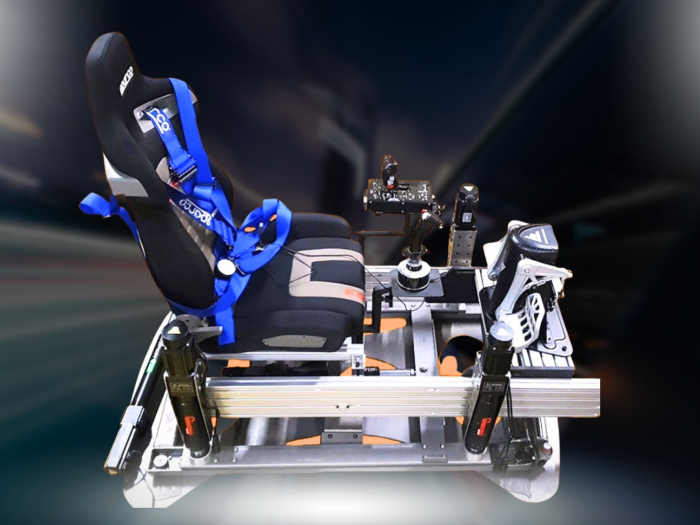

The difference between a high-end simulation and a true sensory experience isn't found in the pixels on your screen, but in the precision of the forces acting on your body. You've likely felt that frustrating disconnect where the car on screen reacts instantly whilst your physical rig lags behind, or perhaps the grinding mechanical noise of inferior systems has shattered your immersion during a midnight session. It's a common hurdle for those chasing the ultimate lap time. When you demand professional-grade fidelity, the choice of motion simulator actuator technology becomes the most critical decision in your build.
We understand that you want more than just movement; you want the authentic weight of G-forces and the subtle vibration of the kerbs without the complexity of industrial-grade headaches. This guide will show you why PT Actuators have become the gold standard for enthusiasts who refuse to compromise on realism. You'll discover how these actuators transform digital telemetry into a zero-latency physical reality, and how a compact, UK-engineered platform like the LowSlider can deliver world-class performance in a home environment. From technical specifications to seamless software integration, we're diving into everything you need to know to master the art of professional motion.
Key Takeaways
- Understand how high-speed linear actuators and precision servo motors form the backbone of professional-grade motion simulator actuator technology.
- Learn why sub-10ms response times are essential for eliminating motion sickness and ensuring digital telemetry translates into visceral, real-world G-forces.
- Compare the performance of enthusiast-grade PT systems against industrial alternatives to see why 100mm+ stroke lengths offer superior immersion over shorter travel systems.
- Discover how the hand-built LowSlider platform optimises the centre of gravity and minimises mechanical flex to extract maximum performance from your actuators.
- Gain practical insights into cable management and AASD controller configuration for a safe, efficient, and professional-level home rig assembly.
What is PT Actuator Technology in Sim Racing?
PT Actuator technology represents a significant leap from the early days of DIY motion. At its core, it consists of high-speed linear actuators powered by precision servo motors. Whilst older systems often repurposed industrial components like SCN actuators designed for factory automation, PT Actuators are engineered specifically for the rigours of sim racing. This shift matters because racing requires a unique combination of violent velocity and microscopic precision. Industrial parts often lack the speed or the payload capacity to keep up with a modern, heavy sim rig.
When you're building a high-end motion simulator, PT systems are the preferred choice for 6 DOF (Degrees of Freedom) setups. They provide the necessary speed and travel to simulate heave, pitch, roll, yaw, surge, and sway with absolute authority. This creates that elusive 'seat-of-the-pants' feel. You don't just see the car losing grip; you feel the weight transfer through your spine before your eyes even register the slide. It is the difference between playing a game and operating a vehicle.
The Components of a PT Actuator System
A professional setup isn't just a motor in a tube. It's a curated ecosystem of hardware. The linear actuator body determines your 'throw' or stroke length, which typically starts at 100mm. This distance allows for long, sustained G-force simulation that shorter systems simply can't match. Controlling this movement is the AASD Servo Drive. It acts as the system's brain, translating complex telemetry data into smooth, instantaneous motor behaviour. Finally, shielded cabling is a non-negotiable requirement. High-performance motors generate significant electromagnetic interference. Without proper shielding, VR users often experience 'flyaway' tracking or signal drops that ruin the experience.
Why Realism Requires High-Fidelity Motion
True immersion requires a clear distinction between haptic vibration and physical displacement. Whilst basic haptic pucks can rattle your seat to simulate an engine, they can't throw you into a corner. Modern motion simulator actuator technology handles both. It provides the massive displacement needed for a heavy braking zone whilst simultaneously delivering high-frequency feedback for road textures and kerb strikes. Weight capacity is another defining factor. Professional-grade rigs are heavy, often loaded with direct drive wheels and hydraulic pedals. PT systems are built to handle these payloads without sacrificing speed. If your actuators struggle under the weight of your rig, the feedback becomes muddy and sluggish. With PT technology, the response remains crisp. Every gear change and ripple strip feels as sharp as it does in a real GT3 car.
How PT Actuators Translate Telemetry into Real-World G-Force
The immersion of a professional rig relies on the invisible journey of a data packet. When your virtual tyres hit a kerb in iRacing or Assetto Corsa, the game engine exports telemetry data at high frequencies. This raw data describes the car's position, velocity, and acceleration across three axes. Advanced motion simulator actuator technology then intercepts this stream. It calculates the necessary actuator extension transformation to move the platform into a position that tricks your vestibular system into feeling real motion. It's a complex mathematical dance performed hundreds of times per second.
Latency is the ultimate enemy of realism. If the physical movement occurs even slightly after the visual cue, your brain detects a mismatch. This sensory conflict is the primary cause of motion sickness in simulation. PT Actuators achieve sub-10ms response times. This ensures that the thump of a gear change or the snap of oversteer reaches your body at the exact moment it reaches your eyes. The result is a seamless connection between the driver and the machine.
This demand for zero-latency data transfer is a challenge shared by many high-stakes professional networks; for instance, you can discover trialport to see how real-time connectivity is used to support clinical research communities.
The Role of Sim Racing Software
Software tools like SimManager act as the interpreter between the digital and physical worlds. They filter out noise, which are the jittery, unrealistic data spikes, to ensure the platform's behaviour remains smooth and predictable. You can customise profiles to match specific vehicle dynamics. An F1 car requires stiff, short-travel movements to mimic its high-downforce suspension, whilst a GT3 car needs more compliant, rolling motion to reflect its softer setup and higher centre of gravity.
G-Force Simulation and Sustained Loads
Because we cannot create infinite movement in a living room, actuators use washout filters and clever positioning. To simulate heavy braking, the actuators pitch the entire rig forward. This sustained tilt uses gravity to pull you into your harness, mimicking the feeling of deceleration. Cornering is achieved by combining roll with lateral surge, leaning the driver into the turn. In this context, dynamic range is the ratio between the smallest detectable vibration and the maximum possible acceleration the actuator can produce.
For those looking to experience this precision first-hand, exploring a bespoke motion platform is the next logical step in your sim racing journey. Translating traction loss is perhaps the most impressive feat. By using high-speed actuators to swing the rear of the rig, the system provides an instant physical warning that the rear tyres are sliding. This allows you to catch the car before you spin, just as a professional driver would on a real circuit.
PT Actuator vs. D-BOX and SCN: A Comparative Analysis
Choosing the right hardware requires a clear understanding of where different systems sit on the engineering spectrum. For years, the SCN series was the default choice for DIY builders. These industrial actuators were originally designed for factory automation, meaning they were robust but often lacked the nuanced feedback required for high-fidelity racing. In contrast, PT Actuators represent a dedicated evolution in motion simulator actuator technology. They bridge the gap between industrial durability and enthusiast-grade refinement, offering a level of tactile detail that repurposed factory parts simply cannot replicate.
Travel distance is perhaps the most visible differentiator when comparing PT systems to the industry-standard D-BOX. Whilst D-BOX is renowned for its haptic fidelity, its actuators often feature shorter travel, typically around 1.5 inches in many consumer models. This is excellent for high-frequency vibration but can feel restrictive during long, sweeping corners or heavy braking zones. PT Actuators provide a 100mm or 150mm stroke as standard. This extra 'throw' allows the rig to sustain pitch and roll angles for longer, providing a far more convincing simulation of sustained G-loads without hitting the mechanical limits of the hardware.
Actuator Speed and Acceleration (Velocity)
In the heat of a race, velocity is the metric that saves you from a DNF. If your actuators can't move fast enough to simulate traction loss, you won't have the physical cue needed to catch a slide. PT systems excel here, providing rapid direction changes without the mechanical lag found in older solenoid-based designs. Researching the Digital Control of Flight Simulators reveals how crucial low-latency processing is for maintaining this velocity. When considering the financial side of your build, you can explore how much does a motion simulator cost to see how PT technology offers a superior cost-to-performance ratio compared to closed-ecosystem alternatives.
Maintenance and Long-Term Reliability
Domestic suitability is often overlooked until the rig is in your spare room. Modern servo motors used in PT systems operate with a near-silent hum, a stark contrast to the mechanical chatter of older SCN units. Reliability is equally impressive. These actuators feature internal lubrication and sophisticated dust protection, ensuring a long lifespan even in demanding commercial environments. Whilst DIY setups might require constant tweaking, a professionally integrated PT system is built for 'set and forget' operation. Regular maintenance is minimal, usually limited to basic inspections of the mounting points and ensuring the AASD controllers remain well-ventilated to protect the sensitive electronics.

Integrating PT Technology into the LowSlider Platform
The LowSlider platform is engineered to be the ultimate vessel for high-fidelity motion. Whilst many professional rigs are cumbersome and require significant floor space, the LowSlider maintains a compact footprint without sacrificing performance. This design philosophy focuses on keeping the centre of gravity as low as possible. By reducing the distance between the driver and the pivot points, we minimise the leverage forces acting on the hardware. This results in a much sharper response from the motion simulator actuator technology, as the motors aren't fighting unnecessary rotational inertia.
Mechanical flex is the enemy of immersion. If your mounting brackets bend under load, the subtle vibrations of the road surface are lost before they reach your seat. We utilise bespoke mounting solutions specifically designed for PT Actuators. These heavy-duty interfaces ensure that every millimetre of actuator travel is translated directly into the chassis. This rigidity is what allows our rigs to deliver such crisp, tactile feedback. For a comprehensive look at how these configurations achieve professional realism, explore our guide to the 6 DOF motion simulator.
6 DOF vs 3DoF: Choosing the Right Actuator Count
Your choice of actuator count defines the complexity of your physical feedback. A 3DoF setup typically utilises four vertical actuators to manage heave, pitch, and roll. It provides an incredible foundation for any home rig. However, the LowSlider 6 DOF Twin-Traction-Loss Motion Platform takes this further by adding horizontal movement. We organise the actuator placement to maximise mechanical advantage, ensuring the system can handle heavy payloads whilst maintaining its signature velocity. Adding traction loss allows you to feel the rear of the car stepping out, providing that vital window of time to correct a slide.
VR Integration with Pimax and PT Motion
Pairing motion with VR creates an unparalleled level of immersion, but it introduces the 'VR Float' problem. This occurs when the movement of the rig is interpreted by the headset as head movement, causing the virtual cockpit to shift around you. PT Actuators are particularly well-suited for VR because their movement is exceptionally smooth. When combined with motion compensation software and high-resolution Pimax VR Headsets, the digital world remains perfectly stable. You are left with a truly immersive cockpit experience amongst high-speed motion feedback that feels entirely natural.
If you are ready to transform your digital racing into a visceral reality, you can view our range of hand-built motion platforms and discover the difference that precision engineering makes.
Setting Up Your PT Actuator Motion Rig: Best Practices
Transitioning from a static cockpit to a dynamic motion rig is a transformative moment in any sim racer's journey. However, the performance of your motion simulator actuator technology is only as good as its installation. When your Race@Home LowSlider arrives, the first priority is positioning. You must ensure the rig is placed on a perfectly level floor. Any slight incline can cause uneven wear on the internal components over time. We provide dedicated 'cup' mounts for the actuator feet; these protect your flooring whilst providing a stable, non-slip base that prevents the rig from 'walking' during violent direction changes.
Managing the AASD controllers is the next critical step. These units are the powerhouse of the system and they require adequate ventilation to maintain peak performance during long endurance sessions. Cable management isn't just about aesthetics; it's a safety requirement. High-torque actuators move with significant force. You must ensure that all power and data cables are organised with enough slack to accommodate the full range of motion without tension. Once the hardware is secure, initial software calibration defines your 'zero' point. Setting accurate travel limits ensures the actuators never hit their mechanical stops, preserving the life of the hardware whilst maintaining maximum immersion.
Optimising Your Environment
A full-motion 6 DOF setup, particularly one featuring Twin Traction Loss, requires a generous clear zone. You should allow for at least 50cm of clearance around the entire perimeter of the rig to ensure no part of the platform strikes walls or furniture at full tilt. Power is another vital consideration. Whilst standard domestic sockets are usually sufficient, high-torque actuators can draw significant current during peak loads. If you are running a high-end PC alongside a 6 DOF platform, a dedicated circuit is often a wise investment to prevent tripped breakers. For those installing on upper floors, high-density rubber floor protection and sound dampening mats are essential to isolate mechanical vibrations from the rest of the house.
The One-Hour Assembly Promise
Most competitors offer generic manuals that lead to several hours, or even days, of frustrating troubleshooting. We do things differently. The LowSlider features a four-piece modular design that allows for rapid integration. Because every rig is hand-built in the UK and professionally pre-configured at our factory, the complex task of synchronising the actuators is already handled before the box reaches your door. This bespoke approach allows us to offer a one-hour assembly promise. You spend less time with a spanner and more time on the track. If you are ready to elevate your experience, build your professional sim racing rig with Race@Home today.
Master the Art of Professional Motion
Investing in the right motion simulator actuator technology is about more than just hardware; it's about the engineering expertise that brings it to life. Our platforms are hand-built in the UK and shipped worldwide in four modular sections to ensure a seamless experience. With our one-hour setup promise, you can transition from unboxing to the starting grid with a professional-grade 6 DOF experience in record time. Explore the LowSlider 6 DOF Motion Platform powered by PT Actuators and discover the ultimate evolution of your home simulator. It's time to feel every corner.
Frequently Asked Questions
Are PT Actuators better than D-BOX for sim racing?
PT Actuators offer a different performance profile, primarily focusing on longer travel distances of 100mm to 150mm compared to the shorter, haptic-focused stroke of many D-BOX models. This makes PT systems superior for simulating sustained G-forces and large chassis movements. Whilst D-BOX is renowned for its proprietary haptic engine, PT Actuators provide an open ecosystem that allows for higher payloads and more aggressive motion at a competitive price point.
How much power does a PT Actuator motion rig consume?
A standard 4-actuator system typically peaks between 1kW and 1.5kW during high-intensity sessions. Whilst this is well within the limits of a standard UK domestic socket, we recommend a dedicated circuit for 6 DOF rigs. This prevents potential breaker trips when the actuators and a high-performance gaming PC are drawing maximum current simultaneously during violent manoeuvres.
Do PT Actuators require regular maintenance or lubrication?
These systems are designed to be virtually maintenance-free due to their sealed internal lubrication and commercial-grade build quality. You won't need to grease the shafts regularly. However, it's a sensible habit to check the tightness of mounting bolts every few months and ensure the AASD controllers remain free of dust to prevent overheating and maintain optimal motor behaviour.
Can I add PT Actuators to my existing static sim rig?
Yes, you can integrate this motion simulator actuator technology into most aluminium profile rigs using bespoke mounting brackets. It's vital that your existing chassis is rigid, ideally 80/20 profile, to prevent mechanical flex from absorbing the motion. If your rig isn't sturdy enough, you'll lose the subtle tactile details that these high-precision servo motors are designed to deliver.
Is motion sickness a problem with PT Actuator systems?
Motion sickness is actually less common with high-fidelity systems because they operate with sub-10ms latency. Sickness usually occurs when your brain detects a delay between the visual movement on screen and the physical sensation in your seat. Because these actuators respond almost instantaneously to game telemetry, your vestibular system stays in sync with your eyes, creating a much more natural experience.
How loud are PT Actuators during a high-intensity racing session?
The modern servo motors used in these systems are remarkably quiet, producing only a faint electronic hum whilst in operation. They are significantly more refined than older, industrial-grade actuators that suffer from mechanical chatter. Most of the noise in a motion rig comes from the cockpit's mechanical components or the seat vibrating against the frame rather than the actuators themselves, making them perfectly suitable for home environments.
What software do I need to run PT Actuators with iRacing or Assetto Corsa?
Most enthusiasts utilise SimHub or Sim Racing Studio (SRS) to manage their motion simulator actuator technology. These applications are highly compatible with major titles like iRacing and Assetto Corsa, allowing you to fine-tune your motion profiles. You can adjust the intensity of heave, pitch, and roll to match the specific car you're driving, ensuring the feedback is always relevant and never overwhelming.
Do PT Actuators come with a warranty for commercial use?
PT Actuators are built with commercial-grade components designed for high-duty cycles, making them a favourite for simulation centres. Whilst standard consumer warranties apply for home use, commercial environments often require specific support agreements. It's always best to verify the warranty terms with your provider to ensure your investment is protected against the rigours of constant public operation.


