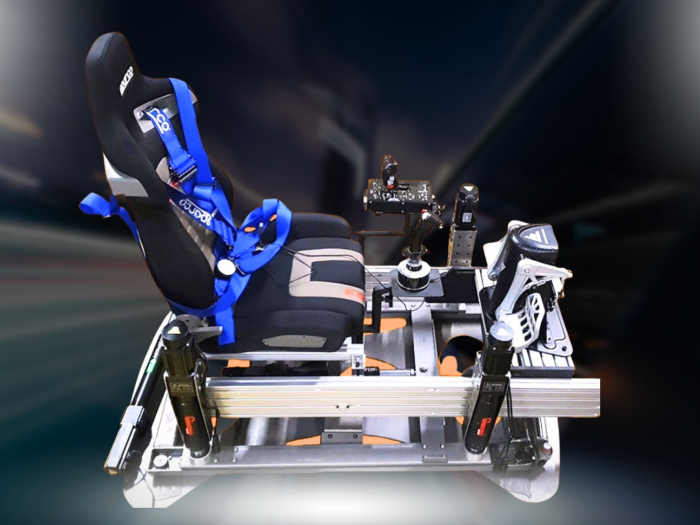

What if the only barrier between you and a professional-grade racing experience isn't your skill behind the wheel, but the physical limits of your spare room? For many sim racers, the dream of true immersion often dies the moment they realise a traditional compact motion simulator platform usually means sacrificing degrees of freedom for size. You shouldn't have to choose between a dedicated garage conversion and a static desk setup that leaves you feeling disconnected from the track. We agree that the best hardware should adapt to your life, not the other way around.
In this article, you'll discover how to achieve uncompromising, high-fidelity realism without colonising your entire living space. We'll explore the engineering behind the LowSlider 6 DOF Twin-Traction-Loss system, a bespoke UK-built solution designed for rapid assembly and maximum sensory feedback. From understanding the nuances of 6 DOF motion to seeing how professional-grade telemetry translates into tangible g-forces in a small area, we're previewing the future of home-based sim racing for 2026. Get ready to feel every kerb and weight shift without moving a single piece of furniture.
Key Takeaways
- Learn how modern engineering allows a compact motion simulator platform to deliver a full 6 DOF experience without requiring a dedicated garage or industrial-sized footprint.
- Discover why the combination of six degrees of freedom and dedicated traction loss is essential for translating digital telemetry into authentic racing sensations.
- Compare the structural integrity of hand-built steel frames against mass-produced aluminium profiles to ensure your rig handles high-torque feedback with zero flex.
- Master the logistics of a home setup by calculating your dynamic envelope and utilising ultra-low profile designs that assemble in under an hour.
- Explore the no-compromise benefits of UK-manufactured hardware like the LowSlider, which prioritises precision and worldwide reliability for the serious enthusiast.
What Defines a Compact Motion Simulator Platform in 2026?
Defining a compact motion simulator platform in 2026 requires looking beyond mere dimensions. Whilst early consumer rigs were often spindly frames with limited travel, modern engineering has bridged the gap between professional training tools and home-friendly footprints. The standard for a high-end setup now fits comfortably within a 1.5m by 1m area. This shift represents a move away from industrial, garage-only equipment towards sleek units that integrate seamlessly into a home office or spare bedroom. It’s about the dynamic envelope; the total space the rig occupies whilst in full tilt, roll, and surge.
A true motion simulator today must translate digital telemetry into visceral physical feedback without requiring you to move house. We've seen a transition from external control boxes and messy wiring looms to integrated, telemetry-driven systems. This evolution ensures that the intensity of a high-speed corner or the jolt of a gear shift is felt through the chassis, not lost in a flexible, mass-produced frame. High-performance racing is no longer about how much room you have, but how efficiently your hardware uses it.
Footprint vs. Fidelity: The Space-Saving Challenge
Traditional full-motion rigs often fail the spare-room test because they prioritise raw travel over space efficiency. If a rig requires a two-metre clearance in every direction just to avoid hitting the walls, it isn't practical for most enthusiasts. The challenge lies in balancing the physical swing area with the base dimensions. Achieving a low centre of gravity is vital here. By keeping the mass of the actuators and the driver close to the floor, we ensure stability even during violent 6 DOF transitions. This design philosophy prevents the top-heavy wobble that plagues taller, less sophisticated systems, allowing for sharper, more accurate movements in a tighter radius.
Key Components of a Small-Footprint System
The hallmark of a premium system is the integration of high-performance components into a rigid, modular frame. The LowSlider proprietary design is a prime example of this engineering feat. By utilising an ultra-low profile, it reduces the total height of the platform, making it easier to mount traditional racing seats and peripherals. Key features of a modern compact rig include:
- Integrated Actuator Positioning: Placing motors within the frame's footprint rather than protruding outwards helps maintain a slim profile.
- Modular Steel Frames: Hand-built UK construction offers superior rigidity compared to aluminium profiles, which can flex under high torque feedback.
- Simplified Logistics: Systems that ship in four manageable pieces allow for easy transport through standard doorways and assembly in under an hour.
By focusing on these specific technical elements, you don't have to sacrifice the real-world sensation of traction loss or heave just to save a few centimetres of floor space. Precision engineering ensures that every millimetre of movement is dedicated to immersion.
Understanding 6 DOF in a Small Footprint
To the uninitiated, 6 Degrees of Freedom (DOF) might sound like overkill for a home setup. However, it's the baseline for genuine immersion. A compact motion simulator platform must replicate Pitch, Roll, Yaw, Heave, Sway, and Surge to fool the inner ear into believing it's on a real circuit. Whilst some argue that 3 DOF is sufficient for small spaces, they miss the nuanced feedback required for competitive racing. This technology isn't just for entertainment; it's heavily utilised in multidisciplinary research and education to study human-machine interaction and high-performance vehicle dynamics. By shrinking the hardware without dampening the data, professional-grade realism is now accessible in a standard room.
The Engineering of Traction Loss
Traction loss is often described as the "holy grail" of sim racing sensations. It's that moment you feel the rear tyres lose their grip on a greasy corner. Traditional rigs achieve this with massive sweeping arms that require huge floor space. The LowSlider 6 DOF Twin-Traction-Loss platform changes the game. By integrating the pivot points within the chassis footprint, it provides that sideways slide sensation without hitting your office furniture. This is particularly vital for GT and Formula racers who need to catch a slide before it ends their race. If you want to experience this level of detail, you can explore the LowSlider 6 DOF Twin-Traction-Loss Motion Platform to see how it fits your space.
Telemetry and Precision: Translating Data to Sensation
Raw power is useless without control. High-speed PT Actuators act as the muscles of the rig, but telemetry is the brain. Software pulls physics data from the sim and translates it into millimetre-precise movements. In a compact setup, zero-latency feedback is essential. If the visual on your screen doesn't match the jolt in your seat instantly, the immersion breaks. 6 DOF is the ultimate standard for professional driver training in 2026. Every bump in the tarmac and every vibration from the engine is delivered through a high-frequency response system that prioritises accuracy over sheer volume. Achieving this level of immersive feedback in a compact motion simulator platform is no longer a compromise; it's a technical triumph.
Compact Motion vs. Full-Size Rigs: A Professional Comparison
Choosing between a sprawling industrial rig and a compact motion simulator platform often feels like a trade-off between power and practicality. Large-scale simulators traditionally relied on mass-produced aluminium profiles. Whilst these are versatile, they're often prone to micro-flexing under the intense stress of high-torque direct drive motors. In contrast, bespoke UK engineering prioritises hand-built steel construction. This ensures that every Newton-metre of feedback is directed into your body rather than being absorbed by a shaky frame. A smaller footprint doesn't mean smaller sensations; it means more efficient energy transfer.
Ease of use is another critical differentiator. Whilst a full-size rig might require a dedicated garage and days of calibration, a modular setup is designed for the modern home. It integrates into your living space without dominating it, addressing the often-overlooked "partner acceptance factor". A rig that assembles in under an hour and fits through a standard doorway makes professional-grade racing a reality for those who don't have a warehouse at their disposal. You're investing in a piece of precision machinery that complements your home office rather than cluttering it.
Bespoke Engineering vs. Mass Market
The benefits of a hand-built UK platform extend beyond mere size. Durability is baked into the design, with every weld inspected to ensure it survives years of high-frequency vibration. For racers with height restrictions, such as those in attic rooms or basement offices, the LowSlider's ultra-low profile is a significant advantage. It allows you to maintain an ergonomically correct seating position whilst keeping the overall centre of gravity close to the floor. This precision-engineered approach offers customisation options for high-end sim racing accessories that mass-market kits simply can't match.
Hardware Compatibility and Integration
A compact motion simulator platform must be strong enough to support the world's most demanding peripherals. Whether you're running a high-torque Direct Drive (DD) wheel or a set of professional hydraulic pedals, the rig must remain rock-solid. Integrating Pimax VR headsets further enhances this immersion, as the lack of frame-flex ensures your virtual horizon remains stable. We ensure compatibility with premium pedal sets and steering systems, meaning your existing investment in high-end hardware isn't wasted on a sub-par motion base. It's a no-compromise ecosystem designed for the serious enthusiast who demands reliability and performance in equal measure.
Planning Your Home Motion Rig Layout
Integrating a compact motion simulator platform into your home requires more than just clear floor space. You must account for the "dynamic envelope", which is the total volume the rig occupies whilst in motion. Whilst the base footprint is remarkably small, the seat and peripherals will tilt, roll, and surge beyond these boundaries. We recommend a clearance of at least 30cm on all sides to prevent collisions with walls or furniture. Accurate measurement ensures your immersion isn't interrupted by a jarring impact with a desk leg or bookshelf.
Cable management is the next priority for maintaining a professional office aesthetic. High-performance actuators and direct drive wheels require robust power and data connections that won't snag during violent 6 DOF transitions. Using integrated cable looms keeps the setup tidy and safe. For those in apartments, managing floor vibration is essential. High-density rubber mats or dedicated isolation feet can decouple the rig from the building's structure, ensuring your neighbours don't feel every kerb strike. Choosing between an ultra-wide monitor and VR also dictates your layout; monitors require a fixed stand, whilst VR allows for an even smaller total footprint.
The One-Hour Assembly Advantage
Many motion rigs arrive as a daunting pile of aluminium profiles and hundreds of loose bolts, often requiring over ten hours of technical assembly. We've eliminated this barrier. By shipping in four pre-assembled pieces, the setup process is simplified for non-technical users. You can go from unboxing to the starting grid in under an hour. This plug-and-play approach means you spend your time racing, not troubleshooting mechanical tolerances. If you're ready to transform your spare room, you can order your LowSlider motion platform today and experience the pinnacle of UK engineering.
Optimising for VR and Motion
Virtual Reality is the perfect partner for a compact motion simulator platform. It removes the need for bulky monitor stands and provides a 1:1 visual representation of the car's cockpit. High-fidelity 6 DOF feedback is also the best defence against motion sickness. When your inner ear feels the exact surge and sway that your eyes see in the headset, the sensory conflict that causes nausea is virtually eliminated. For those using high-end hardware, our Pimax VR motion simulator setup guide provides the technical steps needed to synchronise your telemetry perfectly. This synergy between hardware and software creates a truly seamless professional environment.
The LowSlider Advantage: Professional Realism, Hand-Built in the UK
The transition from a static setup to a compact motion simulator platform is the single most significant upgrade any sim racer can make. Whilst many mass-market options prioritise volume sales and "one-size-fits-all" designs, the LowSlider range is built on a foundation of bespoke UK engineering. We've adopted a "No Compromise" approach to manufacturing, ensuring that every weld and actuator mount meets professional standards. This dedication to quality brings the same level of precision found in industrial training tools directly into your home office. By choosing a rig hand-built in the UK, you're investing in hardware designed for durability, accuracy, and long-term performance.
Our commitment to excellence extends to our global community. We ship our platforms worldwide in four pre-assembled pieces, bringing specialised British expertise to enthusiasts regardless of their location. This ensures that the pinnacle of motion technology isn't restricted by geography. Whether you're a seasoned veteran or a novice looking to skip the entry-level hurdles, the LowSlider provides a gateway to professional-grade immersion that fits your life and your space.
The LowSlider 6 DOF Twin-Traction-Loss Platform
As our flagship model, the LowSlider 6 DOF Twin-Traction-Loss platform is the ultimate expression of what a compact motion simulator platform can achieve. Its ultra-low profile is a genuine game-changer for home ergonomics. By keeping the driver's centre of gravity close to the floor, the rig maintains stability during the most violent 6 DOF transitions. This design also allows for better alignment with standard desk heights and monitor stands, making it the ideal choice for rooms with low ceilings or limited footprints. For those wanting to understand the physics of these movements, our LowSlider 6 DOF guide provides a comprehensive breakdown of the technology.
Investing in Your Competitive Edge
Motion isn't just an aesthetic addition; it's a tool for consistency. High-fidelity sensory cues allow you to feel the car's behaviour through your body, enabling you to catch slides or adjust braking pressure instinctively. This proprioceptive feedback is what separates a fast lap from a consistent race-winning pace. Because our systems are hand-built from high-grade steel rather than thin aluminium, they offer an upgradeable path that won't flex or degrade over time. You're not just buying a rig; you're securing a competitive advantage that will last for years to come. Ready to elevate your experience? Explore the LowSlider range at Race@Home and discover the future of your home cockpit.
Transform Your Home Racing Experience Today
The era of choosing between professional-grade feedback and your spare room’s floor space is officially over. By prioritising ultra-low profile engineering and rigid steel construction, a compact motion simulator platform now delivers the same visceral 6 DOF sensations once reserved for industrial training centres. You've seen how precise telemetry translates into authentic traction loss and how a thoughtful layout can integrate high-performance hardware into any domestic environment without compromise.
Every rig is hand-built in the UK to ensure the highest standards of durability and mechanical precision. With worldwide shipping in four easy pieces and a 60-minute assembly time, the path from unboxing to your first high-speed corner has never been shorter. This is about more than just hardware; it’s about securing the competitive edge that only true physical immersion can provide. We're here to help you bridge the gap between the digital and the real world.
Build your bespoke compact motion rig at Race@Home. Your ultimate cockpit is waiting; it’s time to feel the track.
Frequently Asked Questions
How much space do I actually need for a compact motion simulator?
You need a clear floor area of approximately 1.5m by 1m for the base of a compact motion simulator platform, but you must also account for the dynamic envelope. This is the space the rig moves into during full tilt and surge transitions. We recommend leaving at least 30cm of clearance on all sides. This ensures your seat or peripherals don't strike walls or furniture whilst you're immersed in a high-intensity race.
Is a compact 6 DOF platform as realistic as a full-sized industrial rig?
Yes, a compact rig achieves professional-grade realism by prioritising structural rigidity and high-speed actuator response over sheer physical size. Our LowSlider models use telemetry-driven PT Actuators to translate digital data into precise physical sensations. Because the frame is hand-built from high-grade steel rather than mass-produced aluminium, it eliminates the flex that often dampens immersion in larger, less sophisticated systems. You get the same fidelity in a footprint that fits your home.
Can I assemble the LowSlider motion platform by myself?
You can easily assemble the LowSlider platform on your own without specialised technical knowledge. The system ships worldwide in four pre-assembled pieces, designed for a straightforward "plug and play" experience. Most users find that the entire setup takes under an hour to complete. This modular design removes the frustration of sorting through hundreds of loose bolts, allowing you to focus on the thrill of the drive almost immediately after unboxing.
Does a compact motion platform work with all sim racing games?
Our motion platforms are compatible with all major sim racing titles that output telemetry data. This includes industry standards like iRacing, Assetto Corsa Competizione, and Dirt Rally 2.0. The software bridges the gap between the game's physics engine and the actuators, ensuring every kerb and weight shift is felt instantly. Whether you’re racing GT3 cars or Formula 1 machines, the system adapts its behaviour to match the specific telemetry of your chosen simulation.
How do I prevent floor vibrations in an upstairs room or apartment?
To prevent vibrations from disturbing neighbours or other rooms, we recommend using high-density rubber mats or dedicated isolation feet. These components decouple the compact motion simulator platform from the building's structure, absorbing the high-frequency energy generated by the actuators. Because the LowSlider features an ultra-low profile design, the centre of gravity remains close to the floor. This inherent stability reduces the lateral swaying that typically causes structural noise in taller, more traditional motion rigs.
Is a 3DOF or 6 DOF motion platform better for a small home office?
A 6 DOF platform is the superior choice for those seeking total immersion, even in a small office. Whilst a 3DOF system provides basic movement, only a 6 DOF rig replicates the full range of physical forces, including surge and sway. Our LowSlider 6 DOF Twin-Traction-Loss model is engineered specifically to provide this professional-level experience within a compact footprint. It ensures you don't have to sacrifice critical sensory cues just because your space is limited.
What are the power requirements for a home motion simulator in the UK?
Our motion systems are designed to run efficiently on standard UK 230V household power sockets. You don't need specialised industrial wiring or three-phase power to operate a LowSlider rig at home. We recommend using a high-quality surge protector to safeguard the electronics and actuators during use. The power draw is managed intelligently by the control system, ensuring that the rig delivers high-torque feedback without overloading a typical domestic circuit or office setup.
Do Race@Home platforms ship fully assembled?
Race@Home platforms do not ship as a single, bulky unit, as this would make delivery into a standard home almost impossible. Instead, they ship in four pre-assembled sections that are easy to handle and transport through doorways. This modular approach ensures that your rig arrives safely and can be moved into any room. Once the four components are in place, the final connection process is streamlined to take less than sixty minutes.


