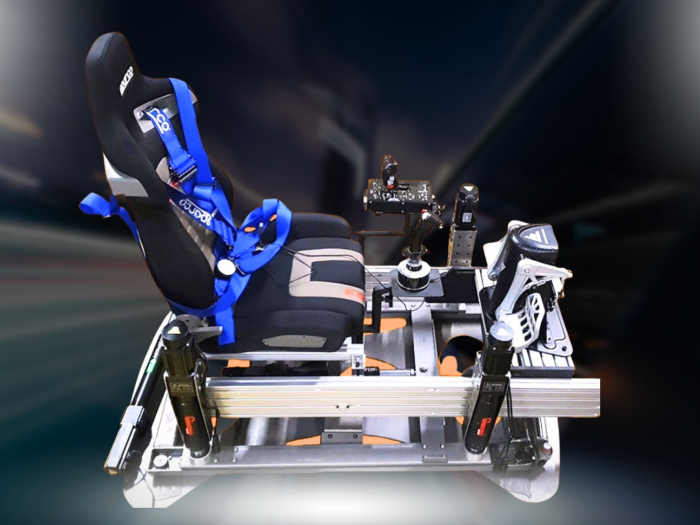
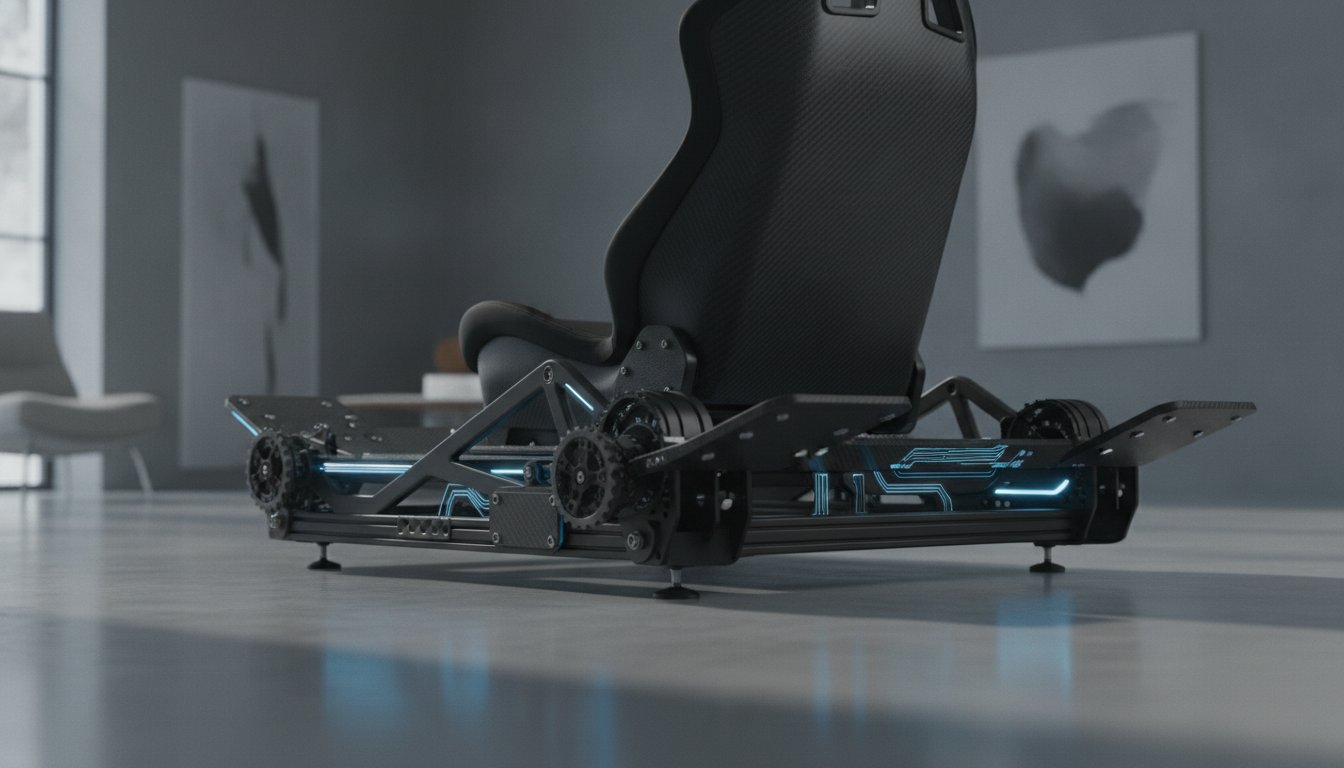
What if the reason you're losing time at the apex isn't a lack of talent, but a fundamental lack of physical data? Most sim racers rely solely on their eyes to detect a breakaway, yet by the time the visual cue registers, the car is already rotating beyond recovery. Integrating a twin traction loss motion platform bridges this sensory gap, translating digital telemetry into the precise, visceral feedback your brain needs to react instinctively. It is the difference between playing a game and actually feeling the weight of the car shift as the tyres fight for grip.
We understand the frustration of a rig that feels more like a roller coaster than a race car, or the space constraints that make bulky equipment impossible. This article reveals how twin traction loss technology transforms your setup into a high-fidelity tool for precision driving without sacrificing your entire office. We will explore how the LowSlider system provides realistic oversteer and understeer feedback whilst maintaining a compact, low-profile footprint. You will learn how British engineering delivers the "seat of the pants" realism required to master every corner with total confidence and plug-and-play reliability.
Key Takeaways
- Understand the evolution from simple yaw effects to dual-actuator systems that simulate independent front and rear lateral movement for total immersion.
- Discover how a twin traction loss motion platform provides the essential sensory data needed to detect front-tyre understeer and rear-end breakaway instinctively.
- Compare the performance of 2 DOF and 3 DOF systems against professional-grade 6 DOF setups to find the right balance of realism for your simulator.
- Learn how the LowSlider’s British engineering achieves an ultra-low profile, solving the stability and height challenges common in standard motion rigs.
- Identify the hardware requirements for a seamless home setup, including how to pair motion technology with Pimax VR for the ultimate driving experience.
What is a Twin Traction Loss Motion Platform?
A twin traction loss motion platform is a sophisticated engineering solution designed to replicate the horizontal forces of a high-performance race car. Unlike standard systems that focus primarily on vertical tilt or vibration, this setup utilises dual horizontal actuators to simulate independent front and rear lateral movement. It represents the ultimate evolution of the motion simulator, moving beyond simple pitch and roll to address the complex dynamics of tyre grip. By translating real-time telemetry data into physical displacement, the system provides that elusive "seat of the pants" feel that professional drivers rely on to find the limit of adhesion.
When you're behind the wheel, the simulation software constantly calculates the slip angle of each tyre based on speed, steering input, and track conditions. A twin system takes this digital stream and commands high-speed actuators to physically shift your rig in real time. If the rear tyres lose grip, the back of the platform slides; if the front tyres understeer, the front of the rig reacts. This isn't just about movement for the sake of excitement. It's about the precision of translating digital data into a visceral, actionable sensation that allows you to catch a slide before it ends your race.
The Physics of Yaw, Sway, and Surge
Understanding horizontal motion requires breaking down three distinct axes. Sway represents the lateral G-forces felt as the entire car moves side-to-side during cornering. Surge covers the longitudinal forces of acceleration and braking. Whilst sway moves the entire chassis as one unit, traction loss focuses on the specific pivot points where the car rotates. Traction loss is the physical manifestation of tyre slip angles. By decoupling these movements, a professional rig can communicate exactly what the chassis is doing relative to the tarmac, allowing for much finer control at the limit.
Single vs. Twin Traction Loss: The Key Differences
Traditional "Yaw" systems typically feature a single actuator at the rear of the cockpit. This effectively simulates oversteer, letting you feel when the back end steps out during a power slide. However, it leaves the driver effectively blind to the behaviour of the front of the car. A twin traction loss motion platform adds a second actuator to the front of the frame. This allows the system to communicate front-end "scrub" and "bite," providing a complete 360-degree sensory profile. Professional drivers prefer twin systems because they allow for more accurate muscle memory training. You aren't just reacting to the rear sliding; you're feeling the front tyres load up and wash out, just as you would in a real GT3 or formula car.
The Mechanics of Twin Traction Loss: Front Bite and Rear Slip
The magic of a twin traction loss motion platform lies in the complex interplay between two independent horizontal actuators. Whilst a single-actuator system can only pivot from one end, a twin setup allows the entire rig to rotate around a dynamic centre of gravity. This movement mimics the real-world physics studied in vehicle handling experiments, where the relationship between front and rear slip angles determines the car's trajectory. When these actuators work in tandem, they translate digital telemetry into a physical language of grip and slip, providing a level of fidelity that traditional static rigs simply cannot match.
This synergy creates a 360-degree sensory envelope. In a high-speed corner, you might feel the front tyres "scrubbing" whilst the rear is simultaneously on the verge of breaking loose. It's a sophisticated dance of data and mechanical force. By decoupling the front and rear lateral movements, the system can simulate how a car rotates into a corner, rather than just tilting the cockpit. This level of communication is what separates a professional training tool from a standard gaming peripheral.
Feeling Understeer: The Front Actuator Advantage
In many racing simulators, understeer is a silent killer of lap times. You turn the wheel, the car doesn't rotate, and you only realise the mistake when you see the grass approaching. The front actuator changes this dynamic. It communicates "scrub" by introducing high-frequency vibrations and lateral wash-out sensations directly through the chassis. When you exceed the front tyres' grip limit, the front of the rig lightens and slides laterally. This physical cue allows you to open the steering or lift the throttle instinctively. By reacting to these micro-movements before they're visually apparent on screen, you can maintain a tighter line and preserve your tyres over a long stint.
Mastering Oversteer: Rear-End Breakaway Realism
Whilst the front communicates bite, the rear actuator is dedicated to the art of the slide. It handles the violent transition of oversteer, power slides, and drifting. When the rear end breaks away, the actuator kicks the back of the rig out with the exact velocity dictated by the sim's physics engine. It's a visceral experience. This physical feedback triggers an instinctive counter-steering response in your brain, allowing you to catch slides that would otherwise result in a spin.
The LowSlider 6 DOF system provides a significantly more nuanced transition than basic 3DoF systems. Because the 6 DOF platform manages heave, pitch, and roll simultaneously, the traction loss doesn't feel like a disconnected sliding plate. Instead, it feels like the natural rotation of a weighted vehicle. If you want to experience this level of precision in your own home, you can explore the LowSlider range to see how British engineering translates data into adrenaline.
Twin Traction Loss vs. Traditional Motion: A Performance Comparison
Selecting a motion system often involves a trade-off between immersion and actionable data. Entry-level 2 DOF platforms provide basic pitch and roll, which adds excitement but offers little in the way of competitive advantage. Stepping up to 3 DOF introduces heave or a single yaw actuator, yet it still leaves a significant sensory gap regarding front-end grip. A twin traction loss motion platform combined with a 6 DOF system represents the pinnacle of professional simulation. It doesn't just move; it communicates the entire state of the vehicle chassis with surgical precision. For the competitive racer, this translates into improved consistency and a drastic reduction in the "guessing game" at the limit of adhesion.
One of the most overlooked benefits of high-fidelity motion is the reduction in driver fatigue. Mismatched physical and visual cues are the primary cause of motion sickness and cognitive strain. When your eyes see a slide but your inner ear feels nothing, your brain works overtime to reconcile the conflict. A full-motion rig provides the missing physical link, allowing you to drive longer stints with greater focus. This "worth it" factor becomes undeniable during endurance events where maintaining a steady rhythm is the difference between a podium and a mid-pack finish.
Telemetry Accuracy and Latency
The effectiveness of any motion rig depends entirely on its ability to keep pace with the simulation. High-end actuators eliminate the "floaty" or delayed sensation found in cheaper, mass-produced alternatives. Sub-10ms latency is the benchmark for professional-grade feedback. At Race@Home, we focus on minimising signal delay through optimised hardware and direct telemetry integration. This ensure that when your front tyres hit a kerb or lose bite, you feel the impact instantly. Without this speed, motion becomes a distraction rather than a tool for performance.
Muscle Memory and Real-World Carryover
Professional racing teams utilise a twin traction loss motion platform because it builds transferable muscle memory. In a real GT3 or Formula car, you don't wait to see the car rotate; you feel it through your hips and steering rack. By replicating these exact lateral forces, sim racers can develop the same instinctive reactions required on a physical track. This synergy between digital and physical realms is why top-tier simulators are now essential for off-track training. You can explore the technical depth of these systems in our comprehensive feature on The Ultimate Guide to 6 DOF Motion Simulators.

Overcoming the "High-Rig" Hurdle: The LowSlider Engineering Approach
High-end motion rigs are notoriously tall. In many enthusiast circles, it is accepted that a professional 6 DOF system will inevitably dominate a room, often exceeding heights of six feet and posing significant challenges for standard UK ceilings. This "high-build" problem isn't just a logistical headache; it introduces mechanical leverage that can lead to unwanted wobble and flex during intense driving sessions. The Race@Home engineering team challenged this status quo by developing a twin traction loss motion platform that maintains an ultra-low profile without compromising on sensory fidelity. By integrating the actuators directly into a bespoke, low-slung frame, we have created a system that feels grounded and exceptionally stable.
A lower centre of gravity is fundamental to the LowSlider design philosophy. When the driver and equipment are positioned closer to the floor, the mechanical noise and vibration transferred through the rig are significantly reduced. Taller, mass-market rigs often suffer from "pendulum effects" where high-frequency movements cause the entire structure to sway. Our approach eliminates this instability, ensuring that every bit of telemetry data is translated into precise motion rather than lost to chassis flex. It is a no-compromise solution for those who demand professional-grade feedback within a domestic environment.
Compact Footprint, Maximum Immersion
Space is a premium commodity in the modern home. Whilst many competitors require a dedicated garage or a large studio space, the LowSlider is specifically designed to fit into standard UK home offices and spare rooms. We have prioritised a compact footprint that allows for a full 6 DOF experience in a space no larger than a traditional static rig. This efficiency makes it one of the best compact motion simulator platforms currently available. You no longer have to choose between a professional training tool and a functional living space.
For racers looking to create a dedicated environment away from the distractions of the home, you can learn more about Workpod to see how modular outdoor workspaces can provide a bespoke solution for housing a professional-grade rig.
Hand-Built Precision and Assembly
Every LowSlider is hand-built in the UK to order, utilizing high-grade aluminium rather than mass-produced steel. Aluminium provides the perfect balance of rigidity and weight reduction, which is essential for rapid actuator response times. We have also solved the headache of complex installations. Our rigs ship globally in just four main pieces, allowing for a "one-hour assembly" promise. You can move from delivery to the track in sixty minutes, avoiding the days of calibration and bolting together hundreds of tiny components.
If you are ready to upgrade your simulator without renovating your home, you can view the LowSlider 6 DOF specifications and see how British craftsmanship is redefining the home sim rig.
Integrating Twin Traction Loss into Your Home Sim Rig
Bringing a professional-grade twin traction loss motion platform into a home environment requires more than just floor space. It demands a hardware ecosystem capable of processing high-frequency telemetry data with absolute precision. Your PC remains the heart of the operation; a high-end CPU and a modern GPU are non-negotiable for maintaining the frame rates and low-latency throughput required for motion synchronisation. Power requirements are also a key consideration. Whilst the LowSlider system is designed for efficiency, high-performance actuators benefit from dedicated power circuits to ensure consistent torque during violent transitions like heavy braking or high-speed slides.
Software acts as the essential bridge between your favourite racing titles and the physical rig. Whether you utilise SimTools or proprietary drivers, the software manages how the twin traction loss motion platform interprets slip angles and lateral G-forces. This integration ensures that the PT Actuators, known for their industrial-grade reliability and maintenance-free operation, react to the sim's physics engine in real time. Because these actuators are built for professional longevity, you can focus on your racing lines rather than constant mechanical recalibration or hardware upkeep.
Motion Sickness and VR Localisation
Mismatched sensory data is the primary cause of nausea in sim racing. If your eyes see a car rotating but your inner ear feels a static chair, your brain triggers a motion sickness response. Twin traction loss actually reduces this effect by aligning physical cues with the visual data. This synergy is most potent when paired with a Pimax VR headset. The wide field-of-view provided by Pimax hardware allows your peripheral vision to register the horizon's shift as the rig rotates, creating a seamless immersion that static screens cannot replicate. Calibrating your motion "washout" ensures the rig returns to centre subtly, maintaining the illusion of a continuous track surface without jarring your vestibular system.
Customising Your Feedback Profile
No two racing disciplines require the same motion profile. A GT3 car on a smooth circuit like Spa demands subtle, high-frequency feedback to communicate tyre scrub, whereas a rally stage in Dirt Rally 2.0 requires aggressive, long-travel lateral movement to simulate a car dancing on gravel. You can save bespoke profiles for different simulations, including iRacing and ACC, tailoring the intensity of the traction loss to suit your driving style. This flexibility allows you to dial in the exact "seat of the pants" feel you need for every car class in your virtual garage.
If you are ready to bridge the final gap between simulation and reality, you can enquire about a bespoke LowSlider 6 DOF setup today and discover the transformative power of British-engineered motion.
Master the Limit of Every Apex
Integrating a twin traction loss motion platform is the final step in bridging the gap between digital telemetry and physical reality. You've discovered how dual-actuator systems translate complex front-end scrub and rear-end slip into actionable data, allowing your brain to react instinctively before a slide becomes a spin. By choosing a LowSlider rig, you're investing in a solution that fits seamlessly into your home life, providing professional 6 DOF feedback within a compact, low-profile footprint that won't dominate your room.
This appreciation for bespoke engineering and high-fidelity experiences often extends beyond the simulator; if you value precision and luxury in your leisure time, you can check out SailHamptons for private yacht charters that provide a similarly elite level of service on the water.
Every platform we produce is hand-built in the UK to order, ensuring the craftsmanship and precision required for high-fidelity driving. When combined with our specialised VR integration, these rigs don't just provide visceral excitement; they actively reduce motion sickness by perfectly aligning your physical and visual senses. It's time to move beyond static racing and feel every weight shift and tyre vibration exactly as the engineers intended. If you're ready to elevate your performance and reclaim your edge on the grid, you can explore the LowSlider 6 DOF Twin-Traction-Loss Platform today. The track is calling, and your fastest laps are finally within reach.
Frequently Asked Questions
What is the main benefit of adding a front actuator for traction loss?
A front actuator provides specific feedback regarding understeer and front-tyre "scrub" that a rear-only system cannot replicate. Whilst a rear actuator tells you when the back end is stepping out, the front actuator communicates when you have pushed the front tyres beyond their grip limit. This allows you to react to front-end wash-out instinctively, preserving your tyres and maintaining a tighter racing line through every corner.
How much space do I need for a twin traction loss motion platform?
The twin traction loss motion platform from Race@Home is engineered with a compact footprint specifically for domestic environments. Unlike many professional rigs that require industrial-sized studios, the LowSlider fits comfortably within a standard UK home office or spare bedroom. Its ultra-low profile design ensures you don't need excessive ceiling height to accommodate the movement, making it a practical choice for home enthusiasts.
Does a motion platform help with sim racing motion sickness?
A high-fidelity motion system can significantly reduce motion sickness by synchronising your physical sensations with the visual data on screen. Motion sickness often occurs when your eyes see movement that your body doesn't feel. By providing immediate physical feedback that matches the simulation, the platform eliminates this sensory conflict, especially when paired with the wide field-of-view provided by a Pimax VR headset.
Can I add twin traction loss to my existing static sim rig?
Integrating a professional twin traction loss motion platform typically requires a purpose-built chassis like the LowSlider to handle the significant mechanical stresses. Standard static rigs often lack the structural rigidity and specific mounting points needed for dual horizontal actuators. Our system is designed as a complete, hand-built aluminium solution to ensure maximum stability and feedback precision without the flex found in converted rigs.
Is the LowSlider motion platform compatible with all sim racing games?
The LowSlider system is compatible with all major sim racing titles that output telemetry data. This includes industry standards such as iRacing, Assetto Corsa Competizione, and Dirt Rally 2.0. Through software like SimTools or our proprietary drivers, the platform translates the physics engine's data into real-world motion across all car classes, from formula cars to heavy GT3 machinery.
How loud is a twin traction loss motion system for home use?
Our motion systems are designed to be surprisingly quiet for home use. By utilising premium PT Actuators and a bespoke aluminium frame, we have minimised the mechanical resonance and vibration often associated with cheaper, mass-produced rigs. The low-profile design also helps dampen noise, making it suitable for use in residential buildings without causing undue disturbance to others in your home.
Do I need special electrical wiring to run a 6 DOF motion platform?
Most setups do not require specialist electrical work and can run safely from standard UK household sockets. The actuators are highly efficient, though we recommend a dedicated circuit for the most extreme 6 DOF configurations to ensure consistent performance during high-torque transitions. It is essentially a plug-and-play solution that integrates with your existing home power supply without the need for an electrician.
What is the difference between traction loss and sway in sim racing?
Sway simulates the lateral G-forces felt by the entire car during cornering, whilst traction loss replicates the rotation of the chassis around a pivot point. Sway moves your entire body side-to-side to mimic centrifugal force. Traction loss specifically simulates tyre slip angles, letting you feel the car sliding across the tarmac rather than just leaning into a bend, which is essential for catching oversteer.


