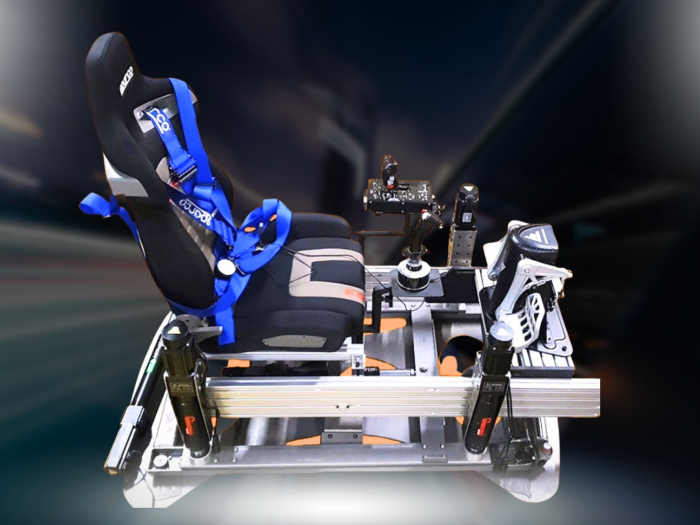
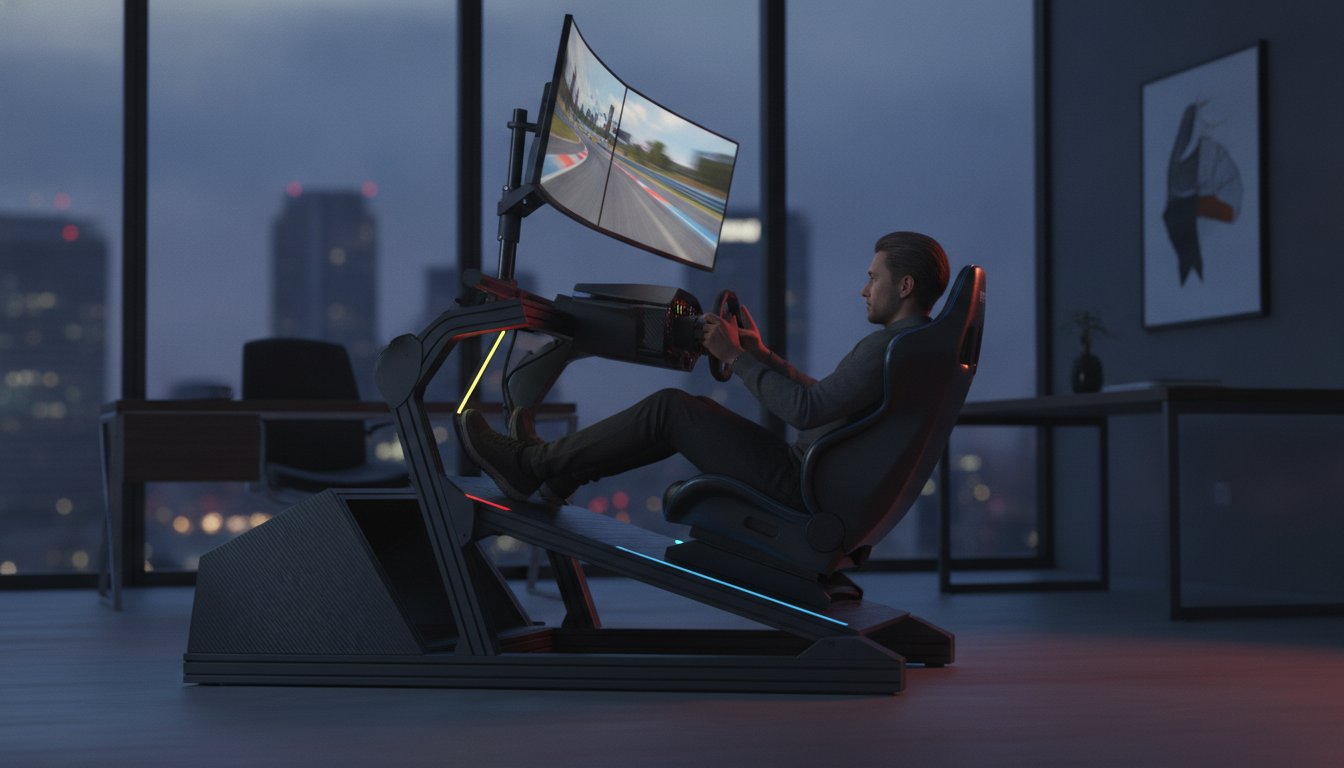
What if you could experience the visceral G-forces of a hairpin turn at Silverstone without your living room looking like a commercial flight training centre? For most sim racers, the dream of professional-grade immersion often stalls when they see the sheer scale of the hardware required. You want the precision of 6 DOF movement, yet you're understandably hesitant to install an industrial eyesore that takes days to assemble. Finding a compact motion simulator platform that balances high-performance feedback with a home-friendly footprint has long been the ultimate challenge for the serious enthusiast.
We agree that your rig shouldn't dominate your decor or require a ladder just to climb into the seat. You're looking for a setup that is as easy to maintain as it is to drive. In this guide, you'll discover how to integrate elite-level motion into your home using the latest LowSlider architecture, which minimises height whilst maximising telemetry precision. We'll preview the best-performing platforms for 2026, focusing on hand-built solutions that ship in four simple pieces for a stress-free assembly that gets you on the track in under an hour.
Key Takeaways
- Learn how the modern compact motion simulator platform has evolved to deliver professional-grade telemetry without the need for an industrial-sized footprint.
- Understand why a low centre of gravity is essential for translating digital data into sharp, realistic physical sensations and faster actuator response times.
- Identify the critical clearance and power logistics required to integrate a full 6 DOF motion system into your existing home setup.
- Discover the advantages of hand-built UK engineering that offers a no-compromise approach to realism whilst remaining easy to assemble and maintain.
The Evolution of the Compact Motion Simulator Platform
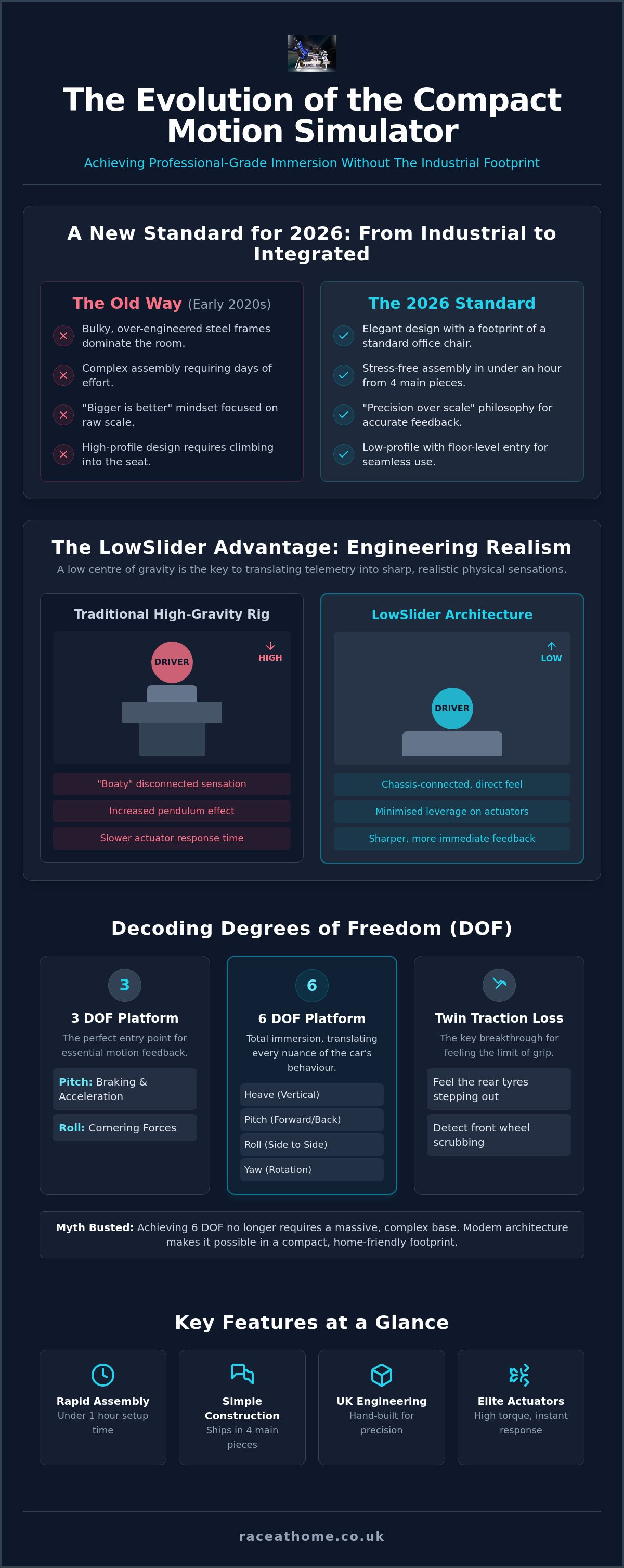
The era of the sim racing rig being a cluttered industrial workshop is over. By 2026, the gold standard for a compact motion simulator platform is defined by how much visceral performance can be engineered into a footprint no larger than a standard office chair. We've seen a decisive move away from the bulky, over-engineered steel frames that dominated the early 2020s. Sim racers now prioritise elegance and integration. As motion simulator technology has matured, the focus has shifted from raw mechanical power to sophisticated telemetry translation. Modern actuators are the catalysts for this change. They now deliver incredible torque and lightning-fast response times within housings that are a fraction of the size of their predecessors.
This evolution represents a significant psychological shift amongst enthusiasts. The "bigger is better" mindset has been replaced by a demand for precision over scale. It's no longer about how much space your rig occupies, but how accurately it communicates the limit of grip. High-performance sim racing is now a pursuit of sensory feedback. If your hardware can't replicate the subtle nuances of a kerb strike or weight transfer without shaking the entire house, it's considered outdated. We've moved into an age where the engineering is hidden; only the intensity of the drive remains.
What Makes a Simulator Truly 'Compact'?
True compactness is measured in two dimensions: footprint and profile height. Whilst many manufacturers focus solely on the floor space, the vertical profile of a rig determines its visual weight in a room. A high-profile platform makes a living space feel cramped and industrial. In contrast, a low-profile design allows the rig to blend into the home environment. Ergonomics also play a vital role. Floor-level entry is now the preferred choice because it removes the need for awkward climbing. It makes the transition from "living room" to "cockpit" seamless and professional.
The Trade-off: Space vs. Degrees of Freedom
There's a persistent myth that achieving 6 DOF (Degrees of Freedom) requires a massive, complex base. This simply isn't true in 2026. By using clever architectural layouts, it's possible to fit full heave, pitch, roll, and yaw into a surprisingly small area. For those with absolute space constraints, a 3DoF setup offers a perfect entry point, providing essential pitch and roll feedback. However, the real breakthrough for the compact motion simulator platform has been the integration of Twin Traction Loss. This allows you to feel the rear tyres stepping out and the front wheels scrubbing, all whilst maintaining a footprint that respects your home's boundaries.
Engineering Realism: How Compact Footprints Deliver 6 DOF
Translating digital telemetry into visceral physical sensation is a matter of pure physics. When you're hurtling toward the apex at Spa, your brain expects to feel the weight shift and the suspension compress. In a compact motion simulator platform, achieving this realism requires a sophisticated approach to mechanical leverage. If the platform is too high, the actuators must work harder to overcome the increased pendulum effect of the driver’s mass. By reducing the distance between the floor and the seat, we increase the efficiency of every movement. This results in sharper, more immediate feedback that tells you exactly what the car is doing in real-time.
High-performance actuators, such as those from PT Actuators, are essential for maintaining this level of fidelity in a smaller frame. These components provide the high-torque output necessary to simulate heavy braking or high-speed cornering without the need for massive, industrial housing. If the hardware is engineered correctly, the "vibration envelope" remains contained. This ensures the rig stays home-friendly by preventing unwanted resonance from travelling through your floorboards whilst still delivering the raw, percussive feedback of a gear change or a rumble strip.
The LowSlider Architecture Explained
The secret to a professional experience in a limited space lies in the architecture of the base. Traditional rigs often place the motion mechanics underneath the cockpit, which raises the centre of gravity and creates a "boaty" sensation. LowSlider is a proprietary UK-engineered design that minimises vertical height whilst maintaining full 6 DOF range. By keeping the sim racer closer to the floor, we reduce the leverage on the actuators and improve their response time. This architectural shift ensures that the motion feels connected to the car’s chassis rather than feeling like a disconnected platform tilt. If you are looking for this level of engineering precision, you can explore the range of motion platforms hand-built for home environments.
Managing 6 Degrees of Freedom: Pitch, Roll, Yaw, Heave, Sway, and Surge
Fitting all six axes into a compact frame is a significant engineering feat. Whilst pitch and roll are relatively simple to implement, "Heave" is the most difficult axis to miniaturise effectively because it requires vertical travel against the full weight of the driver and rig. In a well-designed compact motion simulator platform, heave is integrated into the corners of the base to provide that essential "seat-of-the-pants" feeling when you hit a bump. Unlike basic seat-movers that only tilt the chair, a full-cockpit motion system moves the entire environment. This keeps your relationship with the wheel and pedals constant, which is vital for maintaining muscle memory during high-intensity racing.
- Surge and Sway: Replicating the push and pull of acceleration and lateral G-forces.
- Yaw and Traction Loss: Essential for feeling the rear end step out during oversteer.
- Heave: Communicating the vertical undulations of the track surface.
Comparing Compact Motion Architectures: Which is Right for Your Home?
Choosing the right compact motion simulator platform isn't just about measuring your floor space; it's about matching mechanical behaviour to your specific racing style. Not all small-footprint designs are created equal. Whilst some systems prioritise ease of shipping, others focus on the fidelity of the telemetry. If you're serious about improving your lap times, you need to understand how different architectures translate digital data into physical sensation. We generally categorise these into three distinct tiers: seat-movers, pivot-based platforms, and low-profile full-cockpit motion.
Seat-movers are the most common entry point due to their minimal footprint. They work by tilting only the chair whilst the wheel and pedals remain static. Whilst this provides a sense of G-force, it can feel disconnected because your relationship with the controls changes as you move. Pivot-based platforms, often seen in flight simulation, move the entire rig from a central point. These are often too tall for modern home environments, creating a high centre of gravity that feels more like a carnival ride than a GT3 car. The "no-compromise" solution is a low-profile full-cockpit system, which moves the entire environment whilst keeping you close to the floor for maximum stability.
The Pros and Cons of Common Compact Designs
Mass-market bolt-on kits are often tempting, but they rarely offer the structural rigidity of an integrated bespoke platform. If you're using high-end peripherals like Pimax VR Headsets, the stability of the rig is paramount. Any unwanted flex in the frame can cause tracking issues in VR, breaking the immersion you've worked hard to create. Noise levels are another critical factor. Many compact systems use lower-grade actuators that produce a high-pitched mechanical whine. Premium architectures utilise high-torque, silent actuators that keep the experience immersive for you and quiet for the rest of the household.
Traction Loss: The Game Changer for Racing Realism
If you want to master the art of car control, "Twin-Traction-Loss" is the ultimate feature. It simulates the rear end stepping out and the front tyres scrubbing during understeer. Many racers assume that adding traction loss requires a massive base, but clever engineering allows us to fit this into a compact motion simulator platform under 1.5 metres in length. This feedback is essential for driver coaching. It allows you to feel the limit of grip through your hips rather than waiting to see the car rotate on screen. This split-second advantage is what separates a hobbyist from a professional-level sim racer. By integrating traction loss into a compact frame, you gain a powerful tool for skill development without sacrificing your entire living area.
Planning Your Space: Logistics of a Home Motion Rig
Integrating a professional 6 DOF system into a domestic environment requires more than just measuring floor space. You must consider the dynamic clearance. Whilst a compact motion simulator platform occupies a small static area, it needs room to breathe when the actuators reach full extension. We recommend a safety buffer of at least 30cm around the entire perimeter. This prevents the rig from making contact with walls or furniture during violent weight transfers or heavy braking simulations. If you're planning a dedicated sim room, ensure your flooring is level and capable of supporting the concentrated weight of the rig and driver.
The One-Hour Assembly Promise
The transition from delivery to the driver's seat shouldn't be a weekend-long ordeal. By shipping the compact motion simulator platform in four primary modules, we've reduced the assembly time to approximately one hour. This modular approach isn't just about speed; it's about quality assurance. Every component is tested at our UK facility before being carefully packed for global delivery. You won't need a specialised workshop to get started. A basic set of hex keys and a spanner are usually the only tools required to bolt the modules together and secure your seat. You can view our full-motion setups to see how these modular components integrate into a professional finish.
VR vs. Screens in Compact Setups
If space is your primary constraint, Virtual Reality is the ultimate companion for a motion rig. Using a Pimax VR headset removes the need for bulky triple-monitor stands, which can often double the footprint of your setup. VR also enhances the motion experience by providing 1:1 visual feedback that matches the physical sensations. This high-fidelity synchronisation is the best way to manage motion sickness. When your inner ear feels the roll of a corner and your eyes see the horizon tilt with perfect clarity, the brain accepts the simulation as reality. Managing your cables with a simple ceiling-mounted retracting system keeps the floor clear and maintains the sleek, professional aesthetic of your home sim room.
The LowSlider Advantage: UK-Engineered Compact Motion
Choosing a compact motion simulator platform is an investment in your competitive future. Whilst many global market leaders rely on mass-market volume from overseas factories, the LowSlider is born from a different philosophy. We believe that true precision can only be achieved through a bespoke, hand-built approach. By designing and manufacturing our platforms right here in the UK, we maintain absolute control over every weld, bolt, and actuator alignment. This dedication to craftsmanship ensures that your rig isn't just another piece of consumer electronics, but a professional-grade engineering tool tailored to your specific requirements.
Bespoke Engineering for the Serious Sim Racer
Quality assurance is the cornerstone of our UK facility. Every rig we produce undergoes a rigorous testing phase before it is cleared for shipping. We don't just assemble parts; we curate an experience. This includes seamless integration with premium accessories such as SRP Pedals and PT Actuators, ensuring that every peripheral works in perfect harmony with the motion software. If you encounter a technical challenge, you won't be dealing with an anonymous call centre. You'll have access to direct specialist support from the people who actually designed and built your hardware. This level of personal consultancy is what separates a hand-built British platform from a mass-produced alternative.
Future-Proofing Your Sim Rig
A high-end simulator shouldn't be obsolete in two years. We've engineered the LowSlider with longevity in mind, utilising high-torque mechanical components that are built to withstand thousands of hours of high-intensity use. Our systems are designed for broad software compatibility, ensuring that as new racing titles and telemetry integrations emerge, your rig is ready to translate that data into motion. This forward-thinking approach protects your investment and ensures that your setup remains at the cutting edge of sim racing technology for years to come. If you're ready to transform your home setup into a professional cockpit, you can discover the LowSlider range at Race@Home.
Step into the Future of Home Racing
The landscape of sim racing has shifted. You no longer need to sacrifice your living space to achieve professional-grade 6 DOF immersion. By prioritising precision engineering over industrial bulk, the modern compact motion simulator platform delivers the sharp telemetry and visceral feedback once reserved for commercial training centres. We've explored how the LowSlider architecture minimises profile height whilst maximising response times, proving that a small footprint can still yield a massive performance advantage.
Every rig we produce is hand-built in the UK and rigorously tested to ensure it meets our specialist standards. With global shipping in four easy-to-assemble modules, you can transition from delivery to the driver's seat in approximately one hour. It's time to stop compromising on your home setup and start feeling every kerb strike and traction loss with absolute clarity. Build your bespoke LowSlider motion platform today and experience the ultimate evolution of the hobby. We look forward to seeing you at the apex.
Frequently Asked Questions
How much space do I actually need for a compact motion simulator?
You need approximately the footprint of a standard sim rig plus a 30cm safety buffer around the perimeter for dynamic movement. Whilst the compact motion simulator platform itself is designed to fit into a home office, the actuators require this clearance to reach their full range of motion without hitting furniture. Always measure the total travel of the platform rather than just its static dimensions to ensure safe operation.
Can a compact 6 DOF platform handle the weight of a full sim racing cockpit?
A high-quality compact 6 DOF system is engineered to support the full weight of a driver and a professional aluminium profile cockpit. Our LowSlider frames utilise high-torque actuators that manage payloads effectively without sacrificing response time or precision. The structural integrity of the hand-built UK frame ensures that the motion remains crisp even with heavy direct-drive wheelbases and load-cell pedals attached to the rig.
Will a motion platform damage my floors or disturb my neighbours?
Modern motion platforms are surprisingly quiet and won't damage your floors if you use appropriate isolation pads. Because the LowSlider architecture keeps the centre of gravity close to the ground, it reduces the mechanical resonance that typically travels through floorboards. If you live in an apartment, the silent operation of high-end actuators ensures your racing sessions won't disturb those in adjacent rooms or flats.
Is a motion simulator difficult to set up with games like iRacing or Assetto Corsa?
Setting up a motion rig for titles like iRacing, Assetto Corsa, or F1 24 is straightforward thanks to dedicated telemetry software. These programs automatically translate in-game physics into physical movement with minimal configuration required from the user. You'll simply select your car and track, and the software handles the complex telemetry translation to ensure the platform reacts instantly to every gear change or kerb strike.
What is the difference between a 3DoF and a 6 DOF compact platform?
A 3DoF platform typically provides heave, pitch, and roll, whereas a 6 DOF system adds yaw, sway, and surge for total immersion. Whilst a 3DoF setup is an excellent entry point for space-constrained racers, only a full 6 DOF architecture can replicate the complex lateral and longitudinal forces of a real race car. Choosing a compact motion simulator platform with 6 DOF ensures you feel every subtle weight transfer and traction loss event.
Does a compact motion platform help with motion sickness in VR?
A motion platform significantly reduces motion sickness in VR by aligning what your eyes see with what your inner ear feels. When you enter a corner in a Pimax headset, the physical tilt of the rig provides the vestibular feedback your brain expects. This synchronisation prevents the sensory conflict that usually causes nausea, allowing for much longer and more comfortable racing sessions without the need for breaks.
How long does it take to assemble a Race@Home LowSlider rig?
It takes approximately one hour to assemble a Race@Home LowSlider rig because it arrives in four pre-assembled modules. Unlike mass-market kits that require hundreds of individual bolts and hours of frustration, our hand-built modules are designed to be bolted together quickly with basic tools. This modular approach ensures you spend less time in the workshop and more time on the virtual track perfecting your lap times.
Can I use my existing sim racing seat and pedals with a compact platform?
Most compact platforms are designed to be compatible with standard sim racing seats and pedal sets. The LowSlider base uses universal mounting points that allow you to secure your favourite bucket seat or load-cell pedals directly to the frame. This flexibility means you don't have to start your setup from scratch; you can simply upgrade your existing static rig with professional-grade motion for a more immersive experience.


