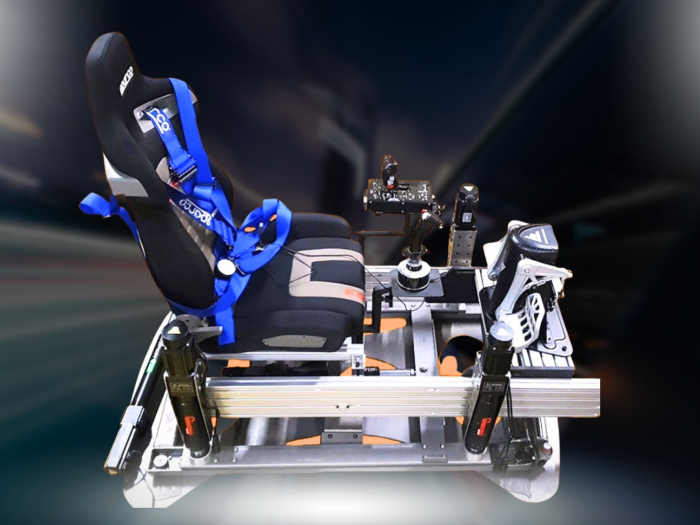
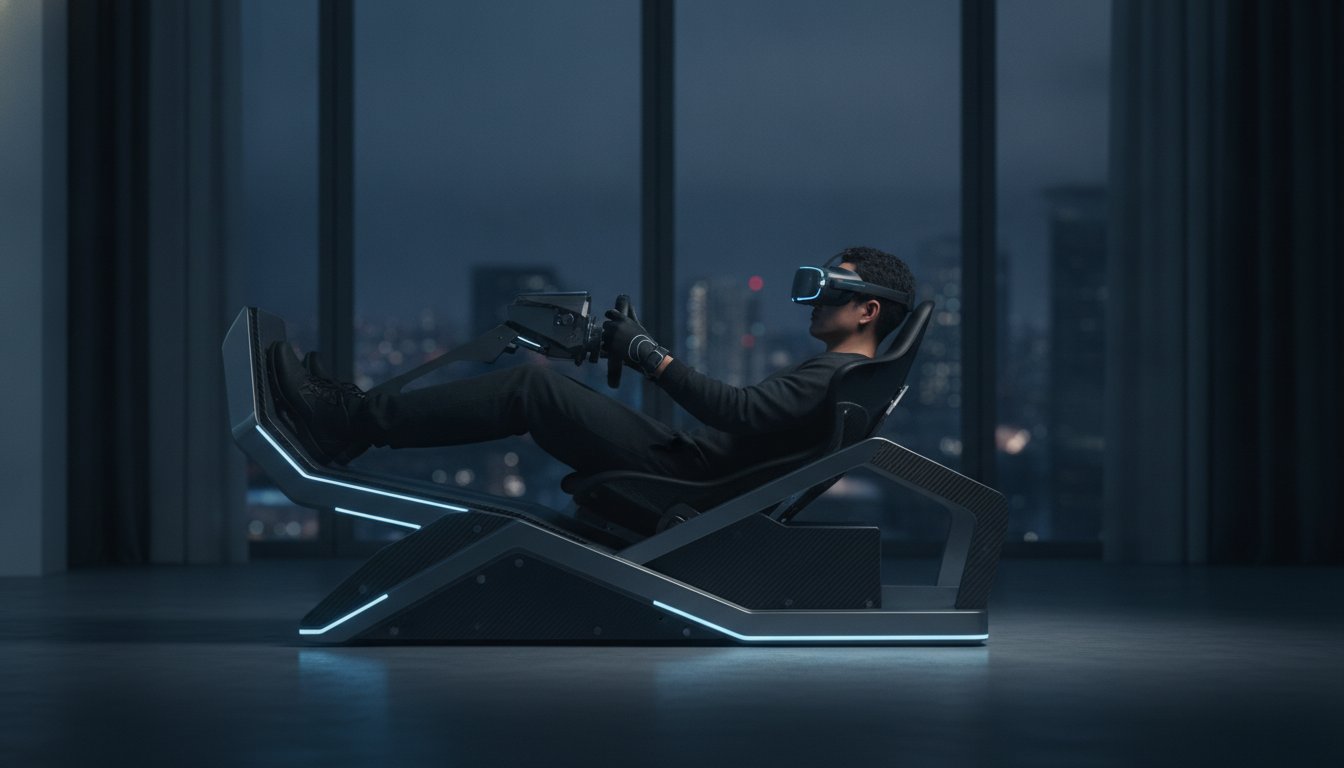
What if you could feel the exact moment your rear tyres lose grip at Silverstone, all from a rig that fits comfortably in your spare room? For too long, investing in a professional sim racing simulator meant choosing between a massive, industrial frame that took days to assemble or a compact setup that lacked true immersion. You've likely experienced the frustration of motion sickness caused by poor latency or the disappointment of a rig that simply doesn't fit your living space.
We agree that your home setup should feel like a specialised training centre, not a compromise. This 2026 trend analysis shows you how 6 DOF motion and compact engineering are redefining the professional standard for both home and commercial environments. You'll discover how modern hardware translates digital telemetry into the tangible sensations of heave, surge, and traction loss, providing a realistic training tool that remains entirely manageable in a domestic setting. We will examine the shift toward ultra-low profile designs that deliver high-end performance without the industrial footprint.
Key Takeaways
- Understand why a professional sim racing simulator in 2026 requires physical telemetry translation rather than just visual immersion to remain competitive.
- Learn how the six degrees of freedom, including pitch, roll, and yaw, bridge the gap between digital data and real-world g-forces.
- Discover how the LowSlider design enables a full 6 DOF experience within a compact footprint, making professional-grade motion accessible for home environments.
- Identify the critical hardware components, such as Pimax VR headsets, that work in synergy with motion platforms to maximise sensory feedback.
- Find out how to move from delivery to the virtual track in under an hour with modular systems designed for rapid assembly.
Redefining the Professional Sim Racing Simulator Standard
The definition of a professional sim racing simulator has undergone a radical transformation. In 2026, visual fidelity alone is no longer enough to satisfy the requirements of competitive drivers or commercial training centres. For those launching such businesses, you can explore the Elevate Google-compliant plan to ensure your online reputation remains as high-performance as your hardware. We've moved beyond the era where a high-resolution screen and a high-torque direct-drive wheel defined the "pro" experience. Today, the industry standard is measured by how effectively a rig translates digital telemetry into physical reality. If your setup doesn't move, you're missing the vital data needed to find those final tenths on the stopwatch.
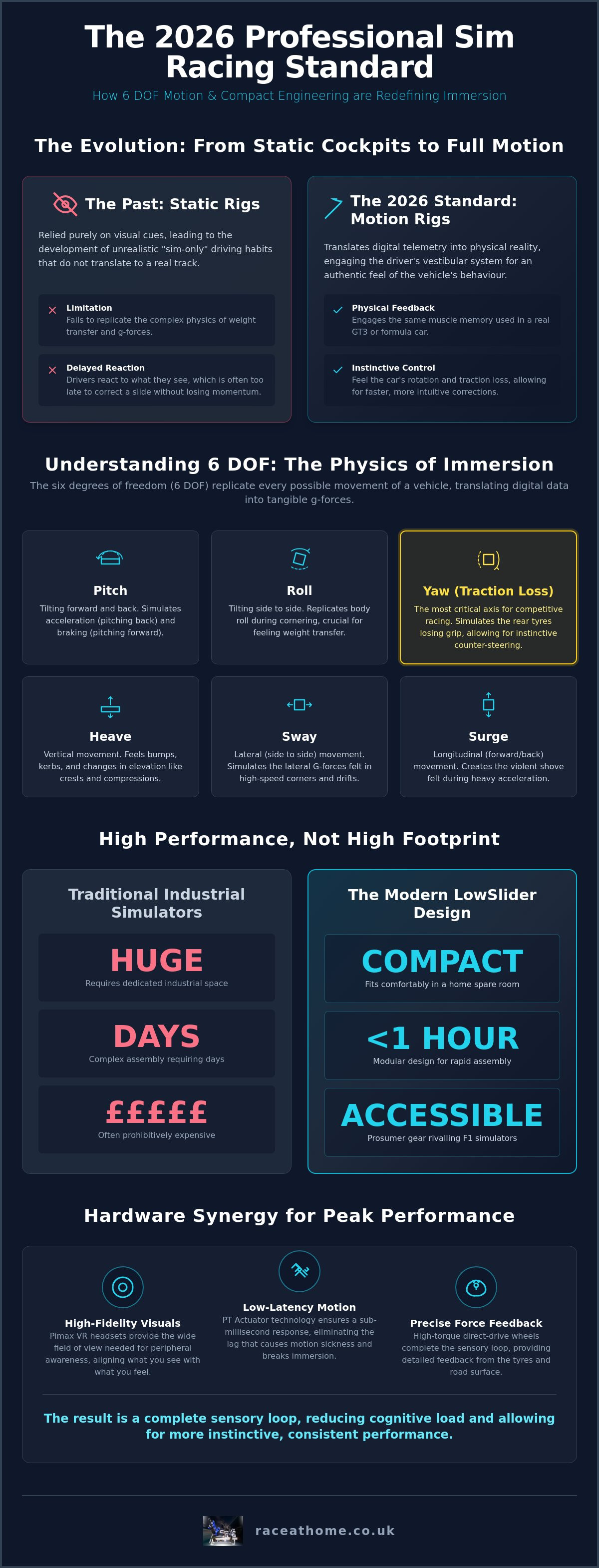
For top-tier competition, a static rig is now viewed as a limitation rather than a tool. Whilst static cockpits provide a stable platform for steering, they fail to replicate the complex physics of weight transfer. Professional drivers rely on their vestibular system to sense motion. In a real-world racing environment, you feel the car's rotation through your hips and lower back long before your eyes register the slide on the horizon. By the time you see oversteer on a monitor, it's often too late to correct it without losing significant momentum.
From Static Cockpits to Full Motion
Static environments force a reliance on visual cues that can lead to the development of "sim-only" habits. These behaviours don't always translate to the track. When you bridge the gap with a motion platform, you're engaging the same muscle memory used in a real GT3 or formula car. The psychological impact is profound. Feeling the harsh vibration of a kerb or the subtle heave as the car becomes light over a crest creates a sense of presence that a screen simply can't replicate. It's this sensory immersion that reduces the cognitive load on the driver, allowing for more instinctive and consistent performance.
The 2026 Market Shift
We've seen a decisive shift in the market toward bespoke, hand-built UK engineering. Discerning racers are moving away from mass-market imports in favour of "prosumer" gear that rivals the multi-million pound simulators used by F1 teams. Today, "professional" implies that six degrees of freedom (6 DOF) is the baseline requirement. This level of sophistication allows for the replication of pitch, roll, yaw, heave, sway, and surge. It's no longer about whether a rig looks the part; it's about whether the mechanical movement accurately mirrors the software's telemetry. This evolution has made high-end training accessible to anyone serious about their craft, transforming the home office into a legitimate driver development suite.
Just as educational institutions rely on California College and Career Indicator tracking software to monitor student progress and performance analytics, sim racers depend on these sophisticated suites to track their own technical development and racing metrics.
Understanding 6 DOF: The Physics of Professional Immersion
To truly master a professional sim racing simulator, you must understand the physics that govern its movement. The gold standard for realism is 6 Degrees of Freedom (6 DOF), which encompasses every possible direction a rigid body can move in three-dimensional space. These axes are Pitch (tilting forward and back), Roll (tilting side to side), Yaw (rotating left and right), Heave (vertical movement), Sway (lateral movement), and Surge (longitudinal movement). A 6 DOF motion platform functions as a high-fidelity translator, converting digital telemetry into precise mechanical vectors that replicate the physical g-forces experienced during high-performance driving.
Whilst many entry-level systems focus on basic pitch and roll, they often ignore the most critical data point for competitive racers: Yaw, or Traction Loss. In professional GT or drift racing, your ability to feel the rear tyres losing grip is the difference between a podium finish and a spin. By incorporating Twin-Traction-Loss technology, a rig can simulate the exact moment the car's rear end steps out. This allows for instinctive counter-steering. This level of detail is only possible through PT Actuator technology, which ensures sub-millisecond latency. If the motion lags even slightly behind the visuals, the immersion breaks and your performance suffers.
Why Degrees of Freedom (DOF) Matter
When you move from a 3DOF system to a full 6 DOF configuration, you aren't just adding more movement; you're completing the sensory loop. A 3DOF rig typically lacks Sway and Surge, meaning you don't feel the lateral push through a high-speed sweeper or the violent shove into your seat during heavy acceleration. Beyond the thrill, 6 DOF is essential for health. Motion sickness often occurs when your eyes see movement that your inner ear doesn't feel. By aligning these signals perfectly, a high-end simulator allows for hours of fatigue-free training. It's the reason why students apply virtual engineering lessons to understand vehicle dynamics in a controlled, repeatable environment.
The Role of Actuator Precision
Precision is what separates a professional tool from a gaming peripheral. Industrial-grade actuators provide significant "travel" and "velocity," which are necessary to simulate the sharp impact of a kerb or the sustained compression of a high-downforce corner. Entry-level vibration motors simply cannot replicate these forces accurately. At Race@Home, we specialise in high-response PT Actuators because they offer the speed and torque required for genuine realism. If you're looking to elevate your training, exploring the LowSlider 6 DOF Twin-Traction-Loss Motion Platform provides the technical foundation you need to compete at the highest level.
Compact Motion Platforms vs. Industrial Simulators
For years, the industry operated under the myth that a professional sim racing simulator had to be a behemoth. Massive, industrial frames were once the only way to house the actuators required for full motion. This often meant enthusiasts needed a dedicated garage or a small warehouse to host their hobby. However, the "LowSlider" revolution has completely dismantled this barrier. We've proven that you can achieve uncompromising 6 DOF performance within a footprint that fits comfortably into a standard home office or spare room. Size is no longer a proxy for realism.
The Footprint Challenge
Traditional 6 DOF rigs are often built on high-clearance frames that raise the driver significantly off the ground. This creates a high centre of gravity, requiring a wider base for stability and increasing the overall spatial requirement. In contrast, an ultra-low profile design focuses on keeping the mass as close to the floor as possible. This engineering shift improves the chassis "feel" by reducing unwanted oscillations. It makes the rig the favourite amongst UK home racers who demand high-end feedback without sacrificing an entire floor of their house. Scientific research on simulator fidelity supports the idea that the quality of movement, rather than the sheer size of the equipment, determines how effectively a driver can learn and adapt to vehicle dynamics.
Bespoke Engineering vs. Mass Production
Mass-produced simulators often rely on "one-size-fits-all" frames that lack the rigidity needed for high-torque actuators. Choosing a hand-built, UK-manufactured platform allows for a level of customisation that industrial imports can't match. Modularity is a primary trend for 2026. Drivers now expect to swap out pedals, wheels, and seats without re-engineering the entire base. A compact, bespoke professional sim racing simulator also solves the practical nightmare of VR integration. With a smaller moving footprint, cable snagging is significantly reduced. This allows for a seamless sensory experience. You don't have to worry about your headset being ripped off during a high-speed yaw correction. It's about providing a no-compromise solution that respects the logistical realities of a home environment.
Essential Hardware for a Professional Sim Rig
Building a professional sim racing simulator involves more than just selecting a motion platform. It requires a curated ecosystem where every component works in perfect harmony. If your visual output or control inputs aren't up to the task, even the most advanced 6 DOF system will feel disconnected. You need hardware that can keep pace with the sub-millisecond telemetry data being processed by your actuators. Every link in the chain must be capable of translating digital data into a visceral, physical sensation without introducing lag or mechanical flex.
Visuals: VR vs. Triple Monitors
Whilst triple monitor setups remain popular for their stability, the trend in professional training has shifted decisively toward high-resolution Virtual Reality. In 2026, Pimax VR headsets have emerged as the industry leader because they offer a wide field-of-view that mimics human peripheral vision. This is crucial for hitting apexes and checking your mirrors during a tight overtake. Modern headsets have effectively eliminated the "screen door effect," providing a crystal-clear image that allows you to read dashboard telemetry and distant track markers with ease. However, for this immersion to work, your motion platform and VR headset must be perfectly synced. Any discrepancy between what you see and what you feel leads to instant motion sickness, making low-latency tracking a non-negotiable requirement.
Control Input: Pedals and Wheels
Your choice of pedals is perhaps the most critical link in the sensory chain. Professional drivers typically opt for hydraulic pedals because they replicate the pressure-based feel of a real braking system. When your rig pitches forward during heavy braking, the resistance in a hydraulic pedal gives you the precise feedback needed to avoid locking up. Similarly, your steering rack must match the intensity of your motion platform. High-torque Direct Drive wheels are now the standard, providing enough force to simulate everything from power steering failure to the heavy load of a high-downforce corner. To handle these forces, you need a rigid cockpit that won't flex under pressure. Flex in the frame is effectively "lost" feedback, dulling the sensations that the software is trying to communicate.
Managing this complex flow of data requires robust software integration. Tools like SimHub allow you to fine-tune how telemetry is translated into physical movement, ensuring that every bump and weight shift feels authentic. If you're ready to build a system that rivals real-world motorsport, you can explore our range of Pimax VR Headsets and Sim Racing Accessories to complete your setup. Curating your gear from a specialist ensures that every piece of hardware is durable enough to withstand the rigours of a full-motion environment.
The Race@Home Experience: Professional Motion Made Accessible
Race@Home is redefining the barrier to entry for high-end simulation. For too long, the path to owning a professional sim racing simulator was blocked by technical complexity and logistical nightmares. We believe that an engineering masterpiece should be as easy to live with as it is thrilling to drive. By focusing on bespoke UK manufacturing, we've created a system that delivers world-class telemetry translation without the typical headaches associated with industrial-grade hardware. It's about bringing the elite training experience of a professional paddock directly into your home environment.
Modular Design and Global Delivery
Shipping a full-motion rig across the globe is a significant engineering challenge. We solve this by breaking the simulator down into four robust, easy-to-assemble pieces that arrive ready for action. This modular approach ensures that sensitive motion components remain protected during transit, whether they're heading to Manchester or Melbourne. Whilst many competitors leave customers with a mountain of bolts and a manual that takes eight hours to decipher, our "One-Hour Assembly" promise ensures you move from delivery to the virtual track in record time. You don't need a degree in mechanical engineering to get started. Our UK-based support team provides direct access to the experts who built your rig, ensuring our global community of racers always has professional guidance on hand.
The LowSlider 6 DOF Advantage
The core of our philosophy is a "no-compromise" approach to mechanical realism. The LowSlider 6 DOF Twin-Traction-Loss Motion Platform provides the essential yaw and traction loss feedback required for professional GT3 training, allowing you to catch slides with instinctive precision. This isn't a static piece of furniture; it's a dynamic training tool that can be tailored to your specific racing discipline. Whether you specialise in endurance GT racing or high-torque formula cars, the rig's behaviour can be adjusted to match the unique physical profile of your favourite vehicle. Investing in hand-built UK quality means you're securing a gateway to the most realistic simulation experience currently possible. If you're ready to transform your training, you can Explore the LowSlider 6 DOF Motion Platform and join the ranks of elite drivers who demand nothing less than perfection.
Step Into the Future of Professional Simulation
High-performance simulation has shifted from simple visual immersion to a deep, physical connection with the track. We've explored how 6 DOF motion has become the baseline for any serious professional sim racing simulator, providing the essential surge, heave, and traction loss data that defines elite performance. By prioritising proprietary LowSlider technology, it's now possible to achieve industrial-grade realism within a compact, home-friendly footprint.
Every rig is hand-built in the UK to ensure uncompromising quality and precision. We've simplified the logistics by offering worldwide shipping in four modular pieces, allowing you to move from unboxing to the grid in under an hour. It's time to stop watching the track and start feeling every kerb, slide, and weight shift. The technology of 2026 is here to turn your home setup into a legitimate driver development suite.
Build Your Professional 6 DOF Motion Rig with Race@Home
Frequently Asked Questions
What is the difference between 3DoF and 6 DOF in a racing simulator?
A 3DoF platform typically manages pitch, roll, and heave, covering basic weight transfer. A 6 DOF system adds yaw, sway, and surge, providing a complete physical map of the car's behaviour. This includes the vital "Twin-Traction-Loss" sensation. For anyone investing in a professional sim racing simulator, 6 DOF is necessary to replicate the lateral and longitudinal forces felt in a real-world cockpit.
Does a professional motion simulator cause motion sickness?
Motion sickness is typically a result of sensory mismatch caused by high latency or limited axes of movement. Because our systems utilise high-speed PT Actuators with sub-millisecond response times, the physical feedback matches the visual data perfectly. Aligning your inner ear's balance with the on-screen action actually helps eliminate the nausea often associated with static or low-fidelity rigs.
How much space do I need for a 6 DOF motion rig at home?
You don't need a warehouse to host a high-end setup. Our proprietary LowSlider design is engineered to fit within the footprint of a standard home office or spare bedroom. Whilst you should allow a small clearance zone around the rig for maximum displacement, the ultra-low profile ensures it remains manageable in a domestic environment without requiring structural modifications.
Can I use any sim racing software with a Race@Home motion platform?
Yes, our platforms are compatible with all major simulation titles that output telemetry data. This includes industry standards like iRacing, Assetto Corsa Competizione, and the latest 2026 releases. We utilise SimHub and dedicated telemetry managers to ensure that the software's digital data translates accurately into physical movement, providing a seamless experience across different racing disciplines.
How long does it take to assemble a LowSlider motion rig?
Assembly is designed to be completed in under an hour. We ship our professional sim racing simulator platforms in four pre-assembled modular pieces. This eliminates the frustration of complex, multi-day builds found with other industrial rigs. You simply connect the core sections, plug in the electronics, and you're ready to begin your first training session.
Is a motion platform worth it for competitive iRacing or ACC?
A motion platform is a significant competitive advantage in titles like iRacing. It allows you to sense the rear-end sliding or the front tyres locking up through your body before the visual cues appear on screen. This instinctive feedback loop leads to more consistent lap times and better tyre management, as you're no longer guessing the car's limit based solely on visual data.
Do you ship professional simulators outside of the UK?
We provide worldwide shipping for all our motion platforms and accessories. Our modular design isn't just about easy assembly; it's also about ensuring safe, efficient transit across international borders. Each component is securely crated to withstand global travel, ensuring that racers from any corner of the globe can access hand-built UK engineering without logistical complications.
What maintenance does a 6 DOF motion simulator require?
Maintenance requirements are remarkably low due to the industrial-grade components we use. Unlike entry-level gear, our PT Actuators are built for heavy commercial and home use. You'll occasionally need to check for bolt tightness and perform basic lubrication on moving parts, but the system is designed to be a "set and forget" investment that survives years of high-intensity racing.


