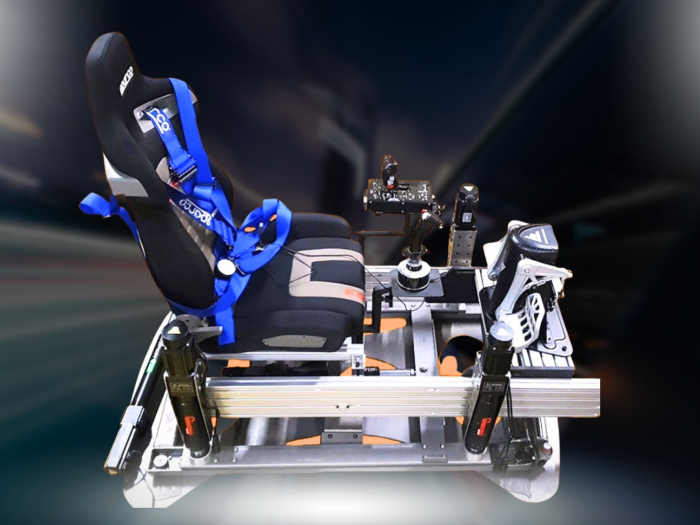

Why should the pursuit of high-speed realism begin with a weekend lost to a mountain of bolts and a confusing instruction manual? For many enthusiasts, the dream of a professional-grade motion experience is often derailed by the fear of complex wiring or the dreaded IKEA effect of hundreds of tiny components. You shouldn't have to be a mechanical engineer just to experience the visceral thrill of a hairpin turn. We believe that a sim racing rig easy assembly isn't just a convenience; it's a necessity for the serious driver who values performance over assembly logistics.
We understand that your space is valuable and your downtime is even more so. You've likely felt the frustration of staring at a half-finished frame whilst the racing season passes you by. This article promises to show you how to transition from unboxing to the starting grid in under an hour without sacrificing an ounce of professional-grade feedback. We'll explore the breakthrough of a hand-built, four-piece modular design that delivers a 6 DOF experience with minimal fuss, ensuring your focus stays exactly where it belongs: on the apex.
Key Takeaways
- Skip the frustration of traditional builds and learn how to go from box to track in under sixty minutes.
- Achieve a sim racing rig easy assembly by choosing a 4-piece modular system that eliminates the complexity of hundreds of individual bolts.
- Compare the structural benefits of hand-built British craftsmanship against the time-consuming nature of standard aluminium extrusion rigs.
- Prepare your racing space with professional advice on flooring and power logistics to ensure your motion platform performs at its peak.
- Discover the transformative impact of professional-grade motion feedback and how it translates digital telemetry into tangible racing sensations.
The Myth of the Weekend Build: Why Sim Rig Assembly Matters
The idea that a high-end racing experience requires a long weekend of manual labour is a persistent myth. For many, the journey into what is sim racing begins with a box of hundreds of loose parts. This "IKEA effect" might feel like a rite of passage, but it carries a hidden cost. You lose hours of track time and suffer the simmering frustration of mechanical misalignment. Real performance shouldn't be buried under a mountain of bolts.
Precision is the foundation of immersion. If your frame isn't perfectly square, the resulting flex can compromise your feedback and lead to long-term wear. A sim racing rig easy assembly isn't just about saving time; it's about ensuring the structural integrity of your setup from day one. When the engineering is handled by specialists before the product reaches your door, the risk of user error during construction vanishes. A simplified build process creates a direct path to the professional-grade sensations you're chasing.
The Problem with Mass-Market Flat-Pack Rigs
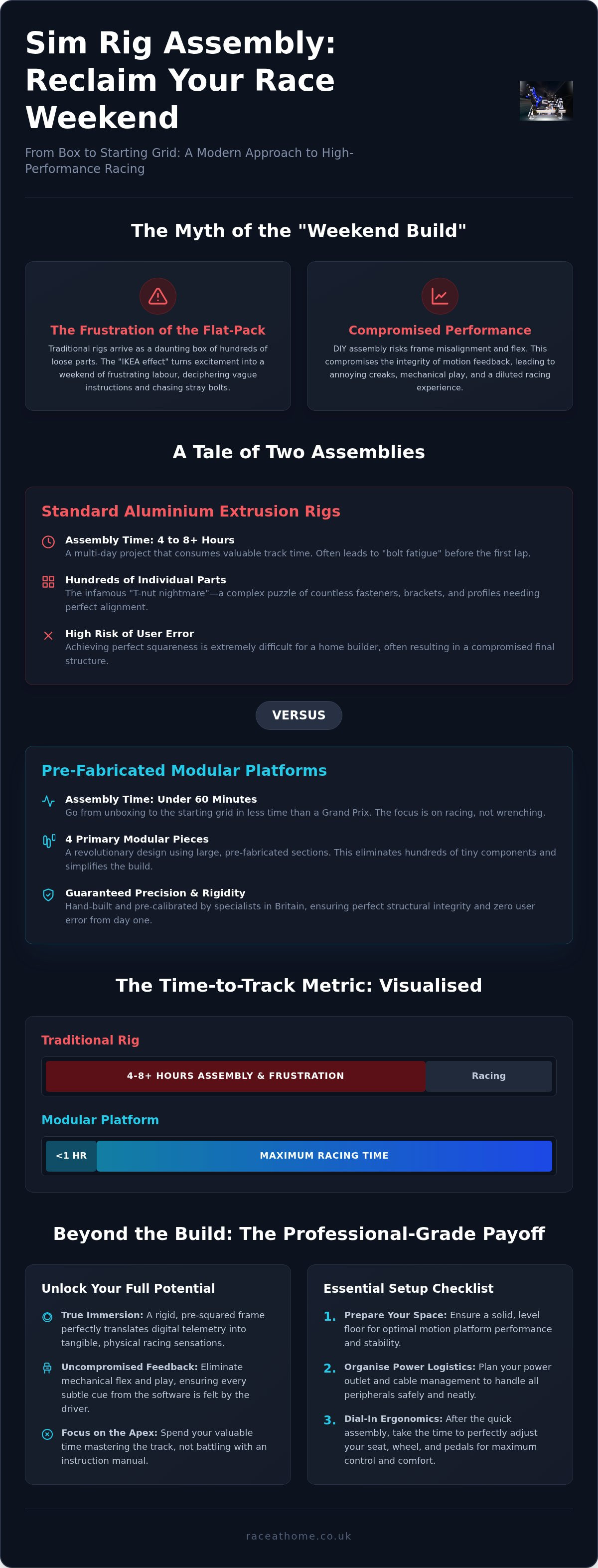
Standard 80/20 aluminium extrusion rigs are the industry benchmark, yet they present a significant barrier to entry. The "T-nut nightmare" involves sliding hundreds of tiny fasteners into narrow slots. This process often leads to "bolt fatigue" and stripped threads before you've even mounted your wheel base. Deciphering vague instructions whilst trying to align heavy profiles is a recipe for stress. Most enthusiasts want to drive, not spend their limited free time acting as an unpaid assembly line worker for a mass-produced kit. Perfect squareness is difficult to achieve in a DIY frame, which can lead to annoying creaks or mechanical play during high-torque manoeuvres.
Why Motion Simulators Are Perceived as Too Complex
Motion adds another layer of perceived difficulty. There's a common fear surrounding complex actuator wiring and software synchronisation. Many drivers also worry about the physical weight and bulk of traditional motion platforms, assuming they require a dedicated garage or a team of lifters. This misconception suggests that "bespoke" hardware must be difficult to install. In reality, a well-engineered sim racing rig easy assembly relies on modularity. By shipping a platform in a few pre-fabricated sections, the transition from box to track becomes a simple matter of connection rather than a complex engineering project. You get professional-grade feedback without the headache of a DIY electronics build.
Comparing Assembly Methods: Extrusion vs. Pre-Fabricated Platforms
The delivery driver leaves, and you're left with a pivotal choice: spend the next three days deciphering an exploded diagram or be on the track before your tea gets cold. Standard 80/20 aluminium extrusion is the industry's default for a reason; it's versatile and adjustable. However, that flexibility comes at a cost. You're essentially purchasing a giant Meccano set. Every joint, every bracket, and every upright must be measured, aligned, and torqued by hand. This labour-intensive process is precisely why a sim racing rig easy assembly has become the holy grail for the time-poor enthusiast.
Pre-fabricated platforms, such as the LowSlider, represent a shift in engineering philosophy. Instead of hundreds of individual profiles and fasteners, the system arrives in large, modular sections. This approach simplifies shipping logistics and physical setup simultaneously. You aren't just buying parts; you're buying a pre-calibrated foundation. Because the core structure is hand-built and checked for squareness before it leaves the workshop, the end-user avoids the common pitfalls of DIY frame construction, such as mechanical binding or inconsistent feedback.
The Time-to-Track Metric
Typical build times for a high-end static rig range from four to eight hours. If you're adding motion, that timeline often stretches into multiple days as you struggle with actuator mounts and cable management. We've established a different benchmark. By delivering a 6 DOF setup in just four primary pieces, the Race@Home standard aims for a full assembly in under sixty minutes. This efficiency isn't about rushing; it's about superior design that respects your time. If you value your time as much as your lap times, you might explore the LowSlider range to see how we've streamlined the professional experience.
Rigidity and Performance Trade-offs
A common concern amongst veterans is whether a sim racing rig easy assembly compromises structural strength. In the world of motion, rigidity is everything. If the frame flexes, the subtle telemetry data from the software is lost in the mechanical play of the rig. Contrary to the myth that DIY builds are tougher, professional pre-assembly actually increases rigidity. By utilising precision welding and heavy-duty modular connections, we eliminate the hundreds of friction-based points of failure found in standard kits. This results in a more compact, ultra-low profile footprint that fits comfortably into a home environment whilst delivering the uncompromising feedback of a professional simulator. The result is a "set and forget" reliability that mass-produced extrusion kits simply cannot match.
The One-Hour Challenge: Designing the LowSlider for Speed
Engineering for speed usually refers to lap times, but we apply that same philosophy to the physical setup of your hardware. A professional-grade motion experience shouldn't require a background in mechanical engineering. Achieving a sim racing rig easy assembly is the result of a "no-compromise" design approach that prioritises modularity without sacrificing structural rigidity. Whilst many kits arrive as a chaotic puzzle of aluminium profiles, our hand-built approach ensures that the heavy lifting is done before the box reaches your door. The LowSlider 6 DOF Twin-Traction-Loss Motion Platform is delivered in just four primary sections, turning a potentially gruelling weekend project into a focused, sixty-minute task.
This streamlined efficiency is made possible through our partnership with PT Actuator. By utilising these industry-leading components within a pre-integrated frame, we remove the guesswork from the motion setup. You don't need specialist tools or an expensive professional installation team. The system is designed for the enthusiast who wants to unbox, connect, and drive. Every component is hand-built in the UK to ensure that when those four pieces meet, they lock together with the precision of a high-performance gearbox. It's about getting you into the cockpit as fast as possible.
Step-by-Step: The Race@Home Assembly Process
The process begins with unboxing and organising the four structural components. Because the frame is already pre-assembled into large modules, you won't find yourself sifting through bags of loose washers. Once the sections are positioned, you'll connect the 6 DOF motion base using our supplied precision fasteners. These heavy-duty bolts ensure a rock-solid connection that can withstand the intense forces of high-speed cornering. Finally, you can mount your favourite sim racing accessories. Our frames feature pre-drilled points, making the addition of your existing wheel base and pedals a straightforward affair. This modularity ensures your sim racing rig easy assembly remains a reality even as your setup evolves.
Smart Cable Management and Integration
Motion simulators involve moving parts, which makes cable management a matter of safety rather than just aesthetics. We've simplified this by pre-routing essential wiring within the frame. This reduces the risk of cables snagging or wearing during intense 6 DOF sessions. If you're using a Pimax VR headset, the integration is even more seamless. Once the hardware is connected to your PC, the final software calibration ensures that the digital telemetry from the track translates perfectly into physical movement. You're not just building a rig; you're activating a gateway to a professional-level experience where every bump and kerb is felt with absolute clarity.
Essential Setup Tips for a Seamless First Drive
The final bolt is in, and the chassis stands proud. However, the transition from a physical structure to a high-performance simulator requires a few strategic adjustments. A sim racing rig easy assembly doesn't end when the parts are connected; it ends when the feedback feels indistinguishable from a real track. Start by assessing your floor surface. A 6 DOF platform generates significant lateral and vertical forces. Placing your rig on a solid, level floor is essential to prevent vibrations from dissipating or causing unwanted noise that could disturb the household.
Power management is equally critical. A full motion system demands a stable electrical supply to ensure the PT Actuators respond with the intended velocity and torque. Avoid using low-quality extension leads; plug your control box directly into a wall socket if possible to maintain consistent voltage. Before you tighten the final bolts on your seat and pedal tray, spend ten minutes in the cockpit. Ergonomics are deeply personal. Ensuring your knees have the correct bend and your line of sight is centred with the horizon will prevent fatigue during long endurance sessions.
Optimising Your Space and Environment
A 6 DOF system like the LowSlider 6 DOF Twin-Traction-Loss Motion Platform needs breathing room. You should allow for at least 30cm to 50cm of clearance around the perimeter of the rig to account for maximum pitch, roll, and heave movements. Because our proprietary design is ultra-low profile, it's far easier to integrate into multi-use rooms without dominating the aesthetic. If you're using a Pimax VR headset, ensure your base stations are positioned to avoid occlusion during rapid movement. Managing ambient light will also improve tracking stability, keeping you immersed in the cockpit without digital glitches breaking the spell.
Fine-Tuning the Motion Feedback
Telemetry is the bridge between software data and physical sensation. Adjusting the intensity of traction loss is a vital step for tailoring the experience to your driving style. Some racers prefer a subtle hint of the rear end stepping out; others want a violent, visceral snap to help them catch a slide. You can find detailed instructions on hardware alignment in The Ultimate Sim Racing Setup Guide. Precision calibration of your pedals and steering is the final touch. When your physical inputs match the digital outputs perfectly, the rig disappears, and only the race remains. To begin your journey toward this level of realism, you can view our full range of motion platforms today.
Beyond the Build: Maximising Your New Motion Experience
The transition from a static seat to a full-motion cockpit is a profound sensory revelation. Once the engine roars to life, you're no longer just observing digital data on a screen; you're feeling the weight transfer of the chassis and the subtle vibrations of the track surface. Choosing a sim racing rig easy assembly isn't just about saving time during the initial setup. It's about ensuring that your entry into professional-grade simulation is seamless and stress-free. By bypassing the mechanical headaches of complex DIY builds, you can focus entirely on the visceral feedback that only a 6 DOF platform provides.
Hand-built craftsmanship offers a level of "set and forget" reliability that mass-produced kits often lack. Because your LowSlider platform is engineered and tested in the UK, it arrives with a structural integrity designed for long-term, high-intensity use. You won't find yourself constantly tightening loose T-nuts or recalibrating misaligned actuators. If you ever require technical assistance, our UK-based support team provides direct access to the experts who actually built your rig. This local expertise ensures that your investment remains at the cutting edge of performance without the frustration of navigating international time zones or vague support tickets.
Maintenance and Long-Term Care
Keeping your motion simulator performing at its peak requires minimal but consistent attention. We recommend a monthly visual check of your PT Actuators to ensure all connections remain secure and free from dust. If you're using a Pimax VR headset, keep the lenses and sensors clean with a high-quality microfibre cloth to maintain perfect immersion and tracking. Whilst many drivers start with a LowSlider 3DoF motion platform, the modular nature of our design makes it easy to upgrade to a full 6 DOF system when you're ready to experience the ultimate evolution of home-based racing.
Joining the Race@Home Community
Your journey doesn't end with the assembly. It's the start of a competitive evolution. Many of our users find that professional driver coaching and telemetry analysis help them translate the physical feedback of the rig into faster lap times. You can explore our curated list of Sim Racing Accessories to further refine your cockpit and enhance your competitive edge. If you're ready to transform your home setup into a world-class simulator, read our professional guide on how to Buy Motion Simulator UK and take your place on the starting grid.
Take the Chequered Flag Sooner
The path to professional-grade immersion shouldn't be blocked by a mountain of fasteners and a confusing manual. We've explored how shifting from traditional aluminium extrusion to a modular, pre-fabricated system allows you to reclaim your weekend. By choosing a sim racing rig easy assembly, you ensure that your focus remains on the apex rather than the assembly line. You've seen how hand-built UK craftsmanship provides the rigidity needed for visceral 6 DOF feedback whilst keeping the setup process under sixty minutes.
Our platforms are designed for those who demand the same precision as professional drivers. Whether you're upgrading from a static seat or diving straight into full motion, our four-piece modular design guarantees a seamless transition from box to track. It's time to stop building and start driving. Experience the ultimate evolution of the hobby with a setup that's as reliable as it is intense.
Explore the LowSlider 6 DOF Motion Platform and discover why our hand-built systems are the preferred choice for serious enthusiasts and professional training alike. Your next personal best is waiting.
Frequently Asked Questions
How long does it actually take to assemble a LowSlider motion rig?
A complete setup of a LowSlider platform typically takes less than sixty minutes. Because we ship the rig in just four pre-fabricated modules, you aren't building from scratch like a traditional extrusion kit. This design prioritises track time over assembly logistics. Most of that hour involves positioning the heavy-duty sections and securing the precision fasteners. It's a transformative approach that ensures you're driving on the same day your delivery arrives.
What tools do I need for the assembly of a Race@Home simulator?
You only need a basic set of hex keys and a standard spanner to complete the build. We've engineered the connections to be straightforward, so there's no need for specialist engineering tools or a full workshop setup. Every bolt is accessible and clearly positioned. By focusing on a sim racing rig easy assembly, we ensure that you don't need to be a professional mechanic to achieve a rigid, high-performance motion experience.
Can one person set up a 6 DOF motion platform alone?
Whilst it is possible for one person to align the components, we recommend having a second person available to help with the initial lifting. The modular sections are substantial to ensure professional-grade rigidity and durability. Having an extra pair of hands makes the process of positioning the four primary pieces much safer and faster. Once the sections are in place, a single individual can easily handle the final bolting and cable connections.
Does the rig arrive with all the necessary wiring for the actuators?
Yes, the platform arrives with all essential wiring for the PT Actuators pre-integrated into the frame. We understand that complex electronics can be a significant barrier for enthusiasts. By pre-routing the cables, we eliminate the risk of incorrect wiring or mechanical interference during 6 DOF movement. You simply connect the control box to your PC and power supply, allowing the software to take over and translate track telemetry into visceral sensations.
Is the assembly process different for the 3DoF versus the 6 DOF model?
The assembly philosophy is identical for both the 3DoF and 6 DOF LowSlider models. Both systems utilise our proprietary four-piece modular design to ensure a sim racing rig easy assembly regardless of the motion complexity. The 6 DOF model involves more actuators, but these are pre-mounted to the structural sections before shipping. This means your physical workload remains the same, allowing you to enjoy the ultimate traction-loss experience with minimal construction effort.
What should I do if my floor is not perfectly level for a motion rig?
It's vital to ensure your rig sits on a stable surface, so we recommend using a spirit level during the initial positioning. If your floor is slightly uneven, you can use high-density rubber mats or adjustable levelling feet to compensate. A level base is crucial for the actuators to perform with precision and to prevent unnecessary stress on the frame. Ensuring a solid foundation helps maintain the "set and forget" reliability that our hand-built rigs are known for.
Can I mount my existing sim racing pedals and wheel to the LowSlider?
Absolutely, the LowSlider features universal pre-drilled mounting points designed to accommodate most professional-grade wheel bases and pedal sets. Whether you use direct-drive systems or high-end hydraulic pedals, the frame provides a rock-solid foundation. This flexibility allows you to bring your favourite sim racing accessories into a motion environment without the need for custom drilling or additional brackets. It's a truly plug-and-play solution for the serious competitive driver.
Does the "easy assembly" design compromise the rigidity of the rig?
Not at all. In fact, our pre-fabricated modular design is often more rigid than a standard DIY extrusion kit. By hand-building and welding the core sections in our UK workshop, we eliminate hundreds of potential flex points found in "flat-pack" rigs. The fasteners we use are chosen for their high-torque capacity, ensuring that the four pieces lock together into a single, unyielding structure. You get an easy build without sacrificing professional-level feedback.


