
A racing simulator is easier to approve when the proposal explains what it will enable, not just how thrilling it feels. Getting budget approval for a racing simulator can be challenging when decision-makers see impressive equipment but no clear organisational purpose. Connect the request to a defined goal, such as driver training, audience engagement or a potential revenue opportunity, then show how you will assess its contribution.
This guide explains how to build that case: set measurable objectives, present the investment in practical terms and address questions about space, power, hardware and ongoing ownership. It also covers how to assess whether a premium motion simulator, such as a Race@Home LowSlider platform, fits the project. A strong proposal sets out both the value you expect and the practical requirements of running the system, giving decision-makers a clear basis for weighing the opportunity.
Key Takeaways
- For getting budget approval for a racing simulator, connect the request to one defined organisational goal instead of relying on an impressive demonstration.
- Choose a measurable indicator and review period for each proposed use, including planned training sessions and relevant coaching outcomes.
- Assess practical readiness, including space, clearance, a solid floor, mains power and a wired network. Allow for a platform weight of 60-100 kg, plus driver and equipment.
- Prepare a concise decision page covering the use case, measures, requirements, risks, ownership and review date, so decision-makers can see what approval involves.
Getting budget approval for a racing simulator starts with the business need
An exciting simulator demonstration can make the potential feel immediate, but enthusiasm alone does not explain why the organisation should invest. Getting budget approval for a racing simulator starts with a specific objective: explain what the equipment is intended to achieve, who will use it and how you will assess its contribution. That shifts the discussion from buying impressive hardware to considering a planned organisational asset.
A strong proposal connects a clear purpose to supporting evidence, practical requirements and an accountable owner. This is the foundation of developing a formal business case: state the rationale, explain how progress will be assessed and identify who is responsible for delivery.
Which organisational goal would a racing simulator support?
Choose one primary goal before comparing equipment. For driver coaching, identify the intended drivers, planned session frequency and coaching outcomes to review. The commercial motion simulator guide provides context for considering simulator use in driver training. A team practice proposal could focus on structured sessions and participation, while a customer engagement proposal might track attendance or feedback.
Treat commercial venue revenue as a hypothesis to test, not a guaranteed return. Estimate likely bookings using your own evidence, then define how actual demand will be reviewed. Training and engagement proposals need different measures, such as coaching sessions delivered or customer participation. Avoid combining several objectives into one broad promise, as this makes results harder to assess.
Who needs to approve the proposal?
Identify decision-makers and users early. Budget holders assess the value and priority of the request. Operational stakeholders consider feasibility, space, technical needs and ongoing ownership. The people who will use the simulator can help establish whether the proposed sessions fit their work and objectives.
Ask each group to assess its part of the case: value, feasibility, ownership or risk. Name an accountable owner to coordinate the proposal and report on progress. With that responsibility clear, define evidence that can be reviewed against the objective, rather than relying on enthusiasm from a demonstration.
Build the racing simulator business case around evidence, not promises
A credible proposal gives decision-makers a way to test whether the investment is meeting its purpose. For getting budget approval for a racing simulator, separate what you know from what you expect, then show how you will measure progress. Treat projections as assumptions to test, not guaranteed returns.
Which measures make the proposal more credible?
Choose indicators your organisation can record consistently. Set a baseline, target and review date only when existing records or other evidence support them. Label assumptions clearly, and include a cautious scenario alongside the expected case. This lets approvers consider how the proposal holds up if demand or participation is lower than anticipated.
- Driver coaching: Track planned and completed sessions, coaching participation and relevant outcomes agreed with the coaches. Review these measures against the baseline without promising guaranteed performance gains.
- Venue use: Estimate demand using your own booking history, audience research or comparable internal evidence. Monitor bookings and simulator use, then compare actual activity with the forecast at an agreed review point.
- Team practice or engagement: Record participation, repeat use or feedback that relates directly to the stated objective. Choose measures that show whether the activity reached its intended users.
This evidence-led approach aligns with Harvard Business Review's guide to building a business case, which considers the need, expected value, risks and approval process.
How should you address the investment objection?
Compare the proposal with the organisation’s current alternatives, then identify the specific gap a simulator would address. For example, explain whether the aim is to add a repeatable coaching activity, create a new venue experience or support structured team practice. Keep known requirements separate from projected benefits, and do not invent savings or returns. The sim racing motion rig value guide provides broader evaluation context.
Once the objective and evidence are clear, Race@Home’s design and integration consulting can help shape a motion platform around the project’s requirements.
Prove the racing simulator fits your space, hardware and operations
A proposal is more credible when it shows that the simulator can work in the intended location and that someone will manage its day-to-day use. Treat readiness as a practical assessment, not an afterthought. Include these points in the approval pack:
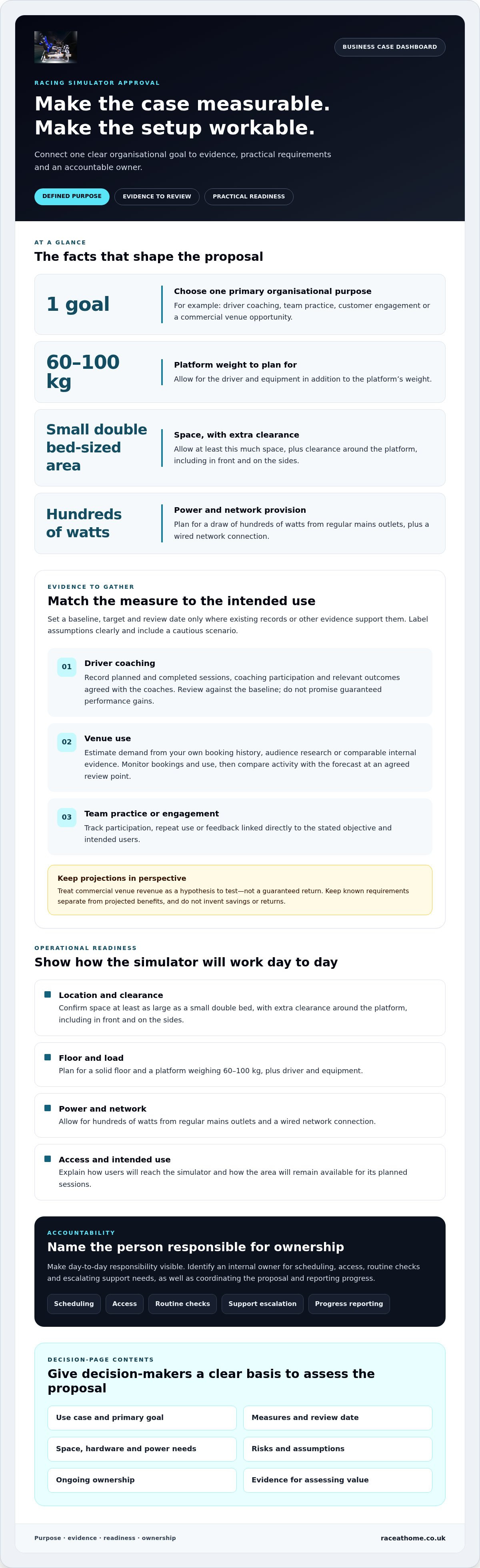
- Location and clearance: allow space at least as large as a small double bed, with extra clearance around the platform, including in front and on the sides.
- Floor and load: plan for a solid floor. The platform typically weighs 60-100 kg, plus driver and equipment.
- Power and network: allow for a draw of hundreds of watts, supplied from regular mains outlets, and a wired network connection.
- Access: show how users will reach the simulator and how the area will remain available for its intended sessions.
What operational details should the approval pack include?
Name the internal owner responsible for scheduling, access, routine checks and escalating support needs. This makes ongoing ownership visible rather than leaving it as an unassigned task. Set expectations about the operating environment too: the platform uses quiet electric motors, though some sound and vibration remain. Most products include at least a one-year warranty, alongside after-sales support.
How will the simulator work with existing equipment?
List the intended wheel, pedals, PC or console configuration, then document the compatibility requirements for that setup. Console compatibility is selective and may require extra hardware, so do not assume every console configuration will work. A clear equipment list helps stakeholders understand what the proposal depends on. The sim racing setup guide offers further system-planning context.
Including these details supports getting budget approval for a racing simulator by showing that requirements, ownership and practical risks have been considered. Race@Home also provides design and integration consulting for project-specific system planning.
Turn approval into a practical next step with Race@Home
Approval is the start of a managed project, not the finish line. Use a short sequence to move from agreement to a reviewable plan:
- Agree the goal: record the primary use case and intended users.
- Document the evidence: state the measures, baseline and assumptions behind the proposal.
- Check readiness: capture the location, technical requirements and any unresolved risks.
- Assign ownership: name the person responsible for coordinating use and reporting progress.
- Set a review: agree when results will be assessed against the intended objective.
This sequence keeps getting budget approval for a racing simulator grounded in a decision that can be evaluated, rather than a one-off response to an impressive demonstration.
What should the final approval summary contain?
Bring the case together on one decision page. Make the requested decision, use case, intended users, success measures, operational owner and review date easy to scan. Include practical requirements and risks, such as space, power, network access or equipment compatibility. Separate confirmed product facts from organisational assumptions and proposed evaluation criteria, so readers can distinguish what is known from what remains to be tested.
How can Race@Home support project planning?
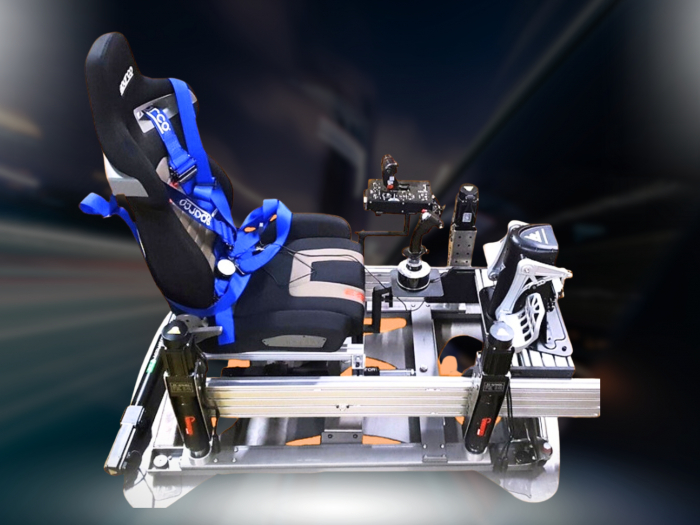
Race@Home’s LowSlider is a premium motion platform offering 2 to 6 degrees of freedom. The right system design depends on the project’s objectives and requirements. Race@Home provides design and integration consulting to shape a rig around those goals. Treat this as project-specific planning, not a promise of a particular outcome or cost.
See Race@Home motion simulator options as you develop a plan around your defined use case.
Move from approval to a project plan
Once decision-makers are ready to proceed, give the proposal a clear next phase. Turn the agreed objective into a project brief that records who the simulator is for, how it will be used and what evidence will guide the review. This creates a useful handover from the approval conversation to practical planning, while keeping expectations tied to the organisation’s priorities.
Getting budget approval for a racing simulator is not about promising a result before the system is in use. It is about making a considered decision, defining how progress will be assessed and giving the project an owner who can keep it on track. From there, you can explore a motion platform suited to your intended sim racing use and the requirements already identified.
Explore Race@Home motion simulator options and take the next step towards a well-planned project. A clear purpose and thoughtful preparation can give the simulator a defined place in your organisation.
Frequently Asked Questions
How do I justify buying a racing simulator for a business?
Show how the simulator supports a business priority, then explain how you will assess its contribution. For example, if the aim is customer engagement, define the audience and record participation or feedback. If the aim is driver development, agree which coaching activities it will support. A focused case for getting budget approval for a racing simulator connects the intended use to evidence the organisation can collect, without presenting hoped-for outcomes as guaranteed.
What should a racing simulator budget proposal include?
Include the decision being requested, the intended use, who will use the system and who will oversee it. Add the evidence behind your assumptions, the evaluation measures and the date for reviewing progress. Make dependencies visible too, such as equipment choices or access to a suitable location. If estimates are provisional, label them clearly so approvers can distinguish established information from forecasts that need testing.
Can a racing simulator be used for driver training?
Yes. A motion simulator can support structured practice and coaching, giving drivers a setting to work through racing scenarios and discuss their decisions. Define the session purpose with the coach, then record participation and the coaching observations relevant to that purpose. Treat simulation as a training tool, not proof of guaranteed improvement or a substitute for every aspect of real-world driver development.
How much space does a Race@Home motion platform need?
Plan for space at least as large as a small double bed, with extra clearance in front and on the sides. The platform also needs a solid floor, mains power and a wired network connection. Include the full proposed rig and room access in your layout assessment, rather than measuring only the platform area, so the planned location accounts for the operating setup.
How can we assess whether a racing simulator investment is worthwhile?
Before use begins, agree what evidence would support continuing, adjusting or ending the project. Compare actual activity with your initial assumptions at the review date, using records such as session participation, bookings or coaching feedback where relevant. Consider both the value created and the effort required to operate the system. This gives decision-makers a consistent basis for assessing the project instead of relying on anecdotal impressions.


