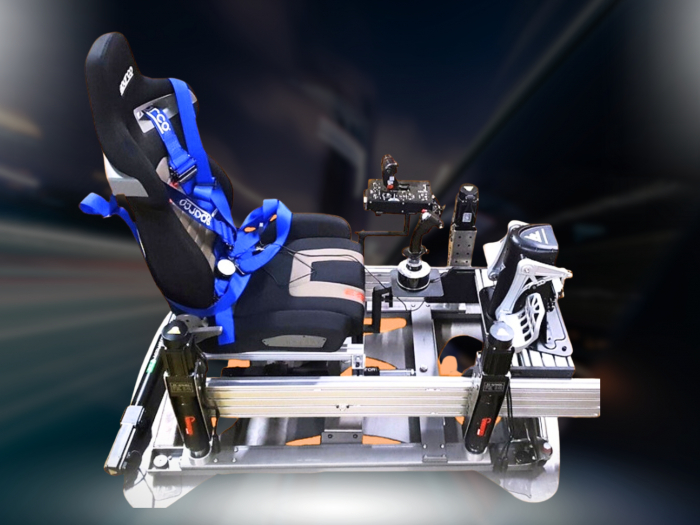

A motion racing simulator turns driving data into physical movement, so braking, cornering and changes in road surface feel through the rig as well as appear on screen. Dynamic motion systems commonly range from 3DOF to 6DOF, with each platform translating telemetry into a different range of movement. Choosing a motion simulator platform for worldwide delivery means considering not just the motion, but also payload capacity, shipping and setup at your destination.
If you already know the appeal of a more immersive racing experience, the practical details matter just as much as the sensation. This guide explains what a motion racing simulator is, how platform options and payload affect your setup, and what to understand about international shipping, installation and warranty terms. You’ll have a clearer picture of how the hardware fits your space and what to expect from delivery.
Key Takeaways
- Understand how motion platforms turn racing data into physical feedback, and how degrees of freedom shape the experience.
- Learn what modular construction can mean for transporting a simulator and assembling it at its destination.
- Assess which platform characteristics and payload considerations matter when planning a rig around your equipment.
- See how worldwide delivery, setup and warranty details fit into choosing a motion simulator for your space.
What is a motion racing simulator?
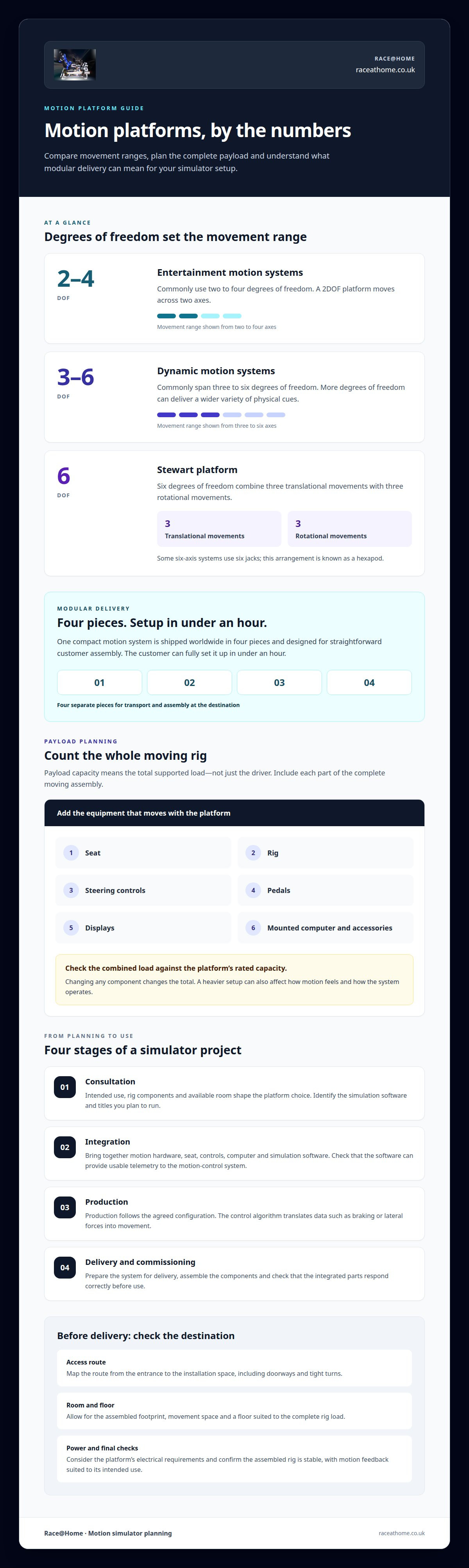
A motion racing simulator converts vehicle data into physical movement, so braking, cornering and surface changes reach the driver through the seat. Dynamic systems commonly range from 3DOF to 6DOF, meaning three to six degrees of freedom. A Stewart platform provides six degrees of freedom through three translational and three rotational movements. Some six-axis systems use six jacks, known as a hexapod, to create that motion.
A project typically moves through consultation, integration, production and delivery. First, the intended use, rig components and available room shape the platform choice. Integration then brings the motion hardware together with the seat, controls, computer and selected simulation software. Engineering decisions matter: the control algorithm must translate data such as braking or lateral forces into useful movement, rather than simply amplifying every signal. Production follows the agreed configuration, before the assembled system is prepared for delivery.
Software compatibility depends on whether the simulation software can provide usable telemetry to the motion-control system. That system interprets the data and directs the platform; compatibility is not automatic across every game or simulator. During integration, identify the software and simulator titles you plan to run, then match their telemetry support to the controller. The same principle applies to flight or gaming simulations: each application needs a suitable data path and motion profile.
A VR headset adds a visual layer to physical feedback. With a Pimax VR headset, you see the virtual cockpit while the platform moves beneath you. The headset’s viewpoint and the platform’s movement should work together, so consider how the visual and physical responses will feel as one driving experience.
Power, space and floor requirements depend on the platform, complete rig and chosen equipment. Allow for the platform’s electrical requirements, its footprint and the area needed for movement; the supporting floor must suit the assembled load. These factors are assessed together, not as separate specifications.
When choosing a platform, consider your simulator software, rig components and intended use. Race@Home’s LowSlider platforms are designed for sim racing, with compact, low-profile construction that helps make a full-motion setup practical at home or in a commercial space.
Modular platforms, portability, shipping, and on-site assembly
A modular design separates a motion platform into manageable components for transport and assembly. This can make it easier to move hardware through a home or simulator room than handling one large, integrated structure. Before delivery, map the route from the entrance to the installation space, including tight turns and doorways. The final position also needs room for the platform’s movement and the attached rig.
Packaging depends on the platform’s construction and how its components are prepared for transit. One compact motion system is shipped worldwide in four pieces, designed for straightforward customer assembly. It can be fully set up by the customer in under an hour. Those details show how a modular platform can reduce the complexity of moving equipment internationally and assembling it at its destination.
After delivery, assembly brings the separate hardware components together into a working system. Follow the assembly sequence, secure the platform and rig components, then connect the system’s electrical and control components as directed. The motion technology may use electric or hydraulic actuation, depending on its design; these are different engineering approaches, not interchangeable setup steps. Once assembled, commissioning means checking that the integrated components respond correctly before using the platform with a virtual driving experience.
How are platforms packaged, installed and commissioned after delivery? Modular systems can be packed as separate pieces, assembled at the destination, and then checked as an integrated unit. For the four-piece system described above, customer setup takes under an hour.
For a smoother arrival, plan the room layout around the assembled footprint, access route, power connection and space needed for movement. Keep related hardware together during assembly so each component can be fitted in sequence. The final check should confirm that the rig is stable and that motion feedback matches the intended use. Explore motion platform options if you’re weighing a compact setup for international delivery.
Motion-platform product ranges and payload capacities
Degrees of freedom describe the directions in which a platform can move. Entertainment motion systems commonly use 2-4DOF, while dynamic motion systems commonly span 3DOF to 6DOF. A 2DOF system creates movement across two axes; a 3DOF platform adds another movement dimension, and 6DOF allows a broader range of physical cues. More degrees of freedom can deliver more varied motion, but the right choice depends on the driving experience and available space.
For a racing simulator, platform dynamics should support the vehicle cues you want to feel, such as cornering, braking and loss of traction. A 3DOF system can suit a focused driving setup, while 6DOF can reproduce a wider range of movements. The same selection logic applies to flight simulators, where the simulated vehicle and intended experience shape the required motion. The visual display and platform response should work together, rather than competing for the driver’s attention.
Payload capacity means the total supported load, not simply the driver’s weight. Include the seat, rig, steering controls, pedals, displays and any mounted computer or accessories. If one component changes, the combined load changes too. The platform’s rated capacity must accommodate the complete moving assembly; a heavier setup can also affect how motion feels and how the system operates.
How do 2DOF, 3DOF and 6DOF platforms compare? Each figure represents the number of movement axes available, from two in 2DOF to six in 6DOF. A 3DOF platform sits between them, balancing motion range with the needs of a particular simulator.
Before choosing, match the platform’s payload rating to the fully equipped rig, then consider how it will be used. Moving parts and a shifting rig make secure assembly and correct loading important safety considerations. Maintenance depends on the system’s components and manufacturer instructions; routine attention to fastenings, connections and wear helps preserve consistent operation. If your build includes a heavier seat or additional visual hardware, account for it in the total payload rather than treating each item separately.
Worldwide delivery installation warranty
International delivery planning means considering both the destination and the space where you’ll assemble the platform. Race@Home ships worldwide, and orders shipped outside the UK receive free delivery.
Worldwide Delivery and Installation
Delivery arrangements depend on the destination and the shipment’s size, packaging and final location. Before dispatch, align the delivery address with the place where the moving platform will be assembled, and consider access from the entrance to the installation space. Installation may involve customer assembly or a separate on-site arrangement. Commissioning then checks that the actuators, connections and motion response work together for the intended racing experience.
If the delivery address needs changing, the customer must request the change from the retailer or merchant, who must process or approve it. Warranty terms should be read alongside installation instructions, since they explain coverage and the process for handling a fault affecting the platform or its components.
Import Duties, Taxes and Restrictions
Import duties, taxes and restrictions vary by destination country, so there is no single worldwide rule that applies to every motion simulator platform. The destination’s import treatment determines which charges or requirements may apply to the shipment. For example, a platform sent to one country may be treated differently from the same hardware sent elsewhere. These destination-specific factors affect the total delivery process, not the vehicle dynamics or motion performance.
For an international order, distinguish the platform shipment from any separate cockpit equipment or accessories. The shipment details and destination determine how import procedures apply; do not assume that one country’s treatment carries over to another.
Platform and Shipping Costs
The cost of a motion platform and its shipping depends on the chosen system, configuration, destination and transport arrangements. A platform with different motion capabilities may have a different product cost, while shipment distance and package dimensions influence delivery costs. These factors mean there is no single price that applies to every order. Consider the platform and transport as separate parts of the overall purchase.
Compare the configuration you need with the delivery destination before settling on a setup. If your racing cockpit includes mounted displays or other equipment, include those components in the shipping and installation plan. Explore motion platform options to identify a system that fits your intended driving experience.
Race@Home: LowSlider 6 DOF Twin-Traction-Loss Motion Platform
Race@Home’s LowSlider 6 DOF Twin-Traction-Loss Motion Platform gives sim racers a way to bring a broader range of movement cues into their cockpit. If your priority is a more compact motion setup, the LowSlider 3DoF motion platform offers a different degrees-of-freedom configuration. The choice depends on the motion experience you want and how your existing rig is configured.
Race@Home’s LowSlider design combines an ultra-low profile with a compact footprint. Its platforms offer two to six degrees of freedom, including a six-DOF twin-traction-loss model. Consider how the seat, controls and other equipment will fit your available space, then choose the motion setup that suits your driving goals.
If you’re planning a motion racing setup, contact Race@Home to discuss your requirements.
Plan your next step towards a more immersive rig
Choose the driving experience you want to build, then consider how the simulator will fit your space and which equipment needs to work together. A motion simulator platform with worldwide delivery also calls for practical planning: Race@Home ships its LowSlider systems in four pieces for customer assembly, with free delivery on orders shipped outside the UK.
Race@Home offers LowSlider motion platforms and Pimax VR headsets to help you shape your simulator setup. Consider your available space, the rest of your rig and the kind of motion experience you want when choosing your equipment.
Contact Race@Home about your simulator to discuss the direction you have in mind. Your next lap can begin with a setup designed around the way you want to drive.
Frequently Asked Questions
How long does delivery typically take?
Delivery timing depends on production and the destination, so there isn’t one standard timeframe for every order. Race@Home builds its simulators to order and ships worldwide. For planning, allow for both the build stage and the transport journey, and consider that international routes involve different delivery arrangements from domestic orders.
What does a motion platform do?
A motion platform moves the simulator rig in response to driving data, adding physical cues to the on-screen experience. For example, braking or cornering can produce movement that helps the driver feel changes in vehicle behaviour, rather than relying on visuals alone. The platform works with compatible simulation software to translate telemetry into movement.
What types of motion simulator platforms are available for worldwide delivery?
Race@Home offers the LowSlider 3DoF motion platform and the LowSlider 6 DOF Twin-Traction-Loss Motion Platform. Its LowSlider range spans 2 to 6 degrees of freedom. Choose between configurations by considering the motion experience you want, your rig and the equipment it must support. Race@Home ships its products worldwide.
Which motion simulator platform manufacturers ship internationally?
Race@Home ships its products worldwide, including its LowSlider motion platforms. Its simulators are supplied in four pieces for assembly at the destination, and customer setup can be completed in under an hour. This approach helps make delivery practical for international customers planning to assemble their simulator in a home or commercial space.
What are the shipping costs and delivery times by destination country?
Shipping costs and delivery timing depend on the product and destination. Orders shipped outside the UK have free delivery, while delivery timing varies with the destination and transport arrangements. For a motion simulator platform with worldwide delivery, separate the product choice from the destination logistics when planning your purchase; the selected platform also affects the overall product cost.
What warranties, service options, and spare-parts support are available worldwide?
Warranty coverage and the process for service or spare parts are governed by the terms applicable to the product. Keep your order details and product information available if you need to report an issue, as these help identify the relevant system and components. For international owners, the destination can affect how parts are transported and how service is arranged.


